When a Symbol Becomes a Snare: The Bronze Serpent and the Danger of Idolatry

In Numbers 21, we read one of the more surprising rescue stories of Israel. The people rebelled, serpents bit them, many died, and Moses prayed for the nation. Then the LORD said:

“Make a fiery serpent, and set it on a pole; and everyone who is bitten, when he sees it, shall live.” (Numbers 21:8)

So Moses made a bronze snake, lifted it high, and those who looked endured. That bronze image was, in its moment, a divinely-given means of deliverance. It was not magical in itself, but God created it as a sign: repent, look, live.
Later, however, we read in 2 Kings 18:4 that King Hezekiah destroyed that very bronze serpent — called Nehushtan — because the people had begun to burn incense to it. What was once a tool became an idol.

The bronze serpent was not a fetish. It was not meant to become the object of worship. It was a “look and live” sign. The serpent foreshadowed later realities (as Jesus himself referenced in John 3:14–15) — the lifted-up Christ, who brings healing, life, and redemption.

The key is: God ordains means, for his purposes, in his time. A means is good so long as it points away from itself and points to him.

But the bronze serpent became a problem. 2 Kings 18:4 states:

“…for up to that time, the Israelites had been burning incense to it. It was called Nehushtan.”

What changed? The people stopped seeing the object as the means. They began venerating the object. They burned incense. They worshipped the serpent. The means became the end. The sign became the substance. The action became the object of trust.

Thus, we see a pattern:

1. A god-ordained symbol becomes a comfortable habit.

2. A god-ordained tradition becomes a barrier to biblical truth.

3. A god-ordained means becomes the substitute for the true end.

If we’re not cautious, the very things God uses to bless our faith become traps in our devotion.

What does this look like in our context today?

Perhaps a worship style, a ministry program, a church tradition — originally given to serve — becomes the thing we cling to, rather than Christ.

Perhaps a past experience of God becomes the standard prize rather than the person of God.

Perhaps a helpful symbol, like a cross on a necklace, becomes the locus of our trust.

When the object of our faith becomes anything but the living God, we drift into idolatry. And idolatry is not just bowing to carved images; it is anything that takes God’s place in our hearts (see Romans 1). To serve the created rather than the Creator is to become idolaters (Romans 1:25).

Hezekiah’s act of breaking the bronze serpent is a striking image. It’s not destruction for destruction’s sake: it is obedience to the Lord’s re-ordering of worship. The object itself had done its job — it had served its day — and now it hindered the true worship of the living God.

We, too, must ask: Are there “bronze serpents” in our lives? Things once used by God that now stand between us and God. Things we trust in, cling to, bow down to — though they were only meant to lead us to Christ.

Therefore, be thankful for the means God has given. Use them. But never worship them. When they become a wall rather than a window to God, they must go.

The gospel is always about Christ, not our methods. Always about faith, not form. Always about the living God, not our comforts.

The Lifted Serpent and the Lifted Savior

Jesus said of this ancient event:

“Just as Moses lifted up the serpent in the wilderness, so must the Son of Man be lifted up…” (John 3:14)

The bronze serpent pointed to Christ on the cross. The serpent on the pole drew the dying, the wounded, the bitten — and when they looked, they lived. Christ on the cross draws sinners, wounded by sin, and grants eternal life by his work. The serpent was never the object of worship — Christ is.

Let us, therefore, live by faith in Christ, not in our symbols. Let us worship God in spirit and truth (John 4:24). Let us tear down our idols — even those born of good intentions — that none may stand between us and the one true God.

Conclusion

The story of Nehushtan is a sober warning and a hopeful message. A warning: that the means can become the idol; a hopeful message: that Christ is the true object, the true end, the living hope. May our hearts hold fast to him — not the bronze snakes of our past, but the Living God who grants life by faith.

Derrick Stokes for Theologetics.org

The Power of The Tongue and the Complexity of History

Martin Luther, a Catholic monk(1483-1546), known for beginning the Protestant Reformation (largely why so many of us in the West aren’t Catholic), spoke out against the Catholic church’s abuses of the time. He wrote the popular 95 Theses, pointing out the corruption of the church and government. Nearly 500 years later, he was respected, so by Michael King Sr. that he changed his and his son’s names to Martin Luther King Sr. and Martin Luther King Jr., who was also strongly influenced by the writings of Martin Luther.

The same Martin Luther was extremely anti-semetic, especially in his later years. He wrote “On the Jews and Their Lies,” in which he called for the destruction of the homes and synagogues of the race of people he called “envenomed worms.” These later teachings influenced and were used by Adolf Hitler to promote the extiction of the Jewish people.

The teachings of one man were, centuries later, used to change the lives of millions for the better. And that same man influenced an evil that murdered millions and brought the world to its second war.

The Bible is clear on the power of words. We’ve all experienced the pain and destruction of someone’s verbal assault and, conversely, the nourishment and liberation of someone’s kind and wise words. In the end, our words have power-they can build up or break down, heal or harm. Once spoken, they can not be taken back. So choose them wisely, and let them reflect the respect and integrity you stand for. Be careful of the words you speak.

Derrick Stokes for Theologetics.org

read more here: https://www.biography.com/activists/martin-luther-king-jr-martin-luther-similarities

https://scholarship.rollins.edu/mls/20/

Relationship or Religion

When people speak of Christianity, it is often described exclusively as either a religion or a relationship. Those who argue that it’s purely a relationship oftentimes see religion as a negative thing, at least for Christianity. Religion is typically seen as a stiff set of rules held by stiff people wearing their stiff clothes holding their stiff noses in the air as they judge the sinners around them. The Christianity-is-a-relationship crowd tends to place emphasis on love, acceptance, and freedom. On the other hand, the ones who see it as a religion seem to have a more encompassing view of what Christianity is, in my opinion. Yes, it is love and acceptance and freedom. But it also includes structure, rules, and some of the less feel-good aspects like “the wrath of God.”

However, those in the relationship crowd aren’t very different from those in the religion crowd when it all boils down to it. Think about what a relationship is, whether it be between spouses, friends, family, or employees/employers. There are rules, whether spoken or unspoken, written or unwritten, that govern whether the relationship is going to be healthy or not. A healthy relationship has boundaries. One or all parties involved understand that there are certain things that they shouldn’t do if they want to continue in harmony with the other participant(s). A husband knows that certain things will make his wife legitimately unhappy and that other things will bring her happiness and security. Some things may have more bearing on the trajectory of the marriage than others. A cheating spouse is more at risk of causing the marriage to end than a spouse who forgets to take out the trash. Or, in an employee/employer relationship, stealing time is more detrimental than stealing a pen or paperclip. Either way, it’s understood that no matter the relationship, there is typically a strict set of do’s and don’ts if you want the relationship to last. I feel that perhaps, more often than not, those who adhere to a strict mindset of Christianity being a relationship and not a religion want to do away with the religious aspect because they don’t think it’s should be about rules. To this, I agree. It shouldn’t be about rules. It should be about the object that we want to have a relationship with. I didn’t marry my wife for it to be about rules, but I did get married knowing that there are rules that I would have to abide by if I want the marriage to work. Some rules are universal, like don’t cheat. Some rules are more specific to the relationship because of the individuals involved. My wife doesn’t like her steak well done, so I know not to let it cook on the grill for longer than she would like. If I messed up the steak once or twice, she’ll forgive me, but if I do it every time, she may feel as if I don’t care or am doing it out of spite. 

The problem with some in the religious crowd is that it has become about rules. The relationship has been completely dismissed for a checklist. Usually, it is a checklist of negatives. Don’t smoke, don’t drink, don’t wear that, don’t say that, don’t go there, don’t watch that. It can easily become (or at least be seen as) a joyless list of impossible commands to appease a joyless and angry God. Many people would rather do without such stringency.

So people do away with the “religion” and its rules. Relationship feels better. It comforts. It brings peace. It brings freedom. It lifts up and encourages. Some say they’re not religious but are “spiritual.” There are various reasons one may claim to be spiritual, but one of the reasons is often a rejection of the rigidity of religion. Some even go further and reject it all together. (Sadly, some people who reject religion aren’t very good at relationships either. They want the security that either may bring but they also want the freedom that makes neither an option. You can’t live as a single person and expect a happy marriage. You can’t be employed but live as though you have no job.)

I feel that what’s missing on both sides is a true understanding of what Christianity is supposed to be. It’s both a religion and a relationship. Merriam-Webster defines religion as “a personal set or institutionalized system of religious attitudes, beliefs, and practices.” Britannica sites religion as: human beings’ relation to that which they regard as holy, sacred, absolute, spiritual, divine, or worthy of special reverence. Both definitions, along with any other I could find, describe what Christianity is. However, that’s like looking at a book and describing it by giving the definition of a book.

Christianity is so much more.

In the New Testament of the Bible, Jesus is often seen rebuking the religious leaders of his day (this fact is frequently used as proof that our faith isn’t a religion). But like the religious leaders in Jesus’ time and those in modern times, the religion is weaponized. The Pharisees and Saducees used the Jewish religion and its rules hypocritically. They misunderstood what the law was given for. One such example was when Jesus healed a blind man on the Sabbath. According to the “rules,” no work was supposed to be done on the Sabbath. This law was (and still is) a good law because it requires rest. Any hard worker understands that sometimes you have to be made to take a breather. Don’t work yourself so that you don’t get time to enjoy yourself and your loved ones. Take a day to enjoy the fruits of your labor. Take this day as a day to gather and worship God. Instead, the religious leaders made it another burden on the people. When Jesus healed the blind man on the Sabbath, he was chastised. John 9 tells us, 

They brought to the Pharisees the man who had been blind. Now on the day which Jesus had made the mud and opened the man’s eyes was the Sabbath…Some of the Pharisees said ‘This man is not from God, for he does not keep the the Sabbath.’” (verses 13-16 NIV).

While the Pharisees knew the letter of the law, Jesus understood the spirit of the law. The rule concerning the Sabbath kept someone from lifting burdens on that day. Jesus freed a man from his burden that day.

When God gives rules, they are to help us. To keep us from trouble. Sometimes, the trouble is unknown to us. Rules aside, the Bible is full of relational statements. God desires all who he created in his image (that’s all humans) to be his sons and daughters. But as I mentioned earlier, to have a healthy relationship with anyone, there are expressed boundaries set by one or more parties. God himself has expressed what his boundaries are. He has said that there are things we ought to do and things we ought not do. The goal isn’t in the oughts and ought nots. The goal is  the object of our affection. That object is God. The all-knowing lover of our souls knows what benefits us and what hurts us even when we don’t. Just because something feels good doesn’t mean it’s beneficial in the long run, just like one may use maladaptive coping mechanisms to deal with stress, but in the end, it leads to more hurt.

James 1:15 ESV
Then desire when it has conceived gives birth to sin, and sin when it is fully grown brings forth death.

So I’ll end this by saying that yes, the Christian faith is a religion, technically. The goal, however, is relationship. It is what God desires to have with us. It is the reason Jesus came and died: so that we may be reconciled into right relationship with him when we have strayed. But for us to stray means that there was a  breach in the relationship. We sometimes walk away by doing what God has expressed displeases him. In the same way, many of us have had failed relationships because we or the other party did something that had negative repercussions on the bond. If we continue, the bond can be severed forever. Likewise, if we continue in ways that displease God, we are severing our bond. One day, it’ll be too late to reconcile.

Read also: James 1:27, Luke 15

Derrick Stokes

Why Doesn’t God Forgive Sin Without a Sacrifice?

If God can do anything He wants, why doesn’t he just forgive sin? He’s all-powerful. He’s the epitome of love. So, why did He need a sacrifice for sin? Why doesn’t He just say to everyone, “Poof your sins are forgiven!”

The Return of the Prodigal by Rembrandt

In the beginning, we are told that God gave mankind one rule: don’t eat the forbidden fruit. We only had that one rule. We still disobeyed. God drove man from His earthy temple, Eden, but not before telling them a promise. We’ll get back to that promise later.

Why would God need to send them away, though? Couldn’t He just have said, “I forgive you. Don’t do it again. Stay and enjoy paradise”? Furthermore, later in Scripture, we are told that God requires us to forgive someone who sins against us, and if we don’t, then He won’t forgive our sins. But wait. Why do we have to be the first to forgive? Is that even fair?

Well, I believe that to understand this, we must first understand who God is and who we are in relation to God.

God, who is the most perfect being, created man. Man is not a perfect being. As I stated earlier, the earliest man couldn’t even keep one rule. God is all-powerful (omnipotent), all-knowing (omniscient), and the ultimate goodness (omnibenevolent). Man is none of these things. We can only know so much, do so much, and have a limit on how good we can be. God, because of His omnibenevolence, cannot sin. Since we do not have that attribute, we do sin.

To illustrate my point, let’s say I kicked a small rock down the road. It’s not a being that can not feel or think because it’s incapable of life. I’ve done no wrong. Now, let’s say I’ve kicked a bug that wasn’t bothering me. I’ve likely caused it harm or even killed it, and this action probably speaks negatively about my character. But it basically stops there. Now let’s say I continue down the road and I see a dog and decide it’s a good idea to kick it. Well, if it doesn’t bite me, I could actually be charged with animal cruelty in many places and if it’s someone’s pet, the dog has more intrinsic value bestowed on it, and I could get in trouble with its family also. There would be even more trouble for me if I chose to kick one of the dog’s human owners.

Basically, as I moved up the “hierarchy” of existing things, I committed more of a trespass against each thing. Even if I was never caught, most people would probably agree that some cosmic or divine justice would (or at least should) await me for my moral failing. The higher the being, the more I would be indebted to some sort of restitution even if it’s just an apology.

This brings me to my point. Our trespasses (sins) against a Being who exists in infinite goodness increases because of who He is. The increase is so much that an infinite punishment is the only justified payback.

When man sins against man, the debt is much less than when man sins against God.

Jesus told a story about a master who called his servant to him to settle an outstanding debt he owed the master. The servant begged and pleaded that the master would be merciful, and the master was. Later, the servant sees another servant who owed him much less than the first servant owed his master. The second servant begged for mercy, to which the first refused to listen and had his family thrown into prison until he received his money. The king heard about the incident. “You wicked servant! I forgave you all that debt because you pleaded with me. And should you not have had mercy on your fellow servant, as I had mercy on you?” He then had the servant thrown into prison until he could repay the debt. (Read Matthew 18:23-34).

Immediately before Jesus told this story, his apostle Peter asks how often he should forgive his brother if his brother sins against him. “As many as seven times?” Peter inquires to which Jesus answers, “not seven times, but seventy-seven times.” Some translations say seventy times seven. By following up Peter’s question with the above story, Jesus illustrated that sins against the Master are exponentially greater than sins against each other.

When you read the parable, take note of the amount that the servant owed his master: 10,000 talents. A “talent” was twenty years wages. Twenty years!! One talent=20 years wages. This man owed 10,000 talents to his master. That’s 200,000 years of wages he owed. There was no earthly way that this man could have repaid that debt. The amount his fellow servant owed him was worth only a few hundred days of work.

You may ask, “Since Jesus told the story, and He said that the master was just going to forgive the servant, why can’t God just forgive us?” The point of the parable was to show how our sins against each other pale in comparison to our sins against God. But it does remind us that God is merciful.

I’ve mentioned that God is all-powerful, all-knowing, infinitely good, and merciful. I must add that His goodness goes hand in hand with another attribute, His justice. As a good and just judge, he must punish wrongdoing. Otherwise, he is neither good nor just. Take a moment and think about some of the bad things you’ve done in life knowing what the punishment could have been, and you still proceeded to do the evil deed. How brazen we can be! Now imagine the only “punishment” awaiting our evil deeds was God saying, “Ahh, it’s all good! Just don’t do it again!” You better believe we’re gonna do it again! So, since it’s not “all good,” He punishes because He is all good. And since He is all-good, He still makes a way for us. How? He paid our debt, nailing it to the cross of Christ. (Colossians 2:14)

In conclusion, since God is the highest being (The Most High), any sin against Him is of the highest offense. Any sin man commits against his fellow man is not. Therefore, God does not have to forgive us just because He is good. Instead, because He is good (and just), He must punish sin. However, the good news is that Jesus, the promise God told Adam and Eve, took our penalty for sin on His own back by dying on the cross. The ultimate goodness took on the ultimate punishment. Those who repent and believe this are forgiven and free. And if you are forgiven, you must forgive others.

Derrick Stokes

Theologetics.org

Why Am I Guilty For Adam and Eve’s Sin?

Isn’t it true that man stands guilty before a holy and blameless God for his sin nature? And that sin nature comes from our first parents Adam and Eve? Isn’t it unfair that a God of love would punish me for something that I didn’t do but was merely a condition I was born into? Isn’t the following passage from Ezekiel a complete contradiction to the Christian concept of salvation?

The soul that sinneth, it shall die. The son shall not bear the iniquity of the father, neither shall the father bear the iniquity of the son: the righteousness of the righteous shall be upon him, and the wickedness of the wicked shall be upon him.” Ezekiel 18:20

Son of Man by René Magritte

In the book of Genesis, Adam and Eve broke God’s command by eating of the forbidden fruit. This in turn cursed the ground and the rest of humanity. According to the Christian faith, we have to be saved from this curse and in the end the earth will be restored to its former glory and all that placed their faith in Jesus are forgiven. But is it true that we have to be forgiven for something we didn’t do? We didn’t eat the forbidden fruit.

There are many theological terms concerning our condition of needing salvation because of Adam’s sin. The doctrine of “original sin” states we are sinners from the moment we’re born because we were born to the fallen human family, children of Adam. The concept of “imputation” means that Adam’s falleness is automatically placed upon all who are born from him because he was the representative of all of man. Adam, therefore is our “federal head” and whereever the head goes the body follows. “Seminalism” is that we are now born with Adam’s sinful nature because we were physically born of his seed. Basically, Adam’s nature after he sinned became that of fallen man therefore, everyone born after that is born with the same nature in the same way snakes can give birth to snakes. They can’t help that they have a snake nature.

Therefore, it is our nature that we have to be saved from. Remember though, a snake can only act according to its snakey nature. If we are born with a sinful nature, then we will sin. It’s inevitable. Every single human being will sin because that is our human condition. For this reason, every single human being needs salvation. When people say “I was born this way”, they are absolutely right. We were all born this way and with propensity to various sins. We all sin our different sins. That’s why Jesus said we must be born again. (John 3:3)

Even when we’re “born again” we still maintain our fallen human nature right? We don’t cease to be human. No, the Bible says we actually gain a new nature. Once we have repented and placed our faith in Jesus, we become imputed with His nature; His righteousness. Sin therefore, loses its original appeal because it appealed to our old nature. Have you ever stopped eating a certain type of food or drink for, perhaps, health or lifestyle reasons? Then after a while you tried consuming whatever you gave up and it no longer tasted good or even made you sick? That’s a picture of how sin no longer appeals to the born again believer. Of course, there are those different sins that we still struggle with. There are those that we may even be unaware of until the Holy Spirit illuminates those dark corners. As we continue to live in this body with its aging and ailments and as we continue to live in this fallen world, we will continue to struggle with sin. Sin resurfacing from within us and sin from outside us.

Couldn’t God have just punished Adam and Eve and let those born after them have their original sinless nature? Sure, God could have. However, consider that if Eve listened to a serpent, and Adam listened to his wife, both in their sinless state, how much more so would a sinless child born to them follow their sinful example? Or, one may ask why would they have to have had children at all? Couldn’t God just have killed them or waited till they died and started over fresh? Again, yes He could have, but why do we think anyone else would have done any better? Even if all generations were sinless all the way down to you and I, one of us would have screwed it up. Couldn’t God have just made us so that we wouldn’t sin to begin with? As Clark said in his blog Why didn’t God make us perfect without sin?, “A being that is perfect without sin would also be holy, so this seems to indicate that He would have just created another God…”

It may still seem unfair to you that God holds us accountable for something we didn’t start. I wholeheartedly sympathize. Yet, if we’re honest, this concept doesn’t just apply to matters of spirituality. If someone is born to parents who do nothing but break the law and they teach their child to do the same, that child doesn’t know any better yet as the child gets older he or she is still held accountable. Was it unfair that they were born to bad parents? Sure, but at some point, I truly believe, they are shown that there is another way and they must move from pointing fingers at the condition they were born in to the direction of a higher way of living. Remember, that Adam blamed Eve and Eve blamed the serpent but God held them all accountable for their own actions. Just because you were put into an “unfair” situation, your reaction is still your responsibility.

While we may not be punished for Adam’s sin, mankind suffers because of it. In the same way the child born to a drug addicted mother may have physical or mental challenges or the employees of a business may suddenly be without a job because the CEO mismanaged funds.

All that is to say, we aren’t punished for Adam and Eve’s sin. We are punished for our own sins. But, the story doesn’t stop there. If we want to say that it’s not fair that we’ve had to suffer for their sin, we must also conclude that it’s not fair that Jesus suffered and was punished for our sins. While generations have suffered for the sin of Adam, Jesus suffered for the sins of generations. How unfair is that? It’s not about what’s fair or unfair; it’s about His love for us. Jesus took on the punishment meant for us when He died at the cross. What a gift! Do you accept it?

But the free gift is not like the trespass. For if many died through one man’s (Adam) trespass, much more have the grace of God and the free gift by the grace of that one man Jesus Christ abounded for many.
And the free gift is not like the result of that one man’s sin. For the judgment following one trespass brought condemnation, but the free gift following many trespasses brought justification.
For if, because of one man’s trespass, death reigned through that one man, much more will those who receive the abundance of grace and the free gift of righteousness reign in life through the one man Jesus Christ.
Therefore, as one trespass led to condemnation for all men, so one act of righteousness leads to justification and life for all men.
For as by the one man’s disobedience the many were made sinners, so by the one man’s obedience the many will be made righteous.” Romans 5:15-19

Read: 2 Corinthians 5:17, John 3, Ezekiel 18

Derrick Stokes for Theologetics.org

“Does God Care What We Wear to Church?”

A Man Wearing a Suit by Peter Scolamiero

Earlier today, I read a well written article on a popular Christian website. The name of the website escapes me, though. The name of the article is the same as this blogs title. The conclusion of the article was basically “Yes. God cares.”

Without going into the details of the article (mainly because I can’t remember), I will touch on some reasons that I believe their conclusion was correct, but I will give one reason that I believe they missed altogether.

One often quoted “Bible verse” that’s not found in the Bible is “Come as you are.” Yes, this verse is not in the Bible. However, the concept is. The Gospel message itself is that you bring your sinful, broken self to God and He makes you into a new creature. He changes your heart and conforms you into the image of his Son. So basically we don’t fix ourselves before we come to God. We can’t. We come to God as we are and let him do the changing to us.

In the context of how we dress for church, the phrase “come as you are” is used quite often. The article I mentioned above touches on this phrase. What I think they left out is that, if we are truly saved, we come as we are but we aren’t supposed to stay as we are. When God changes our hearts, even the way we dress may change. And if the way we used to dress was immodest then it is my strong conviction that how one dresses would change also.

I know that anytime the topic is brought up most people immediately think about how some women show up to church. Mine does. However, in no way should this apply to women only. While women may wear skirts or dresses that are too short, men might wear shirts or pants that are too tight.

I’m often told by the older saints that the “church mothers” or ushers would place a small blanket over the exposed legs or shoulders of younger ladies that they feel are dressed immodestly for church. I think there was a time where we expected the older folks in church to hold the younger believers accountable. But now we sneer at anyone who tries to tell us that what we’re doing or what we’re wearing might not be appropriate, even in church. We think no one can judge us but God. We have to remember, though, that “Do not judge” is not a stand-alone verse. Judging rightly is a command stated over and over in Scripture. But are we to judge those who aren’t believers? The Apostle Paul says in 1 Corinthians 5:12, “For what have I to do with judging outsiders? Is it not those inside the church whom you are to judge?” The outsiders he mentioned here are unbelievers. Paul is saying not to hold unbelievers to the same standard of Christians.

So maybe an unbeliever or a new believer comes through the church doors wearing something we deem immodest. What do we do as believers? First let’s look inward. As my mom used to tell me “If I point one finger at you I have 3 more pointing back at me.” Scripture says in Matthew, chapter 7, “first pull the plank out of your own eye so that you may see clearly to get the speck out of your brothers eye.”

Second, we should ask ourselves if what we claim to be immodest is just tradition mistaken as God’s word. Is it a woman wearing pants? Does the Bible forbid women to wear pants when there were no pants in the Bible? Is it that a man is wearing shorts and sandals? Is that immodest or just not how we think people should dress in church? Is someone wearing jeans when you think they’re supposed to have on a suit immodest? Are any of these examples inappropriate for church? Not really but if it bothers the wearers conscience then, for him, it is. No one should go against their conscience (Romans 14:23). On the other hand, some articles of clothing are inappropriate for church. If an individual is showing too much skin or can barely sit or walk up stairs because they’re afraid of exposing something, it might be a bit much for church. If your clothing is so tight that it leaves little to the imagination, then it’s probably best you leave it at home. If the clothing is so flashy that you’re getting all the attention, maybe save it for another occasion. The focus during church service should be on God, not ourselves.

Going back to the title, the subject is “we”. Who is the “we” in the title? “Churchgoers” one may say. Well, in every attempt to find the original article that I read with that title, I see many Christian websites have articles with the same title. So, to me, the “we” is not just churchgoers but believers. To me asking the question if God cares what we wear to church is akin to asking if God cares how we act, talk, dress, and think in any situation. The answer is emphatically yes!

For the Christian, according to Martin Luther, there are two kinds of righteousness. There is coram Deo and coram mundo. Coram Deo is our righteousness before God. Coram mundo is our righteousness before man, like how we treat each other. As we gather on Sunday, Wednesday, Saturday, or whenever we gather with the saints, we should dress and speak and act in a way that does not cause stumbling to other believers. Our Christian life is not only for our benefit but it should be for the benefit of those within our sphere of influence and for the edification of the Church body. I would dare say that there is no true Christian independence. We’re all in this together.

The way we dress is also a reflection of our coram Deo. To live coram Deo is to live one’s entire life in the presence of God, under the authority of God, to the glory of God. The way we dress, act, speak, and think should always give glory to God. If God has truly changed who we are then the way we think and act will reflect who we are in him. The moon reflects the light it gets from the sun. In the same way the Christian should reflect the light it gets from God. Like the moon, the Christian has no light in and of itself. The moon gives testimony to the existence of the sun. The Christian should likewise give testimony to the existence of God. If there is no change in the life of the Christian from his or her former self or a change in the life of the Christian from the unsaved world around them, then they aren’t giving glory to God. And if they aren’t reflecting the light of God then, perhaps the light of God is not in them.

In conclusion, the problem with the “come as you are” mentality, is that as a Christian, we are not supposed to stay as we are. We are supposed to change from the person we used to be. There is supposed to be an obvious difference in the person we were and the person we are in Christ. There is supposed to be an abundant difference in unbelievers and believers. At times that means our wardrobe changes also. So let us look up, out, and in. During service, as we gather to worship The Most High God (up), let us come in reverence. Let us not forget He is holy and commands us to be holy as He is holy. Let us also do what is in our power to not cause our fellow believers (out) to stumble. Lastly, let us look and judge ourselves (in) first before we tell or suggest anyone else change how they come to worship God. Remember, man looks at the outward appearance, but God looks at the heart (1 Samuel 16:7).

———

P.S.

Grace. We all need to show each other grace. Even in judgement, we have to extend grace. We extend grace because we have been shown the grace of God. If a brother or sister in Christ needs correction, we should be graceful about it. Likewise, we should be graceful in receiving correction. Sometimes God uses God’s people to do God’s work.

Derrick Stokes for Theologetics.org

God’s Attributes Devotional (Free)

Introducing our FREE 1 month Devotional! It’s based on our God’s Attributes poster that can be found and also downloaded for free. We pray this devotional not only informs but draws each reader closer to their Creator. Don’t forget to share it with others!


https://theologetics.org/wp-content/uploads/2021/10/derrick-devo-33-attributes-of-god.pdf

No homoi.

Arius of Lybia

In the beginning was the word and the word was with God and the word was God.” John 1:1

During the early church, there was a dispute about the ontology of Jesus Christ. Is Jesus the same essence as God or is he of a similar essence? These two schools of thought divided those who wished to be faithful to what was revealed in scripture about the Redeemer. They used the Greek words ὁμοούσιος (homoousios) and ὁμοιοούσιος (homoiusios) to describe thier respective views.

Homo-ousios – that the Father and the Son are of the same essence. “Homo” meaning same. “Usia” meaning essence, or being.

Homoi-usious – that the Father and the Son are of similar essense. “Homoi” meaning similar.

Now at first glance it may seem that the difference in the two is nonessential banter. Why would there be division about such a seemingly trivial concept? Well, those that accepted the homoousian christology believed that the other camp was downplaying or outright denying the divinity of Christ. That the Theos and Logos described in John 1 are of the same essence and to describe them as anything else would be to describe someone else other than the Christ of Scripture.

Arius, a third century Lybian theologian believed in similar-substance-christology. Arius did not believe, however, that his view went against the teachings of scripture. Nor did his christology start with him. He learned from Lucian of Antioch. In a letter to another theologian known as Alexander, he called Jesus “a creature of God.” Making God the Father the creator of everything else including the Son and Holy Spirit. Therefore, according to those of the homoousion christology, God does not save but one of His creations does. Making Arianism seem to be too close to donetism, that Jesus is only a man.

Now this seems to coinside with John 3:16 that says Jesus is the “only begotten son.” The Greek here is μονογενής (monogenēs) meaning basically the single of its kind. This is important because if Jesus was of similar essence then He would not be of the same kind as His Father.

Arius, in his letter to Eusibius of Nicomedia, says of Jesus, “…the Son is not unbegotten, nor in any way part of the unbegotten; and that he does not derive his subsistence from any matter; but that by his own will and counsel he has subsisted before time and before ages as perfect as God, only begotten and unchangeable, and that before he was begotten, or created, or purposed, or established, he was not. For he was not unbegotten. We are persecuted because we say that the Son has a beginning but that God is without beginning.

The Nicene Creed describes the Son as “God of God, Light of Light, true God of true God, begotten but not made…” Now I am not placing any creed above Scripture. However, those in the Council of Nicea (A.D. 325) thought it vital to settle this debate. That Scripture made it plain that Jesus and God are one (John 10:30).

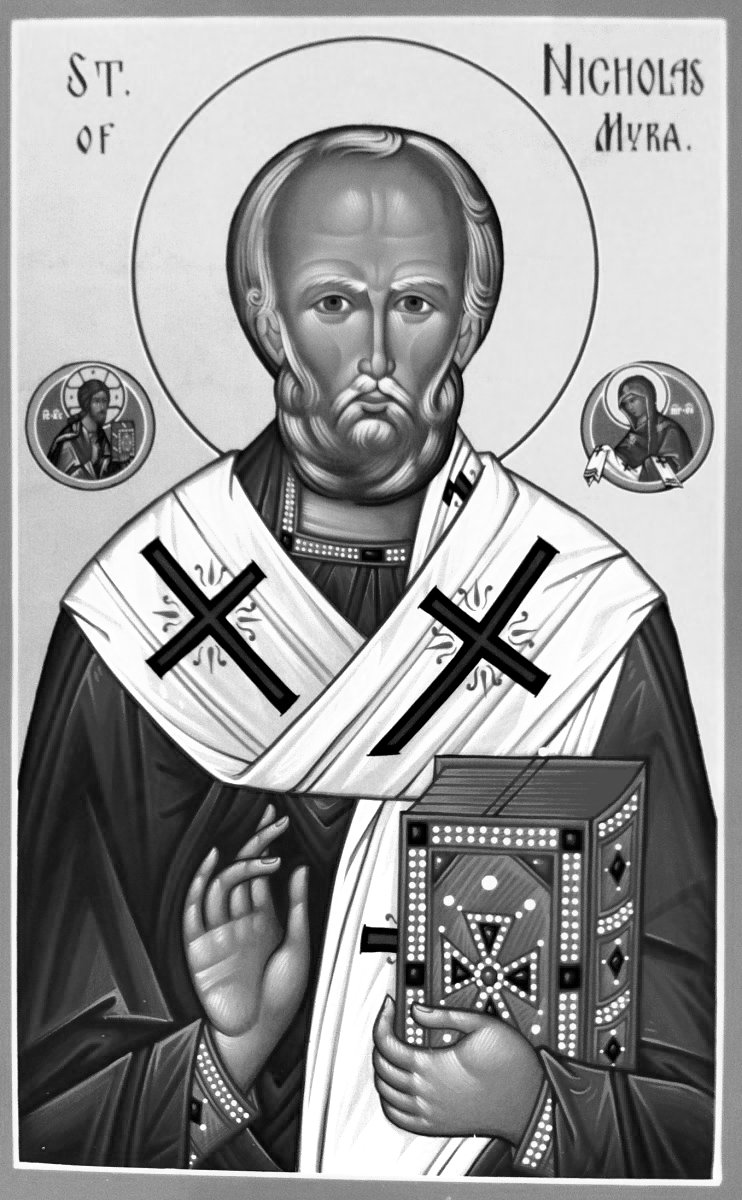
Tradition has it that one member that attended the council was even so impassioned that he slaps an Arian, perhpas even Arius himself. This attendee was none other than Saint Nicholas of Myra, the same St. Nicholas we see around Christmas time.

——————————–

Now, I’ve heard the argument, “what about Colossians 1:15 that states that Jesus is the first born of all creation? How can He be of the same essence as the Father?” I believe that instead of using the word “of” here, “over” would have been better as used in the New King James Version, NIV, and the CSB.

Colossians 1:15-18 states, “He is the image of the invisible God, the firstborn of all creation. For by Him all things were created, both in the heavens and on earth, visible and invisible, whether thrones or dominions or rulers or authorities—all things have been created through Him and for Him.
He is before all things, and in Him all things hold together. He is also head of the body, the church; and He is the beginning, the firstborn from the dead, so that He Himself will come to have first place in everything.
” (NASB). We see here that He has made EVERYTHING. All that was created has been created by Jesus Christ. As John 1:3 says, “…apart from Him nothing came into being that has come into being.” Making Jesus outside of creation and not a thing created.

While I can’t say that the New Living Translation is the best or even my favorite translation, I think it excellently words Colossians 1:5 this way, “Christ is the visible image of the invisible God. He existed before anything was created and is supreme over all creation.” In other words it’s Christ’s preeminence over creation that this verse is talking about.

In conclusion, I believe homoousia better describes our Lord as revealed in the Bible. Not homoi-.

Further reading: John 5:18, John 8:24, John 8:58, John 10:30-33, John 20:28, Colossians 2:9, Hebrews 1:8

Derrick Stokes
Theologetics.org

The Curse Reversed: The Parallels of Genesis and Revelation

“Satan Enters Eden” and “The New Jerusalem” by Gustave Dore

“The Bible says light appeared on the 1st day of creation. However, the sun and stars weren’t created until the 4th day. How can there be light and days with no sun and stars?”

Apologists have different ways of answering this question. I once even considered what’s called the cosmic microwave background. However, through further scripture reading, I believe the Bible has answered this question thousands of years ago.

I believe the “light” in Genesis 1:3 is the Glory of God.

The reason I believe this is because of the parallels in the books Genesis and Revelation. In Genesis we have the creation of the world and the Garden of Eden, God’s temple on earth. We also have the fall of mankind and the curse on man and the rest of creation where God dwelt and communed with man. In the book of Revelation we see the reversal of the curse.

Therefore, the light in Genesis 1:3 is the same light that will exist in the New Earth in Revelation.

Revelation 21:23 The city does not need the sun or the moon to shine on it, for the glory of God gives it light, and the Lamb is its lamp.

There are other parallels mentioned in Genesis and Revelation. Here are some listed below:

Genesis 1:4 -separation of light and darkness
Revelation 21:25 -no night, only day.

Genesis 1:10 -separation of land and sea Revelation 21:1 -there is no more sea.

Genesis 2:10 -a river flows from the Garden of Eden
Revelation 22:1 -a river flows from God’s throne.

Genesis 2:9 -the Tree of Life in the midst of the garden
Revelation 22:2 -the Tree of Life throughout the city.

Genesis 2:12 -God and precious stones in the land
Revelation 21:19 speaks of gold and precious stones throughout.

Genesis 3:8 -God walks in the garden, among His creation
Revelation 21:3 -God will dwell amongst His people.

Genesis 3:17 -the ground is cursed because of man’s sin
Revelation 22:3 -there will be no more curse in the New Earth

Genesis 3:17-19 -sin results in pain and death being introduced to creation
Revelation 21:1-4 -there is no more pain or death in the New Heavens and New Earth.

Genesis 3:24 -Mankind is banished from the garden, and cherub guards the entrance Revelation 21:9 -angels actively invite into the city

In Genesis 3:15 we are given the first Gospel promise of the Redeemer who will crush the head of the serpent. Jesus is that one who is promised. While Adam broke the law given to him and brought death to the world. Jesus kept the whole law and defeated death. Adam disobeyed and ate of the tree God told him not to bringing death. Jesus obeyed and died on a tree bringing us life. As stated in 1 Corinthians 15:22, “For as in Adam all die, so also in Christ all will be made alive.

Also read: Habakkuk 3:4, John 1:1-14, John 7:37-38, James 1:17, 1 John 1:5

Derrick Stokes
Theologetics.org

What Do You Mean By “God”? Defining Terms

When having interfaith dialogues, the word God is often thrown around. “You believe in God? I believe in God!” When in actuality, the “God” spoken of is totally different in the eyes of the respective believer. So it is imperative in these conversations to “define terms”. Ask what does a person mean by God. Ask them who they believe God is.

It’s often said that Christians and Muslims worship the same God. However, the Muslim God has no Son unlike the Christian God. Muslims believe in “Jesus” but their Jesus was not crucified and therefore did not die for the sins of the world. Of course, the Christian Jesus did. These are, in no way, minor differences.

The Mormon god was once a man who is currently married to his heavenly wife. This is a different god.

Jehovah’s Witnesses believe that Jesus is not God but is, instead, the archangel Michael. In Mormonism, he is the spirit child of “God” and his wife and is the brother of Lucifer. This is a drastically different Jesus. Yet, both Jehovah’s Witnesses and Mormons consider themselves Christians.

Many Arabic speaking Christians call God “Allah”. Muslims call their’s “Allah”. It is not the same “Allah”. Though many would have us believe it is.

Many religious groups other than Christians use the term God when speaking of their own deities. Often it is used as a generic term. Even in Christendom, God is actually a title and not a name for Yahweh (YHVH from the Hebrew יהוה). The word “God” actually comes from the German “Gott”.

To some people “God” may just mean some non-personal energy or just the material universe itself. To others we human beings make up the collective “God consciousness”.

To have clear and concise communication in theological discussions, defining terms can make the difference between what we agree on and what we disagree on. It lays the foundation. Understandably, we won’t always be right in everything we discuss. But making the differences known from the beginning can get to the root of the issue.

Derrick Stokes
Theologetics.org