Thoughts, Prayers, Amens and Lies

Praying-Child
Jacques Hnizdovsky (1915-1985) Praying Child Notecard

I had a discussion about prayer with a few individuals online that brought up some interesting ideas, this is just part of that conversation. It all started when this statement was made:

Person A “Any of us who tweet or post “prayers” for people in tragedy and do not follow through on them are in sin. Any of us who merely tweet or post “thoughts” going out to people in tragedy are painfully mistaken. And any of us who broadly dismiss the honest prayers for people in tragedy are tragically blind to true power.”

Now this first statement seemed pretty straight forward to me and a rather truthful statement as well but the conversation that ensued brought up some interesting questions about prayer.

Person BJust making the statement “you are in my prayers” requires the conscious thought in reference and affirmation [of] a higher power and if sincere IS in essence ……a prayer

So as I see it, here is the “theory” being presented for lack of a better word;

A Christian’s thought is a prayer.

If someone has a prayer request and you say to them “You are in my prayers”, because you think it, agree with what they are saying, and have a relationship with God, because God knows your thoughts, you in essence just prayed. Let us continue…

Me “Person B, your statement is an interesting one, at first thought I’ll admit it sounded like a cop-out to actually taking the time to say a specific prayer but when I thought about it, I’m wondering if there could be a little something to that statement…

Person A “Not sure that I agree with that person B. Tacitly referring to a higher power and affirming the existence of a higher power is not in essence communicating with that higher power. Prayer is directed to God. Telling someone “you are in my prayers” is directed toward that person. Also, what is the content of this “prayer” when you say “you are in my prayers”? It seems rather vacuous. In other words, when you say “you are in my prayers”, what are you actually praying for or about on behalf of that person?

Person BIf a person is in your thoughts even and you have a personal relationship with God – any conscious thought of that person while thinking of God would be as sincere and direct a petition to God as any plastic prayer one could muster.

One could go to church and pray every prayer in the book standing or kneeling or arms raised….it matters not.

I would say the almighty needs not for you to do that. Your own relationship with God and your conscious and heartfelt sincere thought is enough. …”

Person A “…When you say “my prayers are with you,” there is no specific petition attached to that, and that is directed at the person and not to God. Prayers can be communicated all sorts of ways, but there must actually be a communication, which implies specific content. So, I’m not sure in what sense simply saying it makes it true…

So, what is being presented now is that saying you will pray for someone is not a prayer because prayer is a conversation between you and God, but that conversation has not happened yet when you simply tell someone you will pray for them. A valid point.

Person BDo you believe God knows your intent? God has grasp of your conscience? God is aware of your conscious and subconscious? That God knows exactly what you are thinking?

Person AIf you do not actually pray, did you have intent to pray?

Person BI agree that if you say that (with intent to pray) and never pray- you’re right (right about not praying being a sin). However if you have a conscious contact with God- and you tell someone you will keep them in your prayers- God can take it from there- you just prayed.

MeThe one point that has not been specifically brought up is that the Bible, and Jesus Himself, commands us to pray specific prayers beyond just agreeing with others needs. The agreement is basically the amen part of the prayer. I personally think that person B is onto something if the comment to someone’s request for prayer was “amen” because that implies “I hear your need, I agree with you and stand with you and believe God’s will will be done.” But if someone were to say “I’m praying” since the Bible is clear on what prayer is, that person should actually take the time to say a prayer.

A few more things were said but one last statement stood out to me:

Person BIf God already knows your specific content whether it be verbalized or not- what need there be for an Amen. God already knows you are in agreement. God already knows if you’re NOT in agreement!!

So one last point I would like to make is that by this logic, one could argue that prayer is not needed at all. If God knows all and is all powerful, then who are we to think that making requests to God in prayer will make any difference?

Well, the problem with this line of thinking is that, like I brought up in the conversation, the Bible and Jesus Himself commands us to pray. Prayer is for our benefit not Gods and is specifically defined. Prayer allows us to grow closer to God, and while God is unchanging by nature with His immutability and impassibility, we can change, so the outcome of a situation can change because we pray.

An example of this is in Genesis 6:6

“And the LORD regretted that he had made man on the earth, and it grieved him to his heart.

Did God make a mistake in making men on the earth? Did he change his mind about his creation? If he was grieved in his heart, does that mean he has changing emotions the same way we have changing emotions?

No. No. And no.

The simple answer is that God does not change, we do. God is holy and we are not. When sin enters the picture, God must act, he is unchanging in this way. So the same principle can be applied to prayer. While we cannot change God’s mind, I believe prayer can move God to act in ways we cannot fully understand and no matter what, prayer lets us become more intimate with the one who made us, we can draw closer to him through our prayers. Who wouldn’t want that?

By Clark Campbell with quotes from a random online conversation
Theologetics.org

Option c: The Time-Salvation Paradox

Calvin-and-Arminius
Portraits of John Calvin and Jacobus Arminius

There is one aspect about God and our understanding of Him that I felt compelled to write about. This one area has divided Christians for centuries, and that is the subject of God’s sovereignty in relation to man’s free will.

Now, I know this is a topic which has been perpetually argued, but it is because of this fact that I had felt so passionate about the subject. I would love to end the debate, although I am not that naive to think that the argument I am about to outline could do so but it is my hope that it might possibly provide Christians who take a strong stance for Calvinism or Arminianism a more common ground and that is Option c.

To preface the argument, there are two reasons I think it is so important that Christians (notably Christian apologists) come to some agreement on the subject of God’s will and man’s will.

The first reason, is that when skeptics see how different Christians, churches, and denominations disagree and possibly even argue about God’s omnipotence, it builds a wall instead of providing a door.

The second reason, is that if the subject comes up when witnessing to someone who has doubts about how God’s will and man’s will can be understood, I feel taking a strong stance for Calvinism or Arminianism has the potential to hurt one’s witness, allow me to explain this:

For the Calvinist, “IF” he is wrong about the elect and we do have free will when it comes to choosing Christ, this can cause people to reject Christ when presented this view because they may feel their decision doesn’t matter when really it does (remember this is “IF” the Calvinist is wrong, similar reasoning is used in Pascal’s Wager).

On the other hand, a skeptic may argue against an Arminian’s views stating those views place God in a position of diminished authority, which causes logical inconsistencies with the Christian’s beliefs of God. So what I suggest is the third option which is my argument, so let’s examine Option c and what I like to call the Time-Salvation Paradox.

In my studies and thoughts about salvation, human will, and God’s transcendence, I have realized I was limiting God by thinking that what God has decreed is in the past. For example–when God chose the elect. And as it turns out, this is a very important detail with some surprising consequences. The idea occurred to me one day after reading this passage in the Bible:

“But do not forget this one thing, dear friends: With the Lord a day
is like a thousand years, and a thousand years are like a day.”
2 Peter 3:8

This is not a verse one typically sees referenced when God’s sovereignty and man’s free will is argued, but stick with me. The one conclusion that I have come to is that the only people who choose God are the ones He elects, but God only elects those who choose Him. This statement alone may not sound logical but the reasoning behind it however, I believe, makes all the difference.

Option-c-

If you take into account the fact that God did choose those He elected before the foundations of the earth, and since God exists outside of time, what has happened with God may not have happened yet with us. To say that it did would mean that God is subject to the same confines and laws of time as we are. Because God is outside of time, what has already happened, (i.e. His choosing the elect) can be said to have not yet happened until we choose God (illustrated in the symbol above).

What I like about this stance is that it focuses on what God can do instead of what God cannot do. Calvinism says that God cannot make man with free will because that would compromise His authority. Arminianism says that God cannot choose people unto salvation because that would compromise His love and justice. Option c says that God can do both of those things, the paradox, if it can even be called that, is understanding how.

Again, God exists outside of our laws of time and space, and thus, outside of our understanding. God’s “time” is not faster or slower than ours, it is nonexistent as He is the creator of it and not bound by it. This is a foundational Christian belief about God, so with that in mind…

A summary of the argument is as follows:

Time-Salvation-Paradox 1.36.13 AM

God is spirit and He is eternal. God exists outside of time.

Man is physical and he is temporal. Man exists inside of time.

Because God exists outside of the laws of time, a moment that has already happened to man could be said to be happening right now with God.

But because man is temporal, a moment that has happened inside of time has already happened and will not happen again with man.

Also, since God exists outside of time, a moment that has not yet happened to man could be said to have already happened with God.

Similarly, consider how God had chosen the elect outside of time before the foundations of the Earth were even set. (Eph 1:4)

Because man is temporal, a moment that has not yet happened inside of time has not yet happened with man. (1 Cor 7:18, 20, 22, & 24)

And because man exists inside of time, man has not yet been chosen inside of time until the moment he chooses God. (1 Tim 6:12 & 1 Pet 5:10)

So it can be demonstrated that people who do not choose God are personally responsible for their choice for eternity, while people who do choose God do so because they were called by God.

This is because everyone has a God given ability to choose God inside of time, while God has chosen the elect outside of time.

So, brothers and sisters, I hope at the very least this argument has brought you another way to look at God’s sovereignty in conjunction with man’s will. Whatever view you feel fits God’s Word and His character best, let it unify us as the Body of Christ. We are not labeled Calvinists, Arminians or a combination of the two; we are Christians, “Little Christs” saved and loved by God. Let our views bring us together for the sole purpose of glorifying God and spreading the Good News. As long as we are doing that, what else could possibly matter?

By Clark Campbell
This blog was written from multiple papers on our List of Theologetics Papers page posted here and here.

What is MOST Important to God?

michelangelo-buonarroti-creation-of-adam
Detail from The Creation of Adam by Michelangelo between 1508 and 1512 of Sistine Chapel ceiling.

To start, let’s define the terms.

Definition of most:
Greatest in amount or degree.

Definition of important:
Strongly effecting the course of events or the nature of things

So with God, what specific thing strongly effects the course of events or the nature of all things in the greatest amount or degree?

To me, three answers seem to stand out; there is love, there is free will, and there is holiness.

John 3:16-18
16 “For God so loved* the world, that he gave his only Son, that whoever believes** in him should not perish but have eternal life.
17 For God did not send his Son into the world to condemn the world, but in order that the world might be saved through him.
18 Whoever believes in him is not condemned, but whoever does not believe is condemned*** already, because he has not believed in the name of the only Son of God.”

*We know love is important to God because He died to redeem us so we might be saved from sin.

**We know free will is important to God because He gives us the opportunity to choose His Son, to choose to spend eternity with Him, and this is evident even from the beginning when God created man and woman in the garden of Eden.

***And we know that holiness is important to God because those who do not choose to believe in Jesus don’t just get a free pass, but condemn themselves to an eternity apart from God.

In contrast, we know it cannot be any of the three by themselves because the others clearly exist, as this is evident throughout all of the Bible.

What does this mean for us?

Well, with all the beliefs in theology, there seems to be 3 levels of importance.

A. Matters of Salvation – How one is saved, the most important. Jesus is God in the flesh. It is only through belief in Him that you can be saved. This is not by works but by faith.

B. Matters of Witnessing – Effecting salvation of others, second most important. Some beliefs can affect your witness to the lost and possibly the salvation of others. Such beliefs include the authority of Scripture, the role of Christians as missionaries, views on God’s sovereignty and man’s free will, etc…

C. All Other Beliefs – The least important. These are the denominational differences that seem to divide believers but are really trivial beliefs; the proper way to baptize, types of acceptable music, religious traditions, etc…

Other theological stances on certain issues may inadvertently lead to violating A or B, for example: condoning homosexuality, gay marriage, or theistic evolution may seem innocent enough but by doing so, one would have to compromise on what Scripture says about those issues and could thus compromise the authority of Scripture leading to that person’s effectiveness in witnessing.

Also, taking something that falls under C too far could effect one’s witness, for example: if believers fight and argue about religious traditions instead of agreeing to disagree and acknowledge that traditions don’t save people, only Jesus does – that can tarnish the view of the Body of Christ for those who observe this division.

So, my brothers and sisters in Christ, because we can deduce that love, free will, and holiness are so important to God, we know that each person is first solely responsible for his/her salvation. After that, we all share a responsibility to present ourselves worthy to be called followers of Christ and to bring the good news to the lost. And lastly, anything else we believe should be laid aside and not cause contention among one another. Let us strive to build each other up and spread the Gospel to all.

For further insight on love click here
For further insight on free will click here and here and here
For further insight on holiness click here

By Clark Campbell
Theologetics.org

Why Did Jesus Want Two Swords Before He Died?

Jesus-Betrayed
Woodcut for “Die Bibel in Bildern”, 1860.
Artist: Julius Schnorr von Carolsfeld (1794-1872)

“Jesus died because He loves us.”

The meaning of this statement was taken to a whole new level for me once I understood why Jesus may have wanted His disciples to be armed on the night before He was crucified.

Luke 22:35-38
35 Then Jesus asked them, “When I sent you without purse, bag or sandals, did you lack anything?”

“Nothing,” they answered.

36 He said to them, “But now if you have a purse, take it, and also a bag; and if you don’t have a sword, sell your cloak and buy one. 37 It is written: ‘And he was numbered with the transgressors’; and I tell you that this must be fulfilled in me. Yes, what is written about me is reaching its fulfillment.”

38 The disciples said, “See, Lord, here are two swords.”

“That’s enough!” he replied.

I found this passage perplexing since Jesus commanded His disciples to buy swords but then when they said they already had two, Jesus said that would be enough. What was He referring to? Enough for what??

Well I read an article about Dale Martin, who is a professor of religious studies at Yale University (link at the bottom), that may explain it. The article is titled:

Jesus Was Crucified Because Disciples Were Armed, Bible Analysis Suggests

The writer of the article actually tries to prove a different point about how Jesus was trying to be a political leader.

What the writer didn’t mention are verses that would prove this view wrong, that His disciples thought that’s what the Messiah would do all along; free them from Roman rule, but the Bible is clear on all accounts that this was not why Jesus came to earth. Regardless, if Jesus’s disciples having swords did make the crucifixion possible, it is pretty amazing to think about how the events leading up to Jesus’s death actually unfolded.

In Luke, it’s recorded that before Jesus was betrayed, He told His disciples to buy swords. They told Him they had two already and He said that was enough. This seems strange, what good would two swords do all of them? Well according to the article mentioned above, by Roman law, Jesus was crucified because of the swords His disciples were carrying the night He was captured. If that was the case, He actually made sure they had swords so that He would be crucified.

Also, Jesus wanted them to have the two swords to fulfill a prophecy in Isaiah.

Therefore I will give him a portion among the great,
    and he will divide the spoils with the strong,
because he poured out his life unto death,
    and was numbered with the transgressors.
For he bore the sin of many,
    and made intercession for the transgressors. (Isaiah 53:12)

So what seems like a strange request by Jesus the night before being betrayed, humiliated, beaten, and crucified was possibly a request to ensure that He would be crucified to fulfill the prophecies about Him and save the lost. What an amazing God we serve!

If you read this article and do not know Jesus as your personal Lord and Savior, please send us an email (Theologetics3.15@gmail.com). We would love to tell you more about how to have a personal relationship with Him!

http://www.newsweek.com/jesus-was-crucified-because-disciples-were-armed-bible-analysis-suggests-271436

By Clark Campbell
Theologetics.org

Do All Scientists Today Really Base Their Beliefs On Science?

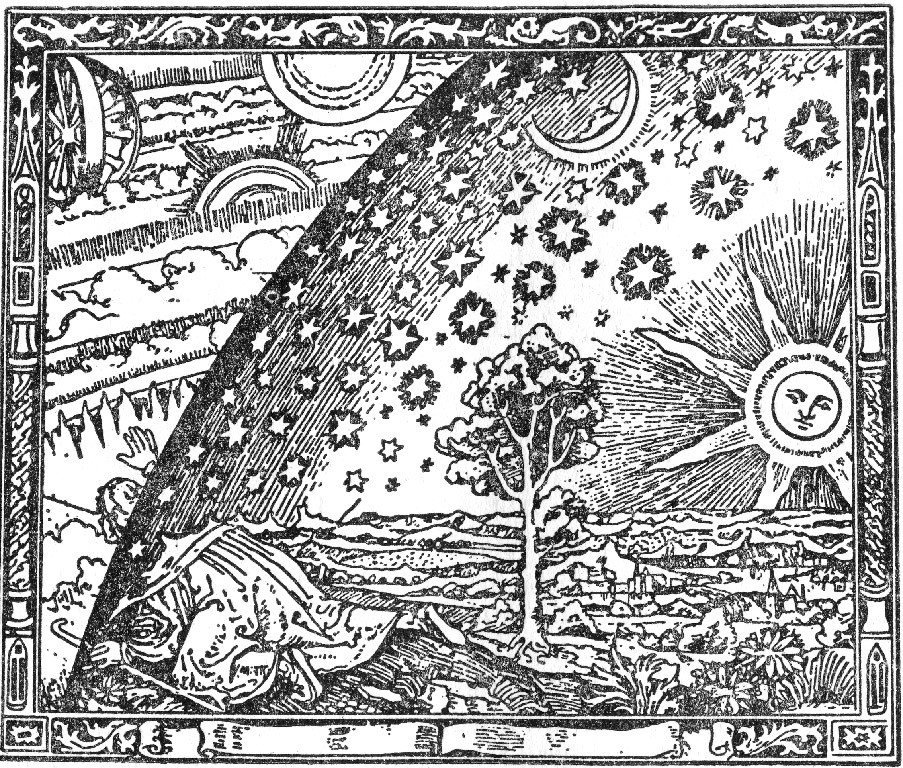
Gur029b
Anonymous – Camille Flammarion, L’Atmosphere: Météorologie Populaire (Paris, 1888), pp. 163

There are natural laws built into the fabric of our existence. Laws like gravity.

These laws, that can be tested by science, are necessary for our existence and are very finely tuned. So much so, that they are difficult to imagine originating on their own by chance.

One such law is so finely tuned, it has been shown that to have happened naturally on its own, by what we know about our universe without something to finely-tune it (God), would be absurd. To have happened on its own would practically be impossible; this law is the cosmological constant.

Scientific theorists have pointed to other possibilities to get around the need for a fine-tuner, one popular idea is that our universe is just one of an infinite number of universes, each with it’s own naturally developed laws. This means that within this “multiverse”, it isn’t absurd to think that our universe is as finely tuned as we measure it to be because if there are an infinite number of universes out there, then at least some would end up with ideally tuned laws for the existence of life.

Scientifically there is a problem with theories like these; they are not scientific. At least not in the sense that they can be measured, observed, and quantified.

Despite this problem, there are many scientists who entertain this idea of a multiverse or even outright believe it exists. The interesting thing is that many of these same scientists would likely be quick to dismiss the idea that God was the one who fine-tuned our universe making it ideal for life on earth.

The point of this article is that the Bible says that nature itself is evidence that God exists.

Romans 1:20
For ever since the world was created, people have seen the earth and sky. Through everything God made, they can clearly see his invisible qualities—his eternal power and divine nature. So they have no excuse for not knowing God.

The scientist who says that a multiverse explains our natural existence occurring by chance or the believer who says that God explains our finely-tuned existence by His eternal power are both making the same statement, and that statement is this:

“I have FAITH!”

If you would personally like to know the God who made our universe, the God who is love, the God who knows who you are and wants you to know Him. If you would like to know Him, just message us (Theologetics3.15@gmail.com), we would love to share!

By Clark Campbell
Theologetics.org

The Hidden “Verse” about Jesus in Genesis 5

Jesus
Christ Crucified between the Two Thieves: The Three Crosses Rembrandt (Rembrandt van Rijn) (Dutch, 1606–1669) Drypoint, engraving, and scraping; fourth state of five Gift of Felix M. Warburg and his family, 1941 (41.1.33)

The more I learn about God’s Word, the more I stand in awe at how amazing God is. To think, that the book of Genesis, a book written over 1,400 years before Christ was even born, contains specific information about God’s plan to redeem the world by sending his only Son Jesus, it is simply incredible.

This is a subtle foreshadowing of Jesus in Genesis 5, I first heard about this subtlety in a short YouTube video which is linked at the bottom of this article. Now it should be noted that Hebrew cannot be perfectly translated into English, or any language for that matter, so some may disagree on the definitions presented but each one is a definition of the name or the idea behind the name, so I feel the following is pretty amazing!

In Genesis 5 the genealogy from Adam to Noah and a meaning of each name in English is as follows:

1. Adam = Man
2. Seth = Appointed
3. Enosh = Mortal
4. Cainan = Sorrow
5. Mahalalel = The Blessed God
6. Jared = Shall come down
7. Enoch = Teaching
8. Methuselah = His death shall bring
9. Lamech = The despairing
10. Noah = Rest

Some names have multiple meanings and roots but one translation of each of the ten names, one name after the other reads:

Man Appointed Mortal Sorrow,
The Blessed God Shall come down Teaching,
His death shall bring The despairing, Rest

So there you have it. The story of Jesus in the 5th chapter of Genesis. These names, starting with Adam from the beginning of creation, to Noah around 2,000 years before Jesus was even sent to earth, outline what God had planned all along to get his children back. Not only that, but this is another example of Christ’s divinity.

I believe that God has a reason for every single word in the Bible, every period and every comma, on more dimensions than we can even imagine. Because of that, I believe the ideas behind these names can be translated this way for a reason, and that reason was to show the world in yet another context, that God loves us so much that he gave his One and only Son to save us from our sin!

1. http://www.abarim-publications.com/Meaning/Adam.html#.VjxQaKSlr7s
2. http://www.abarim-publications.com/Meaning/Seth.html#.Vjw8E6Slr7s
3. http://www.abarim-publications.com/Meaning/Enosh.html#.VjxH26Slr7s
4. http://www.abarim-publications.com/Meaning/Cainan.html#.VjxHyKSlr7s
5. http://www.abarim-publications.com/Meaning/Mahalalel.html#.VjxIWqSlr7s
6. http://www.abarim-publications.com/Meaning/Jared.html#.VjxI8aSlr7s
7. http://www.abarim-publications.com/Meaning/Enoch.html#.VjxOraSlr7s
8. http://www.abarim-publications.com/Meaning/Methuselah.html#.VjxPQqSlr7s
9. http://www.abarim-publications.com/Meaning/Lamech.html#.VjxUrKSlr7s
10. http://www.abarim-publications.com/Meaning/Noah.html#.VjxQBaSlr7s

http://www.youtube.com/watch?v=WsPhPldS6ys

Is Theology and Apologetics Really That Important?

marshill
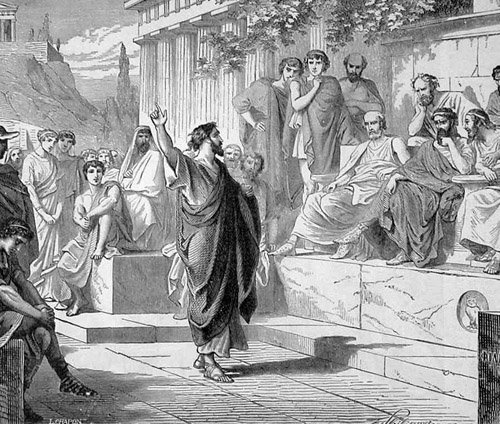
Saint Paul Preaching on Mars Hill (19th century). T. Shilippoteaux. Engraving. © The Provincial Museum of Alberta. PMA:J99.1968.

“Can’t we just read the Bible and worship God without getting all technical?”

Theology is the study of God and is very important. It helps us to understand the God to whom we are worshiping. Proper worship is based on an accurate understanding of who God is. Anytime anyone says anything about God, what is said is something doctrinal. Theology shapes our image of God and if a person’s theology is false then his or her image of God will also be false, which would ultimately lead to idolatry.

In math, the proper answer will proceed from a proper path.

1 + 2 + 3 + 4 = 10

In the same way a proper understanding of who God is, what He would do, and what He wouldn’t do; will inform our doxology (praise) and better guide our prayers.

“Are all these big words and facts really that important?”

For salvation? No. Salvation is not found in head knowledge. However, knowing who God is will help us appreciate Him more, understand the Bible better, and also help us discern false teaching.

Often times we have conversations with family, friends, co-workers, church members, and strangers about God or the Bible. At this point you have just assumed the position of theologian. Apologetics, is the term for defending biblical and theological truths. When these discussions become debates or if you’re just defending you position, you have become an apologist. The more “tools” you have in your mental “toolbox” the better equipped you are to make a defense.

“What about witnessing, isn’t it true that arguing will often just hurt your witness?”

Actually no. If a Christian is just trying to win an argument then he or she will probably do more harm than good but if we allow the Holy Spirit to use the knowledge we have to change a non-believer’s false beliefs about the Bible, Christianity, and God, ultimately this head knowledge can make a huge difference in that person’s heart.

With that said, as Christians, we need to make sure the reasoning we use is sound and that we don’t jump on any “bandwagons” when it comes to modern scientific discoveries. Any scientific argument we use to show that the Bible is accurate could one day be shown to be different or even false, and what the Bible was actually saying may be quite different than what we originally thought but the mistake is not apologetics itself, it would be putting too much trust in man’s knowledge and not enough in the Bible.

An example of this is that through false assumptions and faulty dating methods, many modern scientists believe human life has evolved from smaller and less complex lifeforms over millions of years. While it is quite clear in the Bible that this is not the case and it can even be logically and scientifically shown to be false, there are many Christians who have tried to make the argument that God used evolution to create life. By “jumping on that bandwagon” and taking that stance, it actually weakens the validity of God’s Word because God clearly said in Genesis (written as a historical narrative) that he created everything in the universe in 6 literal days. So when a Christian’s argument becomes making the literal in the Bible something figurative, the Bible becomes a fairy tale instead of something real and that is very sad and dangerous.

I would be remiss if I did not include several disclaimers:

  1. Knowledge of God does not equal a relationship with God. Reading a famous person’s autobiography does not mean you had any kind of relationship with them.
  2. Rebutting objections does not equal evangelism. The goal should be to move someone towards the Gospel.
  3. Head knowledge without the knowledge and guidance of the Holy Spirit can lead to haughtiness and pride. You’re not required to attend each argument you’re invited to. Sometimes the Spirit will move you to be quiet even though you’re knowledgeable on the subject. Sometimes the humble unlearned person will gain spiritual insight and uncanny knowledge when they haven’t been taught by any human. Remember “God apposes the proud but gives grace to the humble.” (James 4:6)
  4. If you read this and want to know more about Jesus, please send us an email at Theologetics3.15@gmail.com we would love to talk with you!