Martin Luther, a Catholic monk(1483-1546), known for beginning the Protestant Reformation (largely why so many of us in the West aren’t Catholic), spoke out against the Catholic church’s abuses of the time. He wrote the popular 95 Theses, pointing out the corruption of the church and government. Nearly 500 years later, he was respected, so by Michael King Sr. that he changed his and his son’s names to Martin Luther King Sr. and Martin Luther King Jr., who was also strongly influenced by the writings of Martin Luther.
The same Martin Luther was extremely anti-semetic, especially in his later years. He wrote “On the Jews and Their Lies,” in which he called for the destruction of the homes and synagogues of the race of people he called “envenomed worms.” These later teachings influenced and were used by Adolf Hitler to promote the extiction of the Jewish people.
The teachings of one man were, centuries later, used to change the lives of millions for the better. And that same man influenced an evil that murdered millions and brought the world to its second war.
The Bible is clear on the power of words. We’ve all experienced the pain and destruction of someone’s verbal assault and, conversely, the nourishment and liberation of someone’s kind and wise words. In the end, our words have power-they can build up or break down, heal or harm. Once spoken, they can not be taken back. So choose them wisely, and let them reflect the respect and integrity you stand for. Be careful of the words you speak.
Let me preface this by saying that I have no official training in psychology, psychiatry, counseling, or mental health. What I am about to write is purely based on my experience with human nature in my 40-plus years of living. It is not intended to be a substitute for actual biblical counsel or clinical help. Therefore, take this blog with a grain of salt.
Jesus with Martha and Mary by Gustave Dore
In recent decades, there has been an uptick in diagnoses in anxiety among those of us in the West. Even for those of us who haven’t been clinically diagnosed, there seems to be an underlying anxiety that pervades our everyday lives. While there are multiple angles from which we can approach the problem of anxiety, I believe one very real reason is our unending busyness.
The reason I call it “unending busyness” is that even in our relaxing, we remain busy. Our minds are constantly being stimulated when we should be truly at rest. We’ve become so accustomed to noise and chaos that we even need noise to help us sleep.
I believe since the advent of personal electronic entertainment; we have slowly begun to lose our personal mental peace. What started off as a handful of channels of broadcast television that we had to wait to watch when we got home or maybe saw as we shopped in a department store, then grew into more channels with cable and even more with satellite. With the convenience of the remote control, we could easily flip between hundreds of channels without having to get up. This instantly gave us access to all kinds of news, sports, shows, and movies at the push of a button. Then came the option to have a TV that showed one channel in a little box inside the picture of a separate channel.
We then move to having personal computers and the internet in our homes. So now, on one device, we have hundreds of TV channels, and on another device, we have an untold number of websites we can access. During this time, most computers had to be plugged into the 1 phone line of the house to access the internet. We went from needing to go to the library and search through countless books in order to do that research paper for school, to being able to Yahoo or Google whatever we wanted to know and having the results in a few seconds.
Since the time televisions made their way into our homes, we saw the invention of the grocery store, the interstate system, dishwasher appliances, the microwave, and all kinds of “instant” foods. This made wait times for almost anything in life much shorter than ever in human history and made life more effortless.
Enter the smartphone in the mid-2000s. Now, we have access to the internet, movies, and an interactive phone book in the palm of our hands. Not only that, but all members of the household also tend to have their own smartphones. There used to be one tv, one computer, and one phone line for multiple people, and everyone had to wait their turn. Now, there’s no need to wait. We don’t have to wait on letters from loved ones across the country or even across the world because we can DM them and get an instant response. We sit down after a hard day of work, and instead of letting our minds relax, we bombard it with news feeds and reels and images of more stuff we want to buy that we don’t need. We see other people post their personal drama, or we see other people post their vacations, which we wish we could be on because they look so peaceful (not knowing the anxiety they endured to get there).
Basically, our need to wait on things in life has dwindled drastically. We can get most of what we need or want with very little wait, if any. While I can appreciate all these things (I am using a smartphone to type this blog, BTW), life doesn’t really work that way. We feel like it does because of everything I mentioned above and some things I’m sure I failed to mention.
Because of the “instant” life we’ve become accustomed to over the past several decades, we think everything should be instant. We want to become healthy, but we don’t want to diet and exercise to get those results. That takes time, usually months and often years. And since it takes too much time, we choose not to do it, or we give up after a couple of weeks of seeing no results or we’d rather take diet pills instead. We want to get good grades, but we don’t want to sacrifice the time to sit and study the material. We don’t want to read books. We want to watch the 10-minute YouTube video about it. (We actually don’t want to watch the 10-minute YouTube video about it. We want to watch the 30-second TikTok video about it.) We want to be financially secure, but we don’t want to save and invest to have that financial freedom when we get older. We want big houses and nice cars early in life. We want the higher pay on our jobs without having to put in the long hours and move up the ladder (I’m not saying we shouldn’t all be paid a fair wage, but I do believe the wage should be commensurate with the amount of skill and training it takes to do the job).
I mentioned the interstate system earlier. In older cars, there used to be a designation at the 55 mph maker on the speedometer. That’s because the speed limit on America’s interstates used to be 55. Now, speed limits are 65, 70, and even 80 in some states. As Brooks said in The Shawshank Redemption, “The world went and got itself in a big d**n hurry.” If anything takes a minute or even a second longer than we think it should, we lose our minds.
So, this is what happens: You drive 10 miles an hour over the speed limit on the way to work, getting upset at the person in front of you actually going the speed limit. You’re irritable because you fell asleep with YouTube playing on your phone and America’s Got Talent on the TV at the same time, not letting our minds rest from the constant distraction. But, YouTube was really playing in a corner of the phone, and you got lost in the comments section of the latest political fiasco. Now you get to your understaffed place of work where you’re doing the jobs of 3 other people. Wait, Kevin called in again? He always calls in sick on payday! Ok, now you’re doing the job of 4 people. And of course, you remembered it was payday. You’ve been looking forward to payday since the day after last payday because you’ve accumulated way more expenses than your grandparents had. They were content with their one tv and one house phone and 2-bedroom house for a family of 5. Now, it’s after work, you’re tired, and you drive home 20 miles over the speed limit, knowing there’s a chance of getting pulled over by the police. Just the thought creates more unnecessary anxiety. Oh well, it’s just another stressor you’re willing to live with just for your ride to be over quicker. And of course, you’re thinking about all the responsibilities you have when you get home. Does any of that sound familiar?
As an adult, it seems that time flies by faster with each passing year. When we were growing up, time seemed to pass so slowly. But I think that possibly creates another kind of anxiety in children. They, too, are used to the fast paced instantaneous way of life, but at the same time, they have to wait for everything. Wait to be given permission. Wait till after dinner. Wait till they’re older. Wait till summer. Wait until the adults stop talking. The younger a child is, the less they understand the concept of time. The younger they are, the more they want whatever they want NOW. Yet our society and modern technology has somewhat enabled that they can, in fact, have it now. Whatever “it” may be. And we wonder why teenagers think we’re out of touch with reality if they’re told to wait till marriage to express one of their strongest and natural desires.
Therefore, I believe our desire to make things more convenient for us has caused us to become impatient. In our impatience, we have lost the ability to sit still, truly still. We have created too many distractions. With our distractions, we have become entirely too busy. We have become so accustomed to the chaos of busyness that our rest is seldom truly restful. And when we are truly resting, we are bored, fidgety, and needing something to stimulate us. Our anxiety never really leaves us.
I’m not saying that there aren’t truly people who suffer from very real anxiety due to perhaps chemical imbalance. Some types of anxiety may truly need medication to be helped. But I believe some anxiety can be helped, even possibly cured, if we choose to intentionally create times of quiet, times of reflection, of prayer, of meditation in our lives. What if we set our clocks for 10 or 15 minutes earlier and have that time dedicated to prayer and meditation? I’m not talking about praying while scrolling Instagram or Facebook. I’m not talking about meditation with the TV on in the background. Or what if on our commute to work, we turned the radio off and sat and listened quietly to what God has been trying to tell us? What if we made time during our lunch break to find a quiet place at work and catch up on some reading? What if we got home from work and made it a point to spend quality time with our families and acted as if there were no smartphones? What if we turned off the screens 30 minutes before bed so our brains could truly wind down? What if we chose to live more simply? What if you set timers on your favorite apps and/or video games in order to have quiet time? Look at your life and ask yourself what you could do to intentionally make peaceful moments every day in your life, however your life may look.
The main question is, what if we truly sought after God? What if we chased after God the way we chase after things? If you live a very busy life, putting away some distractions may be very hard to do at first. It may take some time to create a new normal. However, peace comes intentionally. Being still enough to hear God’s voice comes with intentionality because we may never hear it through all the noise. Understand that it may take some time, but anything good worth having is worth pursuing.
Read: Psalm 46:10, Philippians 4:6, Matthew 6:25-34, Luke 10:38-42
If God can do anything He wants, why doesn’t he just forgive sin? He’s all-powerful. He’s the epitome of love. So, why did He need a sacrifice for sin? Why doesn’t He just say to everyone, “Poof your sins are forgiven!”
The Return of the Prodigal by Rembrandt
In the beginning, we are told that God gave mankind one rule: don’t eat the forbidden fruit. We only had that one rule. We still disobeyed. God drove man from His earthy temple, Eden, but not before telling them a promise. We’ll get back to that promise later.
Why would God need to send them away, though? Couldn’t He just have said, “I forgive you. Don’t do it again. Stay and enjoy paradise”? Furthermore, later in Scripture, we are told that God requires us to forgive someone who sins against us, and if we don’t, then He won’t forgive our sins. But wait. Why do we have to be the first to forgive? Is that even fair?
Well, I believe that to understand this, we must first understand who God is and who we are in relation to God.
God, who is the most perfect being, created man. Man is not a perfect being. As I stated earlier, the earliest man couldn’t even keep one rule. God is all-powerful (omnipotent), all-knowing (omniscient), and the ultimate goodness (omnibenevolent). Man is none of these things. We can only know so much, do so much, and have a limit on how good we can be. God, because of His omnibenevolence, cannot sin. Since we do not have that attribute, we do sin.
To illustrate my point, let’s say I kicked a small rock down the road. It’s not a being that can not feel or think because it’s incapable of life. I’ve done no wrong. Now, let’s say I’ve kicked a bug that wasn’t bothering me. I’ve likely caused it harm or even killed it, and this action probably speaks negatively about my character. But it basically stops there. Now let’s say I continue down the road and I see a dog and decide it’s a good idea to kick it. Well, if it doesn’t bite me, I could actually be charged with animal cruelty in many places and if it’s someone’s pet, the dog has more intrinsic value bestowed on it, and I could get in trouble with its family also. There would be even more trouble for me if I chose to kick one of the dog’s human owners.
Basically, as I moved up the “hierarchy” of existing things, I committed more of a trespass against each thing. Even if I was never caught, most people would probably agree that some cosmic or divine justice would (or at least should) await me for my moral failing. The higher the being, the more I would be indebted to some sort of restitution even if it’s just an apology.
This brings me to my point. Our trespasses (sins) against a Being who exists in infinite goodness increases because of who He is. The increase is so much that an infinite punishment is the only justified payback.
When man sins against man, the debt is much less than when man sins against God.
Jesus told a story about a master who called his servant to him to settle an outstanding debt he owed the master. The servant begged and pleaded that the master would be merciful, and the master was. Later, the servant sees another servant who owed him much less than the first servant owed his master. The second servant begged for mercy, to which the first refused to listen and had his family thrown into prison until he received his money. The king heard about the incident. “You wicked servant! I forgave you all that debt because you pleaded with me. And should you not have had mercy on your fellow servant, as I had mercy on you?” He then had the servant thrown into prison until he could repay the debt. (Read Matthew 18:23-34).
Immediately before Jesus told this story, his apostle Peter asks how often he should forgive his brother if his brother sins against him. “As many as seven times?” Peter inquires to which Jesus answers, “not seven times, but seventy-seven times.” Some translations say seventy times seven. By following up Peter’s question with the above story, Jesus illustrated that sins against the Master are exponentially greater than sins against each other.
When you read the parable, take note of the amount that the servant owed his master: 10,000 talents. A “talent” was twenty years wages. Twenty years!! One talent=20 years wages. This man owed 10,000 talents to his master. That’s 200,000 years of wages he owed. There was no earthly way that this man could have repaid that debt. The amount his fellow servant owed him was worth only a few hundred days of work.
You may ask, “Since Jesus told the story, and He said that the master was just going to forgive the servant, why can’t God just forgive us?” The point of the parable was to show how our sins against each other pale in comparison to our sins against God. But it does remind us that God is merciful.
I’ve mentioned that God is all-powerful, all-knowing, infinitely good, and merciful. I must add that His goodness goes hand in hand with another attribute, His justice. As a good and just judge, he must punish wrongdoing. Otherwise, he is neither good nor just. Take a moment and think about some of the bad things you’ve done in life knowing what the punishment could have been, and you still proceeded to do the evil deed. How brazen we can be! Now imagine the only “punishment” awaiting our evil deeds was God saying, “Ahh, it’s all good! Just don’t do it again!” You better believe we’re gonna do it again! So, since it’s not “all good,” He punishes because He is all good. And since He is all-good, He still makes a way for us. How? He paid our debt, nailing it to the cross of Christ. (Colossians 2:14)
In conclusion, since God is the highest being (The Most High), any sin against Him is of the highest offense. Any sin man commits against his fellow man is not. Therefore, God does not have to forgive us just because He is good. Instead, because He is good (and just), He must punish sin. However, the good news is that Jesus, the promise God told Adam and Eve, took our penalty for sin on His own back by dying on the cross. The ultimate goodness took on the ultimate punishment. Those who repent and believe this are forgiven and free. And if you are forgiven, you must forgive others.
Earlier today, I read a well written article on a popular Christian website. The name of the website escapes me, though. The name of the article is the same as this blogs title. The conclusion of the article was basically “Yes. God cares.”
Without going into the details of the article (mainly because I can’t remember), I will touch on some reasons that I believe their conclusion was correct, but I will give one reason that I believe they missed altogether.
One often quoted “Bible verse” that’s not found in the Bible is “Come as you are.” Yes, this verse is not in the Bible. However, the concept is. The Gospel message itself is that you bring your sinful, broken self to God and He makes you into a new creature. He changes your heart and conforms you into the image of his Son. So basically we don’t fix ourselves before we come to God. We can’t. We come to God as we are and let him do the changing to us.
In the context of how we dress for church, the phrase “come as you are” is used quite often. The article I mentioned above touches on this phrase. What I think they left out is that, if we are truly saved, we come as we are but we aren’t supposed to stay as we are. When God changes our hearts, even the way we dress may change. And if the way we used to dress was immodest then it is my strong conviction that how one dresses would change also.
I know that anytime the topic is brought up most people immediately think about how some women show up to church. Mine does. However, in no way should this apply to women only. While women may wear skirts or dresses that are too short, men might wear shirts or pants that are too tight.
I’m often told by the older saints that the “church mothers” or ushers would place a small blanket over the exposed legs or shoulders of younger ladies that they feel are dressed immodestly for church. I think there was a time where we expected the older folks in church to hold the younger believers accountable. But now we sneer at anyone who tries to tell us that what we’re doing or what we’re wearing might not be appropriate, even in church. We think no one can judge us but God. We have to remember, though, that “Do not judge” is not a stand-alone verse. Judging rightly is a command stated over and over in Scripture. But are we to judge those who aren’t believers? The Apostle Paul says in 1 Corinthians 5:12, “For what have I to do with judging outsiders? Is it not those inside the church whom you are to judge?” The outsiders he mentioned here are unbelievers. Paul is saying not to hold unbelievers to the same standard of Christians.
So maybe an unbeliever or a new believer comes through the church doors wearing something we deem immodest. What do we do as believers? First let’s look inward. As my mom used to tell me “If I point one finger at you I have 3 more pointing back at me.” Scripture says in Matthew, chapter 7, “first pull the plank out of your own eye so that you may see clearly to get the speck out of your brothers eye.”
Second, we should ask ourselves if what we claim to be immodest is just tradition mistaken as God’s word. Is it a woman wearing pants? Does the Bible forbid women to wear pants when there were no pants in the Bible? Is it that a man is wearing shorts and sandals? Is that immodest or just not how we think people should dress in church? Is someone wearing jeans when you think they’re supposed to have on a suit immodest? Are any of these examples inappropriate for church? Not really but if it bothers the wearers conscience then, for him, it is. No one should go against their conscience (Romans 14:23). On the other hand, some articles of clothing are inappropriate for church. If an individual is showing too much skin or can barely sit or walk up stairs because they’re afraid of exposing something, it might be a bit much for church. If your clothing is so tight that it leaves little to the imagination, then it’s probably best you leave it at home. If the clothing is so flashy that you’re getting all the attention, maybe save it for another occasion. The focus during church service should be on God, not ourselves.
Going back to the title, the subject is “we”. Who is the “we” in the title? “Churchgoers” one may say. Well, in every attempt to find the original article that I read with that title, I see many Christian websites have articles with the same title. So, to me, the “we” is not just churchgoers but believers. To me asking the question if God cares what we wear to church is akin to asking if God cares how we act, talk, dress, and think in any situation. The answer is emphatically yes!
For the Christian, according to Martin Luther, there are two kinds of righteousness. There is coram Deo and coram mundo. Coram Deo is our righteousness before God. Coram mundo is our righteousness before man, like how we treat each other. As we gather on Sunday, Wednesday, Saturday, or whenever we gather with the saints, we should dress and speak and act in a way that does not cause stumbling to other believers. Our Christian life is not only for our benefit but it should be for the benefit of those within our sphere of influence and for the edification of the Church body. I would dare say that there is no true Christian independence. We’re all in this together.
The way we dress is also a reflection of our coram Deo. To live coram Deo is to live one’s entire life in the presence of God, under the authority of God, to the glory of God. The way we dress, act, speak, and think should always give glory to God. If God has truly changed who we are then the way we think and act will reflect who we are in him. The moon reflects the light it gets from the sun. In the same way the Christian should reflect the light it gets from God. Like the moon, the Christian has no light in and of itself. The moon gives testimony to the existence of the sun. The Christian should likewise give testimony to the existence of God. If there is no change in the life of the Christian from his or her former self or a change in the life of the Christian from the unsaved world around them, then they aren’t giving glory to God. And if they aren’t reflecting the light of God then, perhaps the light of God is not in them.
In conclusion, the problem with the “come as you are” mentality, is that as a Christian, we are not supposed to stay as we are. We are supposed to change from the person we used to be. There is supposed to be an obvious difference in the person we were and the person we are in Christ. There is supposed to be an abundant difference in unbelievers and believers. At times that means our wardrobe changes also. So let us look up, out, and in. During service, as we gather to worship The Most High God (up), let us come in reverence. Let us not forget He is holy and commands us to be holy as He is holy. Let us also do what is in our power to not cause our fellow believers (out) to stumble. Lastly, let us look and judge ourselves (in) first before we tell or suggest anyone else change how they come to worship God. Remember, man looks at the outward appearance, but God looks at the heart (1 Samuel 16:7).
———
P.S.
Grace. We all need to show each other grace. Even in judgement, we have to extend grace. We extend grace because we have been shown the grace of God. If a brother or sister in Christ needs correction, we should be graceful about it. Likewise, we should be graceful in receiving correction. Sometimes God uses God’s people to do God’s work.
Introducing our FREE 1 month Devotional! It’s based on our God’s Attributes poster that can be found and also downloaded for free. We pray this devotional not only informs but draws each reader closer to their Creator. Don’t forget to share it with others!
As for me, I shall behold Your face in righteousness; I will be satisfied with Your likeness when I awake. – Psalm 17:15
While listening to Philip de Courcy on his radio program yesterday, I listened to him talk about the resurrection of man. He briefly mentioned cremation and it reminded me of something that I’ve thought of many times throughout my life. Can a Christian get cremated? And by “can” I mean does Christian doctrine teach against it? And since I don’t want to commit the argumentum ex silentio fallacy, I don’t seek to argue that if scripture is silent on it then it is permissible.
So let’s start by asking if scripture does in fact explicitly permit or condemn cremation. The answer to that is no. Nowhere in the Bible is cremation prohibited or permitted. The only instance where cremation seems to be mentioned is in 1 Samuel 31: All the valiant men arose and traveled all night, and took the body of Saul and the bodies of his sons from the wall of Beth Shan; and they came to Jabesh and burned them there. Then they took their bones and buried them under the tamarisk tree at Jabesh, and fasted seven days.(verses 12-13) However, in modern forms of cremation the body is burned and the bones are ground into powder. This powder is what we call the “ashes”. So King Saul and his sons weren’t really cremated, per se.
Growing up, I always thought cremation was a bit of a taboo or just flat out wrong in Christianity. I’m not sure if it actually was taboo or if it was just my own perception. Especially as a child, the idea seemed a bit “hellish”. But, with the many articles on Christianity and cremation circling around the internet, I don’t suppose I was the only one thinking this.
One reason I thought it was wrong is because of the resurrection of the saints during the end times. I thought that good Christians should be buried as long as it is feasible to do so. But as I grew and learned in knowledge a few things came to mind.
1. If God can create man from dust then He can resurrect man from dust. He did say in Genesis that we would return to dust.
2. Many Christians haven’t had the opportunity to be buried. Some have been persecuted and torn apart by lions. Some have been lost at sea decaying in water and the marine life eating their remains. Some have been burned at the stake for their beliefs. John Huss, a Czech theologian, was burned at the stake and his ashes scattered in the Rhine river to prevent his followers from burying him. John Wycliffe (whose early English translation of the New Testament paved way for William Tyndale’s first full English Bible) had his remains exhumed from his grave, his bones burned to ashes and thrown into the river all because his writings were considered heretical. What about these people at the resurrection? The particles that made up their bodies are now so far separated that it would seem impossible that they could get pulled back together. But we must remember what Jesus said in Matthew 19:26,”…with God nothing is impossible.”
3. There’s also the fact that the Bible doesn’t just say that the saved will be resurrected. Acts 24:15, “having a hope in God, which these men themselves accept, that there will be a resurrection of both the just and the unjust.” John 5:28-29, “Do not marvel at this; for the hour is coming in which all who are in the graves will hear His voice and come forth—those who have done good, to the resurrection of life, and those who have done evil, to the resurrection of condemnation.” And even that the seas themselves will give up their dead (Revelation 20:13).
Therefore, my reasoning was false as to why I thought Christians shouldn’t be cremated. A God that spoke the world into existence can easily form new resurrected bodies. No matter what state the remains of the believer (and nonbeliever) are in, God will assemble.
Does this mean that cremation is a viable option for believers? Well, where scripture is silent, we let the Holy Spirit guide our conscience. Sometimes it would be a better financial choice since the average cremation can be around 90% cheaper than the average funeral. It’s something that should be discussed with loved ones and prayed about earnestly.
the·od·i·cy (thē-ˈä-də-sē ) noun – An explanation of why a perfectly good, almighty, and all-knowing God permits evil
Habakkuk 1:2-3(ESV) O Lord, how long shall I cry for help, and you will not hear? Or cry to you “Violence!” and you will not save? Why do you make me see iniquity, and why do you idly look at wrong? Destruction and violence are before me; strife and contention arise. So the law is paralyzed, and justice never goes forth. For the wicked surround the righteous; so justice goes forth perverted.
In a world full of such beauty and love and happiness, we also find sadness, pain, and disaster. There are tornadoes, hurricanes, earthquakes, plane crashes, school shootings, holocausts, wars, rapes, all manner of diseases, death… The Christian view of God is that He is good. That God is in control. That God cares and loves His creation. If this is true, then why is there so much suffering? This is perhaps one of the biggest if not the biggest stumbling block to many people when it comes to understanding God. And not just understanding God, but a lot of people just reject the notion of an omnipotent and omniscient God because of what’s known as the “problem of evil.”
Why does a good God allow evil?
Ancient skeptic and philosopher, Epicurus, said of God, “Is he willing to prevent evil, but not able? Then he is impotent. Is he able, but not willing? Then he is malevolent. Is he both able and willing? Whence then is evil? Is he neither able nor willing? Then why call him God?”
Are God and evil mutually exclusive? Does the existence of evil negate the existence of God? Some would say that to have both in the same universe would be a contradiction.
First let’s start with definitions. Let’s define “God” and “evil.” Merriam-Webster online defines God as “the Being perfect in power, wisdom, and goodness who is worshiped as creator and ruler of the universe.” They define evil as, “arising from actual or imputed bad character or conduct. The “archaic” form is “causing discomfort or repulsion.” So, for its use in this blog “evil” consists of both natural and man-made trouble.
So God is defined as “perfect in power.” This means He can do absolutely whatever He chooses to do. As the Psalmist said, “He does whatever He pleases.” Being perfect in power He can stop all evil.
“Perfect in wisdom” means that He will never make a mistake and everything He does is absolutely wise. And being perfect in goodness means that all goodness dwells in Him and in Him there is no evil.
So if this all powerful, all wise, all good God exists and sees the evil in the world, why doesn’t He stop it?
Well we must ask ourselves what exactly is it we want stopped. Do we want God to stop all evil? If so and you’ve ever had an evil thought then you would want God to control your thoughts. If you’ve ever uttered an evil word, you would want God to control your speech. If you’ve ever done an evil deed or even made a mistake that caused harm, you would want God to control your actions. Therefore, we are asking for one of two things if we want God to stop all evil: 1. That God take all free will from mankind, or 2. God kill us upon our first evil thought, word, or deed.¹ And we can’t ask that justice be done to others and not to ourselves.
Now let’s break down Epicurus’ argument:
Is God willing to prevent evil? Well if He is good we would have to say yes. We also know from the Bible that He is willing to prevent evil. He Himself heals. And He sends people out to heal the sick, warn people of judgement, and free slaves.
Is God able? A perfectly powerful God is definitely able to prevent evil. But ability doesn’t mean necessity. A good God may allow things that we deem bad for other purposes. He doesn’t have to stop evil.
Whence then is evil? Or from where does evil come? This is an important question to consider when pondering the existence of a good God when evil is so prevalent in the world.
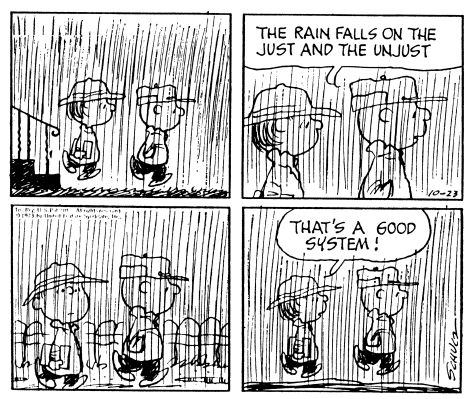
Is evil “bad” just because it causes discomfort and repulsion? If so, the act of a parent correcting a child is “evil.” But of course a parent correcting a child is doing a good thing. But it feels bad. It causes discomfort and no child- nor any adult for that matter – likes correction. And, of course we can say that a parent, or teacher, or friend that corrects is doing it for the other person’s good. Therefore, we would rarely call it evil because we know there is love behind it. So we can logically say there are some things which feel bad that actually aren’t. We can also look at childbirth, growing pangs, the pain we get in our muscles from exercise that facilitates gaining strength: not all pain and discomfort are bad.
But of course there are those things caused by wrongdoing. People with malicious intent doing bad things for a bad purpose. What are we to make of that? And if God can stop them and if it’s in God’s good will to end evil then why doesn’t He stop them? Well as I mentioned earlier, where then would free will be? God can do whatever He pleases, but to stop all evil men from doing evil deeds He would have to stop all evil hearts. As Jeremiah tells us, “The heart is deceitful above all things, and desperately sick; who can understand it?” This would mean at best we would all be “robots” with no will of our own, or at worst destroyed at the first bad thought.
What about “natural evil?” Stopping that wouldn’t inhibit human free will, right? Why doesn’t God stop natural disasters? Well, it would seem that most people “accept” natural evil as “nature being nature.” Not that they like all that happens in nature, per se, but that those things that happen naturally are more acceptable than “moral evil” caused by man. But for the atheist, the discomfort “natural evil” may cause has no good or bad to it. Actually, it should be seen more so as a good thing if it is just nature doing what nature does. It would be just the earth or universe replenishing itself or going through its phases. If plagues happen, it’s just nature. So why seek to cure disease? Also, what about nature would the inquirer want God to stop? Many aspects of nature that can harm us are also things that we need to survive on this planet. Would God need to make water less dangerous to prevent drownings? He would need to make the composition different, but then it would cease to be water. Lightning is another example. Lightning strikes kill many people every year. But, we need lightning. All life requires nitrogen-compounds and “the enormous energy of lightning breaks nitrogen molecules and enables their atoms to combine with oxygen in the air forming nitrogen oxides. These dissolve in rain, forming nitrates, that are carried to the earth.” (http://www.biology-pages.info/N/NitrogenCycle.html) Basically, we need lightning for healthy air and fertile soil.
Well, you might say “that’s all well and good but an all-powerful God could prevent lightning from striking people.” And you would be right. But, once again, that would involve preventing me from being in a certain place at a certain time so that I am not struck by lightning. “Well doesn’t Christianity claim that God does, in fact, intervene sometimes to prevent such occasions?” Yes, whenever God intervenes to prevent what would otherwise have happened, that is called a miracle. As Christian philosopher C.S. Lewis writes, “That God can and does, on occasion, modify the behaviour of matter and produce what we call miracles, is a part of Christian faith; but the very conception of a common, and therefore stable, world, demands that these occasions should be extremely rare.” Have you or someone close to you said after some natural or otherwise unfortunate event, “I was supposed to be there at that moment but ________ happened and I’m alive because of it.”?
Now back to God’s wisdom. When we are children, our parents often tell us that we can’t do something we want to do. We think we are smart enough and mature enough to do whatever it is, but our parents spoil the fun with a “No!” or “Stop!” and sometimes, if we’re lucky enough, we get an explanation of why. Sometimes. Those other times we don’t get the reason because we wouldn’t understand it even if they told us. And we definitely wouldn’t agree with the explanation because we don’t understand it. Our parent’s life experiences and wisdom gained from those experiences have given them a better understanding of the world around us than we have as children. So, their no’s to us may seem cruel at times but it is often for our benefit.
God created the world around us and the universe beyond us. God sees the past, present, and future all at once. God, therefore, is more knowledgeable than our parents (and, of course, us) could ever have dreamed of being. Our knowledge is finite and therefore our wisdom and perception are finite. God is infinite and therefore His wisdom is infinite. So while we can’t always know the reasons of the pain and suffering we experience here on earth, we can know that God does. So, because of our ignorance the words of Job ring true, “Surely I spoke of things I did not understand, things too wonderful for me to know.” Job 42:3
Evil proves God exists. Why do we hate “evil”? Why would someone question why bad things happen? It is because we know that there is a standard of good and of rightness and therefore whatever is “evil” doesn’t seem to meet the standard. We know a line is crooked because we know of straightness. Anything that goes against the “transcendentals” (truth, beauty, and goodness) is evil, bad, or wrong. Since God is defined as perfect in goodness, He is the standard against which one judges evil. If God does not exist, whence then is evil? What standard does anyone have to judge evil? Evil and goodness would only exist as opinions.
If naturalism is true, the best hope we have is that we will return to the nothing from which naturalists say we came. That not only does pain end when we die but so does any amount of pleasure and joy. Nothing created us for no purpose and back to the void of nothingness we will return. All of our pleasures and pain on earth were for naught. No truth, beauty, or goodness awaits in exchange for all the suffering in the world.
However, the Bible tells us there is a reason that pain and suffering are in the world. Man’s sin is so potent that it affects the world. Adam and Eve’s disobedience caused death to come into the world. Before sin, there was no hard work, pain in child labor, shame, disaster, or death. The Bible also promises us that all will be made right again. That God is a God of justice. That one day man will be free from pain and suffering. That one day even nature will experience this freedom. This freedom is not just an absence of pain. Ceasing to exist could do that. No, this freedom from pain will be because of unconquerable and unending joy. This freedom comes to those who place their faith in God. This promise is for those of us that believe He has this gift awaiting us and that it is only available through His only begotten Son, Jesus. God has promised us that the pain on earth has been used to make a way possible to live eternally. The death that Jesus died on the cross was the death that brings us life. What was meant for evil, God is using for good.
“He will wipe away every tear from their eyes, and death shall be no more, neither shall there be mourning, nor crying, nor pain anymore, for the former things have passed away.” And he who was seated on the throne said, “Behold, I am making all things new.” Revelation 21:4-5(ESV)
Footnotes:
¹I present to you that this might be a false dichotomy. And it actually answers the question of “How can evil exist if a good God exists.” The third option is that God uses people to change things. He sometimes uses people to show the world His love and goodness. He uses people to spread His good news, administer justice and benevolence. Anytime God’s people do God’s will, we see God in action.
Today one of the most brilliant scientific minds has died. Stephen Hawking, a world renowned physist, was perhaps best known for his work studying black holes. His contribution to science will be remembered for generations to come.
Mr. Hawking was also an athiest. He said, “Before we understand science, it is natural to believe that God created the universe. But now science offers a more convincing explanation,” he said.“What I meant by ‘we would know the mind of God’ is, we would know everything that God would know, if there were a God, which there isn’t. I’m an atheist.”
My purpose in writing this is not to stress the eternal fate of Mr. Hawking. My purpose in this writing is to stress to believers the importance of being salt and light to a dying world. My purpose in this writing is to stress the importance of evangelizing. Spreading the Gospel of Jesus Christ to those who may die not believing.
There is a video that was released a few years back with Penn Jilette, performer and prominent atheist, in which he says, “If you believe there is a heaven and hell and people could be going to hell and not eternal life, or whatever, and you think that it’s not really worth telling them this because it could make it socially awkward… how much do you have to hate somebody to not proselytize. How much do you have to hate someone to believe everlasting life is possible and not tell them that?”
The death of a nonbeliever is nothing for believers to make snide comments about. Comments like “I bet he believes now,” are more prideful than helpful. There should be no rejoicing but rather prayers for his family.
Death should remind us all that our time on this earth is short. Everyone old enough to read this will most likely face God within the next 100 years. That’s not a long time. No one is promised tomorrow. Therefore, there should be an expediency for believers to spread Christ’s Gospel.
Penn Jilette continues in the video that if you see someone standing in the way of an oncoming truck how much would you have to hate them to not push them out of the way “This [hell] is more important.”
In conclusion, we should pray for Stephen Hawking’s family and that any family members who do not know Jesus would come to accept Him as their Lord and Savior. That they have peace during this difficult time in their lives. We pray they are surrounded with people who will comfort them.
Where your treasure is that’s where your heart will be also. -Jesus
There are often debates surrounding this question. Some say that tithing was only for Old Testament Israel. Some say that the mandate is still in effect for the New Testament Church.
So, which is it? Well, I’m not going to answer that question. You should prayerfully study the scriptures and be obedient to the Holy Spirit’s conviction.
But I am going to ask you, the reader, to reflect on a few questions.
1. What is the heart of the person asking this question? In Proverbs we read, “All the ways of a man are pure in his own eyes, but the Lord weighs the spirit” (16:2 and 21:2). Are we asking to find a loophole to be disobedient? Perhaps they are asking because they don’t want to give 10%. But the Bible says God loves a cheerful giver. So maybe we should ask not what we are commanded to do, but be joyful of what we get to do.
2. Isn’t everything you have God’s? He provides us our money, our food, our time, our talents, our gifts. Therefore, whatever we give back to God, He only allowed us to have in the first place. It’s not 10% of what we’ve earned, it’s 10% of what God made us stewards of. Everything was created by God, so everything that exists is His. “The earth is the Lord’s, and everything in it, the world, and all who live in it; for he founded it upon the seas and established it upon the waters,” Psalm 24:1-2. And Paul reminded Timothy that we brought nothing into this world and we can’t take anything out (1 Timothy 6:7).
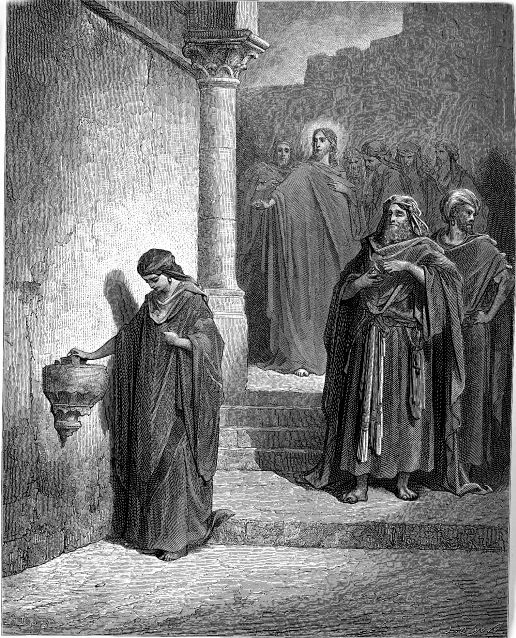
3. What would give God more glory, more or less of your earnings? Whatever gives God the glory also blesses the believer. Wouldn’t God get more glory with more of your time and possessions? If the Christian isn’t mandated to give 10%, God would still bless those that gave more of what they have. Scripture tells us that those who sow sparingly will reap sparingly (2 Corinthians 9:6). David Guzik states, “A farmer sowing seed may feel he loses seed as it falls from his hand to the ground, and we may feel we are losing when we give. But just as the farmer gives the seed in anticipation of a future harvest, we should give with the same heart.” In the New Testament, Jesus said of the widow who gave only a couple coins into the temple treasury, “Truly I tell you, this poor widow has put more into the treasury than all the others.They all gave out of their wealth; but she, out of her poverty, put in everything—all she had to live on.” This principle of giving is an echo of the widow in the Old Testament who gave her last bit of food to Elijah. Both widows gave all they had and were blessed as the result.
Are you willing to give 10% if God has commanded it? Are you willing to give it all to Him if He asks of it?
Like I stated, the purpose of this blog was not to be another arguing point for the tithing debate. But it’s purpose is for us to take a look at ourselves and our hearts behind our giving and not to be so black and white on the amount that we give. So, while I’ll leave the tithe debate up to others, I do believe these points I brought up are worth considering. All things considered, the Kingdom of God advances when the people of God give of their resources and time. What has God placed in your care that could be used? How are you making yourself available?
Further reading on giving: Deuteronomy 15:10-11, 16:17; 1 Kings 17:7-23, 1 Chronicles 29:6-17, Proverbs 3:9-10, 11:24-25, 21:26; Malachi 3:10, Luke 3:11, 2 Corinthians 9:6-15, James 2:15-16
Often in our lives we come upon difficult situations. We pray that God will handle these issues. We have faith that He will. We hope that He will. We wait on Him. But He seems to take His time. In the meantime we’re left waiting on progress or healing. We’re left waiting on a word from God or a display of His power and love. Often that is the plight of the believer. To wait on God.
It can get frustrating. We pray and pray and wait and wait. Sometimes it seems as though He is not there. Yet, we know in our minds and hearts that He is. We have seen Him work in our lives before. We have seen Him deliver us. We have seen Him heal us. We have seen His wonder working power in our lives and in the lives of others around us. But, when God seems silent we get impatient and faith can seem to dwindle. However, every new obstacle comes with a new lesson to learn.
Such was the case with the Israelites after they were freed from Egypt. Their leader Moses went before the LORD on Mount Sinai to receive instruction for the newly liberated Hebrews. They had just seen God’s power through 10 different plagues against the Egyptians. They had just seen God’s power as He parted the waters and they walked through the Red Sea. Afterwards they were waiting on Moses to come back with a word from God so they could make their way to the land promised them by God. They waited. And they continued to wait. I believe knowing that the promised land lay before them made them anxious and impatient. Their impatience with God caused them to commit a heinous sin, idolatry. They created a golden calf and began to revel and party. Why would they do this? Didn’t they know that a golden calf had no power? I think they knew this but since they didn’t hear from God when they wanted to they chose to make a god that they could see. They couldn’t see what they wanted to see when they wanted to see it so they created something they could see. So when they felt abandoned by God they turned to the ways of the land they had just come from. The Israelites were in Egypt for 400 years. They saw the idols of the Egyptians, some may have even dabbled in the Egyptian idolatry. But when they were freed from Egypt they still had some of Egypt left in them.
We can be guilty of the same thing. In God’s “silence” we turn to those things that we remember satisfied our flesh before we were delivered. But the Bible says it’s like a dog returning to its vomit. God delivers us from sins because only He can truly and wholly satisfy us. His provisions are more than anything we can ever imagine.
The same was true for Abraham and Sarah. God had promised that they would have a child. But the years went by and God had not moved yet. So they created their own answer by committing another heinous sin, adultery. They couldn’t see the child promised to them by God so they took the wrong path to make one they could see. 25 years went by between the time of the promise to the fulfullment of the promise.
Before the Israelites went into Egypt, Joseph was a picture of what to do when God seems distant. His brothers sold him into slavery when he was 17. As he worked as a slave he was falsely accused by his master’s wife and thrown into prison. But the Bible tells us four times (Genesis 39:2,3,21,23) that all this time “the LORD was with Joseph”. Knowing that, Joseph remained faithful in whatever he did. He was ultimately taken from prison and made an official to the Pharaoh…13 years after being sold by his brothers. Joseph endured a lot but he continued to patiently wait on God. How many of us would have given up way before then?
In our human experience, we have only a limited finite grasp of eternity. We can’t see what God sees. God sees the beginning and the end of all situations. Someone has said they were are like characters in a very extravagant painting. We can only see the spot that we are in but God sees the entire painting all at once. As scripture says “one day is with the Lord as a thousand years, and a thousand years as one day.”
God is always working while we are waiting. The Hebrews were waiting on Moses because he was talking to God. Neither he nor God had abandoned his people. God was doing a work and His people should have been patiently waiting on what He was doing. It’s the same with us. While it may seem God has not moved in whatever situation we are in, we can be confident that He is working all things together for our good. The worst thing we can do is try to get ahead of God and make things happen that He hasn’t condoned or that He just plain hates. We then take our faith away from God and put it on ourselves. And anyone who has ever made one mistake (that’s all of us) knows that we cannot compare anywhere close to a perfect God.







 Theologetics.org