
If God can do anything He wants, why doesn’t he just forgive sin? He’s all-powerful. He’s the epitome of love. So, why did He need a sacrifice for sin? Why doesn’t He just say to everyone, “Poof your sins are forgiven!”

In the beginning, we are told that God gave mankind one rule: don’t eat the forbidden fruit. We only had that one rule. We still disobeyed. God drove man from His earthy temple, Eden, but not before telling them a promise. We’ll get back to that promise later.
Why would God need to send them away, though? Couldn’t He just have said, “I forgive you. Don’t do it again. Stay and enjoy paradise”? Furthermore, later in Scripture, we are told that God requires us to forgive someone who sins against us, and if we don’t, then He won’t forgive our sins. But wait. Why do we have to be the first to forgive? Is that even fair?
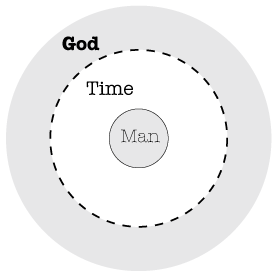
Well, I believe that to understand this, we must first understand who God is and who we are in relation to God.
God, who is the most perfect being, created man. Man is not a perfect being. As I stated earlier, the earliest man couldn’t even keep one rule. God is all-powerful (omnipotent), all-knowing (omniscient), and the ultimate goodness (omnibenevolent). Man is none of these things. We can only know so much, do so much, and have a limit on how good we can be. God, because of His omnibenevolence, cannot sin. Since we do not have that attribute, we do sin.
To illustrate my point, let’s say I kicked a small rock down the road. It’s not a being that can not feel or think because it’s incapable of life. I’ve done no wrong. Now, let’s say I’ve kicked a bug that wasn’t bothering me. I’ve likely caused it harm or even killed it, and this action probably speaks negatively about my character. But it basically stops there. Now let’s say I continue down the road and I see a dog and decide it’s a good idea to kick it. Well, if it doesn’t bite me, I could actually be charged with animal cruelty in many places and if it’s someone’s pet, the dog has more intrinsic value bestowed on it, and I could get in trouble with its family also. There would be even more trouble for me if I chose to kick one of the dog’s human owners.
Basically, as I moved up the “hierarchy” of existing things, I committed more of a trespass against each thing. Even if I was never caught, most people would probably agree that some cosmic or divine justice would (or at least should) await me for my moral failing. The higher the being, the more I would be indebted to some sort of restitution even if it’s just an apology.
This brings me to my point. Our trespasses (sins) against a Being who exists in infinite goodness increases because of who He is. The increase is so much that an infinite punishment is the only justified payback.
When man sins against man, the debt is much less than when man sins against God.
Jesus told a story about a master who called his servant to him to settle an outstanding debt he owed the master. The servant begged and pleaded that the master would be merciful, and the master was. Later, the servant sees another servant who owed him much less than the first servant owed his master. The second servant begged for mercy, to which the first refused to listen and had his family thrown into prison until he received his money. The king heard about the incident. “You wicked servant! I forgave you all that debt because you pleaded with me. And should you not have had mercy on your fellow servant, as I had mercy on you?” He then had the servant thrown into prison until he could repay the debt. (Read Matthew 18:23-34).
Immediately before Jesus told this story, his apostle Peter asks how often he should forgive his brother if his brother sins against him. “As many as seven times?” Peter inquires to which Jesus answers, “not seven times, but seventy-seven times.” Some translations say seventy times seven. By following up Peter’s question with the above story, Jesus illustrated that sins against the Master are exponentially greater than sins against each other.
When you read the parable, take note of the amount that the servant owed his master: 10,000 talents. A “talent” was twenty years wages. Twenty years!! One talent=20 years wages. This man owed 10,000 talents to his master. That’s 200,000 years of wages he owed. There was no earthly way that this man could have repaid that debt. The amount his fellow servant owed him was worth only a few hundred days of work.
You may ask, “Since Jesus told the story, and He said that the master was just going to forgive the servant, why can’t God just forgive us?” The point of the parable was to show how our sins against each other pale in comparison to our sins against God. But it does remind us that God is merciful.
I’ve mentioned that God is all-powerful, all-knowing, infinitely good, and merciful. I must add that His goodness goes hand in hand with another attribute, His justice. As a good and just judge, he must punish wrongdoing. Otherwise, he is neither good nor just. Take a moment and think about some of the bad things you’ve done in life knowing what the punishment could have been, and you still proceeded to do the evil deed. How brazen we can be! Now imagine the only “punishment” awaiting our evil deeds was God saying, “Ahh, it’s all good! Just don’t do it again!” You better believe we’re gonna do it again! So, since it’s not “all good,” He punishes because He is all good. And since He is all-good, He still makes a way for us. How? He paid our debt, nailing it to the cross of Christ. (Colossians 2:14)
In conclusion, since God is the highest being (The Most High), any sin against Him is of the highest offense. Any sin man commits against his fellow man is not. Therefore, God does not have to forgive us just because He is good. Instead, because He is good (and just), He must punish sin. However, the good news is that Jesus, the promise God told Adam and Eve, took our penalty for sin on His own back by dying on the cross. The ultimate goodness took on the ultimate punishment. Those who repent and believe this are forgiven and free. And if you are forgiven, you must forgive others.
Derrick Stokes
Theologetics.org







 Theologetics.org