Relationship or Religion

When people speak of Christianity, it is often described exclusively as either a religion or a relationship. Those who argue that it’s purely a relationship oftentimes see religion as a negative thing, at least for Christianity. Religion is typically seen as a stiff set of rules held by stiff people wearing their stiff clothes holding their stiff noses in the air as they judge the sinners around them. The Christianity-is-a-relationship crowd tends to place emphasis on love, acceptance, and freedom. On the other hand, the ones who see it as a religion seem to have a more encompassing view of what Christianity is, in my opinion. Yes, it is love and acceptance and freedom. But it also includes structure, rules, and some of the less feel-good aspects like “the wrath of God.”

However, those in the relationship crowd aren’t very different from those in the religion crowd when it all boils down to it. Think about what a relationship is, whether it be between spouses, friends, family, or employees/employers. There are rules, whether spoken or unspoken, written or unwritten, that govern whether the relationship is going to be healthy or not. A healthy relationship has boundaries. One or all parties involved understand that there are certain things that they shouldn’t do if they want to continue in harmony with the other participant(s). A husband knows that certain things will make his wife legitimately unhappy and that other things will bring her happiness and security. Some things may have more bearing on the trajectory of the marriage than others. A cheating spouse is more at risk of causing the marriage to end than a spouse who forgets to take out the trash. Or, in an employee/employer relationship, stealing time is more detrimental than stealing a pen or paperclip. Either way, it’s understood that no matter the relationship, there is typically a strict set of do’s and don’ts if you want the relationship to last. I feel that perhaps, more often than not, those who adhere to a strict mindset of Christianity being a relationship and not a religion want to do away with the religious aspect because they don’t think it’s should be about rules. To this, I agree. It shouldn’t be about rules. It should be about the object that we want to have a relationship with. I didn’t marry my wife for it to be about rules, but I did get married knowing that there are rules that I would have to abide by if I want the marriage to work. Some rules are universal, like don’t cheat. Some rules are more specific to the relationship because of the individuals involved. My wife doesn’t like her steak well done, so I know not to let it cook on the grill for longer than she would like. If I messed up the steak once or twice, she’ll forgive me, but if I do it every time, she may feel as if I don’t care or am doing it out of spite. 

The problem with some in the religious crowd is that it has become about rules. The relationship has been completely dismissed for a checklist. Usually, it is a checklist of negatives. Don’t smoke, don’t drink, don’t wear that, don’t say that, don’t go there, don’t watch that. It can easily become (or at least be seen as) a joyless list of impossible commands to appease a joyless and angry God. Many people would rather do without such stringency.

So people do away with the “religion” and its rules. Relationship feels better. It comforts. It brings peace. It brings freedom. It lifts up and encourages. Some say they’re not religious but are “spiritual.” There are various reasons one may claim to be spiritual, but one of the reasons is often a rejection of the rigidity of religion. Some even go further and reject it all together. (Sadly, some people who reject religion aren’t very good at relationships either. They want the security that either may bring but they also want the freedom that makes neither an option. You can’t live as a single person and expect a happy marriage. You can’t be employed but live as though you have no job.)

I feel that what’s missing on both sides is a true understanding of what Christianity is supposed to be. It’s both a religion and a relationship. Merriam-Webster defines religion as “a personal set or institutionalized system of religious attitudes, beliefs, and practices.” Britannica sites religion as: human beings’ relation to that which they regard as holy, sacred, absolute, spiritual, divine, or worthy of special reverence. Both definitions, along with any other I could find, describe what Christianity is. However, that’s like looking at a book and describing it by giving the definition of a book.

Christianity is so much more.

In the New Testament of the Bible, Jesus is often seen rebuking the religious leaders of his day (this fact is frequently used as proof that our faith isn’t a religion). But like the religious leaders in Jesus’ time and those in modern times, the religion is weaponized. The Pharisees and Saducees used the Jewish religion and its rules hypocritically. They misunderstood what the law was given for. One such example was when Jesus healed a blind man on the Sabbath. According to the “rules,” no work was supposed to be done on the Sabbath. This law was (and still is) a good law because it requires rest. Any hard worker understands that sometimes you have to be made to take a breather. Don’t work yourself so that you don’t get time to enjoy yourself and your loved ones. Take a day to enjoy the fruits of your labor. Take this day as a day to gather and worship God. Instead, the religious leaders made it another burden on the people. When Jesus healed the blind man on the Sabbath, he was chastised. John 9 tells us, 

They brought to the Pharisees the man who had been blind. Now on the day which Jesus had made the mud and opened the man’s eyes was the Sabbath…Some of the Pharisees said ‘This man is not from God, for he does not keep the the Sabbath.’” (verses 13-16 NIV).

While the Pharisees knew the letter of the law, Jesus understood the spirit of the law. The rule concerning the Sabbath kept someone from lifting burdens on that day. Jesus freed a man from his burden that day.

When God gives rules, they are to help us. To keep us from trouble. Sometimes, the trouble is unknown to us. Rules aside, the Bible is full of relational statements. God desires all who he created in his image (that’s all humans) to be his sons and daughters. But as I mentioned earlier, to have a healthy relationship with anyone, there are expressed boundaries set by one or more parties. God himself has expressed what his boundaries are. He has said that there are things we ought to do and things we ought not do. The goal isn’t in the oughts and ought nots. The goal is  the object of our affection. That object is God. The all-knowing lover of our souls knows what benefits us and what hurts us even when we don’t. Just because something feels good doesn’t mean it’s beneficial in the long run, just like one may use maladaptive coping mechanisms to deal with stress, but in the end, it leads to more hurt.

James 1:15 ESV
Then desire when it has conceived gives birth to sin, and sin when it is fully grown brings forth death.

So I’ll end this by saying that yes, the Christian faith is a religion, technically. The goal, however, is relationship. It is what God desires to have with us. It is the reason Jesus came and died: so that we may be reconciled into right relationship with him when we have strayed. But for us to stray means that there was a  breach in the relationship. We sometimes walk away by doing what God has expressed displeases him. In the same way, many of us have had failed relationships because we or the other party did something that had negative repercussions on the bond. If we continue, the bond can be severed forever. Likewise, if we continue in ways that displease God, we are severing our bond. One day, it’ll be too late to reconcile.

Read also: James 1:27, Luke 15

Derrick Stokes

Busyness, Anxiety, and the Pursuit of Peace

Let me preface this by saying that I have no official training in psychology, psychiatry, counseling, or mental health. What I am about to write is purely based on my experience with human nature in my 40-plus years of living. It is not intended to be a substitute for actual biblical counsel or clinical help. Therefore, take this blog with a grain of salt.

Jesus with Martha and Mary by Gustave Dore

In recent decades, there has been an uptick in diagnoses in anxiety among those of us in the West. Even for those of us who haven’t been clinically diagnosed, there seems to be an underlying anxiety that pervades our everyday lives. While there are multiple angles from which we can approach the problem of anxiety, I believe one very real reason is our unending busyness.

The reason I call it “unending busyness” is that even in our relaxing, we remain busy. Our minds are constantly being stimulated when we should be truly at rest. We’ve become so accustomed to noise and chaos that we even need noise to help us sleep.

I believe since the advent of personal electronic entertainment; we have slowly begun to lose our personal mental peace. What started off as a handful of channels of broadcast television that we had to wait to watch when we got home or maybe saw as we shopped in a department store, then grew into more channels with cable and even more with satellite. With the convenience of the remote control, we could easily flip between hundreds of channels without having to get up. This instantly gave us access to all kinds of news, sports, shows, and movies at the push of a button. Then came the option to have a TV that showed one channel in a little box inside the picture of a separate channel.

We then move to having personal computers and the internet in our homes. So now, on one device, we have hundreds of TV channels, and on another device, we have an untold number of websites we can access. During this time, most computers had to be plugged into the 1 phone line of the house to access the internet. We went from needing to go to the library and search through countless books in order to do that research paper for school, to being able to Yahoo or Google whatever we wanted to know and having the results in a few seconds.

Since the time televisions made their way into our homes, we saw the invention of the grocery store, the interstate system, dishwasher appliances, the microwave, and all kinds of “instant” foods. This made wait times for almost anything in life much shorter than ever in human history and made life more effortless.

Enter the smartphone in the mid-2000s. Now, we have access to the internet, movies, and an interactive phone book in the palm of our hands. Not only that, but all members of the household also tend to have their own smartphones. There used to be one tv, one computer, and one phone line for multiple people, and everyone had to wait their turn. Now, there’s no need to wait. We don’t have to wait on letters from loved ones across the country or even across the world because we can DM them and get an instant response. We sit down after a hard day of work, and instead of letting our minds relax, we bombard it with news feeds and reels and images of more stuff we want to buy that we don’t need. We see other people post their personal drama, or we see other people post their vacations, which we wish we could be on because they look so peaceful (not knowing the anxiety they endured to get there).

Basically, our need to wait on things in life has dwindled drastically. We can get most of what we need or want with very little wait, if any. While I can appreciate all these things (I am using a smartphone to type this blog, BTW), life doesn’t really work that way. We feel like it does because of everything I mentioned above and some things I’m sure I failed to mention.

Because of the “instant” life we’ve become accustomed to over the past several decades, we think everything should be instant. We want to become healthy, but we don’t want to diet and exercise to get those results. That takes time, usually months and often years. And since it takes too much time, we choose not to do it, or we give up after a couple of weeks of seeing no results or we’d rather take diet pills instead. We want to get good grades, but we don’t want to sacrifice the time to sit and study the material. We don’t want to read books. We want to watch the 10-minute YouTube video about it. (We actually don’t want to watch the 10-minute YouTube video about it. We want to watch the 30-second TikTok video about it.) We want to be financially secure, but we don’t want to save and invest to have that financial freedom when we get older. We want big houses and nice cars early in life. We want the higher pay on our jobs without having to put in the long hours and move up the ladder (I’m not saying we shouldn’t all be paid a fair wage, but I do believe the wage should be commensurate with the amount of skill and training it takes to do the job).

I mentioned the interstate system earlier. In older cars, there used to be a designation at the 55 mph maker on the speedometer. That’s because the speed limit on America’s interstates used to be 55. Now, speed limits are 65, 70, and even 80 in some states. As Brooks said in The Shawshank Redemption, “The world went and got itself in a big d**n hurry.” If anything takes a minute or even a second longer than we think it should, we lose our minds.

So, this is what happens: You drive 10 miles an hour over the speed limit on the way to work, getting upset at the person in front of you actually going the speed limit. You’re irritable because you fell asleep with YouTube playing on your phone and America’s Got Talent on the TV at the same time, not letting our minds rest from the constant distraction. But, YouTube was really playing in a corner of the phone, and you got lost in the comments section of the latest political fiasco. Now you get to your understaffed place of work where you’re doing the jobs of 3 other people. Wait, Kevin called in again? He always calls in sick on payday! Ok, now you’re doing the job of 4 people. And of course, you remembered it was payday. You’ve been looking forward to payday since the day after last payday because you’ve accumulated way more expenses than your grandparents had. They were content with their one tv and one house phone and 2-bedroom house for a family of 5. Now, it’s after work, you’re tired, and you drive home 20 miles over the speed limit, knowing there’s a chance of getting pulled over by the police. Just the thought creates more unnecessary anxiety. Oh well, it’s just another stressor you’re willing to live with just for your ride to be over quicker. And of course, you’re thinking about all the responsibilities you have when you get home. Does any of that sound familiar?

As an adult, it seems that time flies by faster with each passing year. When we were growing up, time seemed to pass so slowly. But I think that possibly creates another kind of anxiety in children. They, too, are used to the fast paced instantaneous way of life, but at the same time, they have to wait for everything. Wait to be given permission. Wait till after dinner. Wait till they’re older. Wait till summer. Wait until the adults stop talking. The younger a child is, the less they understand the concept of time. The younger they are, the more they want whatever they want NOW. Yet our society and modern technology has somewhat enabled that they can, in fact, have it now. Whatever “it” may be. And we wonder why teenagers think we’re out of touch with reality if they’re told to wait till marriage to express one of their strongest and natural desires.

Therefore, I believe our desire to make things more convenient for us has caused us to become impatient. In our impatience, we have lost the ability to sit still, truly still. We have created too many distractions. With our distractions, we have become entirely too busy. We have become so accustomed to the chaos of busyness that our rest is seldom truly restful. And when we are truly resting, we are bored, fidgety, and needing something to stimulate us. Our anxiety never really leaves us.

I’m not saying that there aren’t truly people who suffer from very real anxiety due to perhaps chemical imbalance. Some types of anxiety may truly need medication to be helped. But I believe some anxiety can be helped, even possibly cured, if we choose to intentionally create times of quiet, times of reflection, of prayer, of meditation in our lives. What if we set our clocks for 10 or 15 minutes earlier and have that time dedicated to prayer and meditation? I’m not talking about praying while scrolling Instagram or Facebook. I’m not talking about meditation with the TV on in the background. Or what if on our commute to work, we turned the radio off and sat and listened quietly to what God has been trying to tell us? What if we made time during our lunch break to find a quiet place at work and catch up on some reading? What if we got home from work and made it a point to spend quality time with our families and acted as if there were no smartphones? What if we turned off the screens 30 minutes before bed so our brains could truly wind down? What if we chose to live more simply? What if you set timers on your favorite apps and/or video games in order to have quiet time? Look at your life and ask yourself what you could do to intentionally make peaceful moments every day in your life, however your life may look.

The main question is, what if we truly sought after God? What if we chased after God the way we chase after things? If you live a very busy life, putting away some distractions may be very hard to do at first. It may take some time to create a new normal. However, peace comes intentionally. Being still enough to hear God’s voice comes with intentionality because we may never hear it through all the noise. Understand that it may take some time, but anything good worth having is worth pursuing.

Read: Psalm 46:10, Philippians 4:6, Matthew 6:25-34, Luke 10:38-42

Derrick Stokes

God’s Attributes Devotional (Free)

Introducing our FREE 1 month Devotional! It’s based on our God’s Attributes poster that can be found and also downloaded for free. We pray this devotional not only informs but draws each reader closer to their Creator. Don’t forget to share it with others!


https://theologetics.org/wp-content/uploads/2021/10/derrick-devo-33-attributes-of-god.pdf

Jesus Hidden in the First Two Words of the Bible

biblical_hebrew_modern_hebrew

****Warning: I am retracting my original stance regarding this blog (in a way). I first researched this concept almost 5 years ago and to this day, I still have found that the meanings of the Paleo-Hebrew letters can hold each of the meanings I outline in this blog, however, what I did not fully consider is how drawing meanings in such a vague way can be dangerous. Now, my stance has always been that Paleo-Hebrew letter meanings are certainly no way to derive new secrets or meanings from verses in the Bible. To me it seemed characteristic of our Omniscient God that His purpose and fingerprints could be seen even in the ancient letters used by His chosen people; the Jews. I thought this only because those meanings can already be seen clearly in the text and they only serve to confirm what God already made clear in Scripture. The problem with this, that I see now, is twofold; first, that the process of pulling the desired meanings from each letter requires one to do so inconsistently. So much so that while it is possible the meanings drawn could be true, it is simply too abstract to be evidence of a Messianic prophecy. The second problem is that if we grant this vague way of finding hidden meanings in the Bible, the same inconsistent process could be used by others to confirm almost any idea they want from the Bible. And if we promote this inconsistent process for confirming Christ as Messiah and as Creator, which is already made clear in Scripture, denying the process to be used to promote poor or bad theological ideas would be somewhat inconsistent.****

The claim: The first two words in Genesis act very much like a Messianic Prophecy, so the story of Jesus as Creator and Savior is outlined in just two words which happen to be the first two words in the Bible!

There have been several videos on YouTube and various people who teach about this hidden meaning of the first two words in Genesis (and other words in Scripture). This is a brief blog about my personal research into this claim that the first two words, in their ancient language form, are actually a shadow of Jesus.

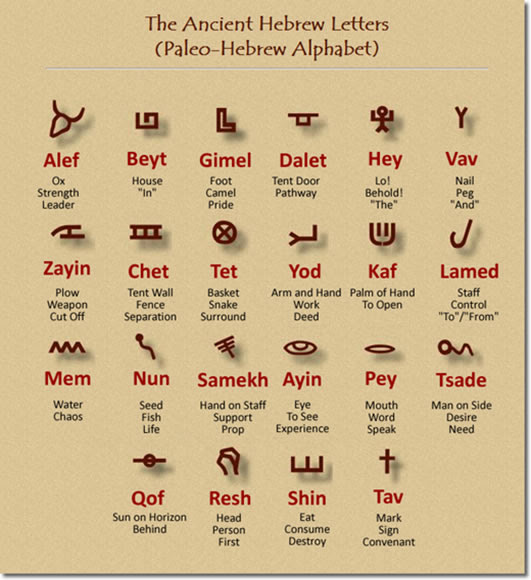
This claim is that in ancient Hebrew (Paleo-Hebrew) there is an idiographic or pictographic meaning assigned to each letter of the alphabet. These are symbols that depict an idea and because of this, the idea of Jesus as Creator and Savior can be seen in the words themselves. Now, I am no Hebraist so I did some research online from various sources to see if the claim about the first two words in the Bible really did hold up and as far as I can tell (and to my surprise), the claim is true (but with a very important caveat; the process used to come to this conclusion is not consistent and is very vague). Since it’s not a perfect science where hermetically you could apply the same rules to all Biblical texts, this idea at best might be said to be used as a shadow of Christ (in my opinion) but as mentioned in the warning above, this is too abstract a process to be good evidence for that.

A few things to keep in mind; Hebrew reads from right to left in case anyone looks this up themselves (which I encourage everyone to do with all claims like these) so don’t let this confuse you. Also, when translated from the Hebrew to English the first verse in Genesis reads: “In the beginning God created the heavens and the earth.” While this is accurate for the English sentence structure, the proper reading of the verse in the original Hebrew would be “In the beginning created God the heavens and the earth.” So here is a breakdown of the first two words in Genesis;

The 1st word Barasheet translated as “In the beginning”
The letters in order are: Beyt Resh Aleph Shin Yud Tav
Beyt + Resh together form the word Bar meaning “Son of” (in Aramaic, in Hebrew it is Ben)
Aleph = Ox head meaning Power, Authority, Strength; said to be used by the Hebrews to represent “God”
Shin = Two front teeth meaning Sharp, Press, Eat… (the function of the teeth when chewing; consume/destroy)
Yud = Arm meaning work, make and deed; the functions of the hand
Tav = Crossed Sticks meaning Mark, Sign, Signal, Monument

So the first word in the Bible, in the beginning, holds this idea (according to the claim);
The Son of God
(will be) destroyed (by His own) work on a cross. Even from the beginning, the Son of God was to die on a cross for us by His own hand to save us from our sins.

Also, the 2nd word Bara translated as “Created”
The letters in order are: Beyt Resh Aleph
Beyt + Resh together form the word Bar meaning “Son of” (again, in Aramaic, in Hebrew it is Ben)
Aleph = Ox head meaning Power, Authority, Strength; said to be used by the Hebrews to represent “God”

The second word in the Bible, “created,” (according to the claim) pictographically means Son of God, so as Scripture plainly tells us (John 1:1-3), it can also be seen in the word “created” itself that Jesus was the one who created us; everything that was created was created by Jesus, the Son of God.

So even though this way of deriving hidden meaning from the text may be too abstract to be a type of shadow of Christ or a Messianic prophecy, there are many other shadows of Christ and Messianic prophecies which are hermeneutically sound. If you would like to know more about Jesus and how to know Him personally, please email us at Theologetics3.15@gmail.com

A few things of note; Beyt alone = house or tent as well as family
Resh alone = head meaning man, chief, top, beginning and first, each of which are the “head” of something
Shin can basically mean “the function of the teeth when chewing” and other sources say “to destroy” which is what the teeth do to food. Yud basically means functions of the hand which could be understood as “by His hand”. And Tav which amazingly looks like the cross and can mean “sign”, “mark” and other online sources say “covenant” so this process is taking the letter itself as a literal sign of the cross.

*Disclaimer: Some Christian organizations teach that Paleo-Hebrew meanings are completely unrelated to the Hebrew language and that it can be dangerous to try to derive meaning from Scripture in this way– and as stated in the warning at the beginning of this blog, this can be true. But I will say I was never condoning or promoting some new secret way to interpret Scripture. I’m not saying this is hermeneutically sound when applied to all words in the Bible, just that it is at the very least, interesting how some key words appear to hold shadows of Christ in their original pictographic form and that it should not be surprising to find that given an almighty, all-knowing God planned Jesus coming to earth from the very beginning, even though it would not have been known to man. With that said, it is my stance now that this process is too inconsistent to be of much help apologetically and at worst opens a door for those who seek to promote non-biblical theologies.

Clark Campbell
Theologetics.org

https://youtu.be/W2-o0WI_qz8
http://www.ancienthebrew.org/alphabet_letters_beyt.html
http://www.ancienthebrew.org/alphabet_letters_resh.html
http://www.ancienthebrew.org/alphabet_letters_aleph.html
http://www.ancienthebrew.org/alphabet_letters_shin.html
http://www.ancienthebrew.org/alphabet_letters_yud.html
http://www.ancienthebrew.org/alphabet_letters_tav.html

ancient-letters

The 2nd Hidden “Verse” about Jesus in Genesis

Descent-from-the-Cross
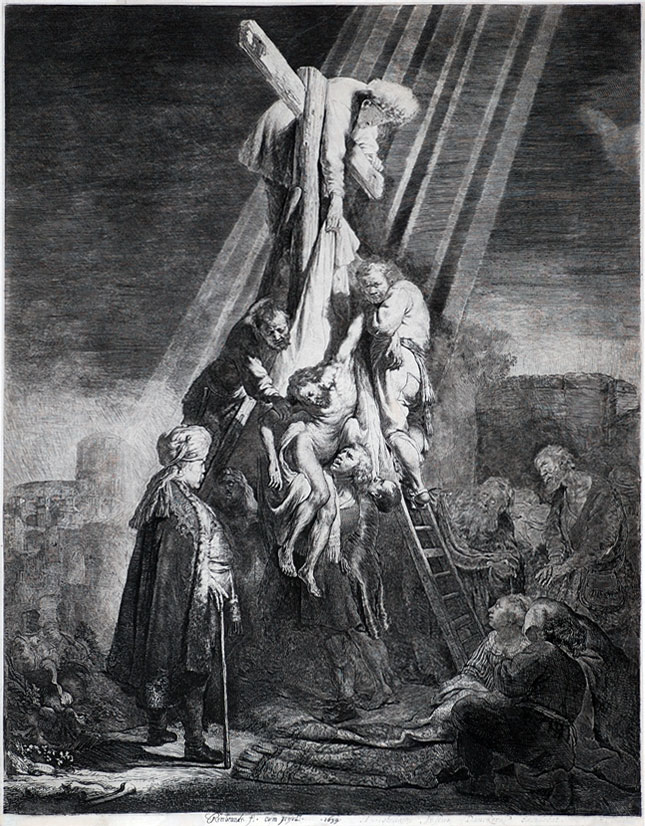
Rembrandt, The Descent from the Cross: the Second Plate, Date
1633


It is incredible to think, that the God who created the entire universe by speaking it into being, would love us and want to know each one of us on a personal level. And that this same God inspired various imperfect people from all walks of life to write about his love for us in a collection of ancient manuscripts we call the Bible. But it’s not only that his love was written about and revealed to us but when you dig into the original languages the Bible was written in, you can see the story of Jesus thousands of years before he was even born hidden in unique ways.

It is more apparent to me today than it has ever been that God is incredibly multi-faceted, so much more than 3-dimensionally and I feel like the more I learn about the Bible the more this can be clearly seen. One example of this is a previous blog we wrote that talks about the hidden “verse” about Jesus in Genesis 5 which outlines the various definitions of the names of the line of Adam to Noah which reads much like a Messianic prophecy. This blog is similar in that it outlines various definitions of the names of the twelve sons of Jacob which has another amazing resemblance to the story of Jesus. I was first made aware of this from something someone else posted on social media.

Lets begin…

Genesis 29:31-35, 30:1-24, and 35:16-18 describes the 12 sons of Jacob who would become the fathers of the 12 tribes of Israel. The following are a list of the 12 sons in order of birth with meanings of each name listed next to it;

1 Reuben – Behold A Son, Son Of Vision, Son Who’s Seen
2 Simeon – Hearing, He Who Hears, Man Of Hearing, Hearing With Acceptance
3 Levi – Joined, Adhesion
4 Judah – Let Him (God) Be Praised, Praised
5 Dan – Judge, Judging
6 Naphtali – My Wrestling
7 Gad – Good Fortune, Harrowing Fortune
8 Asher – Happy, (happiness, to be right in the eyes of someone, to obtain this person’s approval)
9 Issachar – Man Of Hire, He Is Wages, There Is Recompense
10 Zebulun – Glorious Dwelling Place, a rather reserved Dwelling, Wished-For Habitation
11 Joseph – Increaser, Repeater or Doubler, May He (Yahweh) Add, He Shall Add, He Adds, Increases, May God Add
12 Benjamin – Son (building block) Of The Right Hand (of God)

Each name has multiple meanings and even different roots. Taking into consideration that some of the names clearly describe God and others describe man, one translation of each of the twelve names, one name after the other, reads in this way:

“Behold a son who hears with acceptance, joined to (us), let Him be praised. A judge of my wrestling bringing good fortune to obtain His approval. He is wages (for) a glorious and reserved dwelling place. He shall add (us) son(s) of his right hand.”

Now, Hebrew to English is a little rough to begin with but the main idea is pretty clearly seen even without the added pronouns and conjunctions to aid in connecting the words. This isn’t to say these are the only meanings of the names, some may not even be the primary meanings but it’s amazing that God had Jacob give his children names that could be translated in a way that shows the story of Jesus coming to offer salvation to the world!

http://www.abarim-publications.com/Meaning/Reuben.html#.WYqGk4okqRs
http://www.abarim-publications.com/Meaning/Simeon.html#.WYqGuookqRs
http://www.abarim-publications.com/Meaning/Levi.html#.WYqG14okqRs
http://www.abarim-publications.com/Meaning/Judah.html#.WYqG9IokqRs
http://www.abarim-publications.com/Meaning/Dan.html#.WYqHDookqRs
http://www.abarim-publications.com/Meaning/Naphtali.html#.WYqHKYokqRs
http://www.abarim-publications.com/Meaning/Gad.html#.WYqHSookqRs
http://www.abarim-publications.com/Meaning/Asher.html#.WYqHYIokqRs
http://www.abarim-publications.com/Meaning/Issachar.html#.WYqHf4okqRs
http://www.abarim-publications.com/Meaning/Zebulun.html#.WYqHnookqRs
http://www.abarim-publications.com/Meaning/Joseph.html#.WYqH3ookqRs
http://www.abarim-publications.com/Meaning/Benjamin.html#.WYqH9ookqRs

Clark Campbell
Theologetics.org

Universalism: All will be made alive?

Teachings_of_Jesus_38_of_40._the_rapture._one_in_the_field._Jan_Luyken_etching._Bowyer_Bible
The Rapture: One in the Field by Philip Medhurst, The Bowyer Bible, 1795

Universalism is the belief that all people will eventually get to heaven. It has gained some popularity lately in some Christian circles. But is this view biblical?

1 Corinthians 15:22 says “For as in Adam all die, so also in Christ shall all be made alive.”(ESV)

The historical Christian view on the state of mankind is that because of the sin of Adam, ALL people stand condemned and are in need of the gift of salvation that only comes through the obedience of Jesus Christ. That this gift is effective to ONLY those to accept the free give of salvation, and those who reject the gift will not enter into heaven. This is the opposite of universalism.

Does this verse in 1 Corinthians state otherwise? Does this verse support universalism?

The verse in Greek is “ωϲπερ γαρ εν τω αδαμ παντεϲ απο θνηϲκουϲιν  ‾‾ ουτωϲ και εν τω  χω παντεϲ ζωο ποιηθηϲονται” . The word “παντεϲ“, transliterated pantes, means all.  So what are we to take from this verse? Will all of mankind receive salvation no matter what we do or what we believe?

Does all mean all all of the time?

In a sense, yes. All shall be made alive. But the word all always has a qualification (or quantification). We have the macro (total) “all” verses the micro (some of the total) “all”. If I were to say, “I ate all the grapes”, no one would think that I ate all the grapes that exist in the world (macro). I would have to mean all the grapes that were in the refrigerator or all the grapes I had in the bowl (micro). That not one grape that was in my possession, or domain, was left uneaten. So how does this apply to 1 Corinthians 15:22?

Adam and Eve were the first humans created. All of mankind born after them came from them. Because of their sin, all of mankind has come into the world sinful. We are sinful because of Adam’s sin. This is known in theology as imputation. As BibleStudyTools.com defines imputation “the sin of Adam is imputed to all his descendants, i.e., it is reckoned as theirs, and they are dealt with therefore as guilty.”¹ This applies to all of us. The totality of humankind. In Adam all die…

However, in Christ all shall be made alive.

Notice the words “in Christ”. The Greek word “εν” literally means in. In the Nativity it is used to describe how Mary was with child; literally “in womb was child.” Reality tells that not everyone is “in Christ.” Most people reject Him as their Savior. So the all in the second part of verse 22 is not referring to all people but all who are “in Christ”. As in Adam all (macro) die, so in Christ all (micro) shall be made alive. All who are in Christ are imputed with His righteousness.

For further understanding let’s let scripture interpret scripture by looking at the surrounding context.

1 Corinthians 15:17-23
17. And if Christ has not been raised, your faith is futile and you are still in your sins.

18. Then those also who have fallen asleep in Christ have perished.

19. If in Christ we have hope in this life only, we are of all people most to be pitied.

20. But in fact Christ has been raised from the dead, the firstfruits of those who have fallen asleep.

21. For as by a man [Adam] came death, by a man [Jesus] has come also the resurrection of the dead.

22. For as in Adam all die, so also in Christ shall all be made alive.

23. But each in his own order: Christ the firstfruits, then at his coming those who belong to Christ.

24. Then comes the end, when he delivers the kingdom to God the Father after destroying every rule and every authority and power.

25. For he must reign until he has put all his enemies under his feet.

“Those who belong to Christ”. That’s who all means in the second part of verse 22. Unless we are in Christ then we are still in sin and we remain His enemies. Therefore, this verse can not be applied to support universalism.

So lastly and of most importance, are you in Christ? Are you still dead in your sins and an enemy of Christ? Or have you placed your trust in Him? Have you received His free gift of salvation?

Further reading: John 5:24-26, Romans 5:12-21, 1 Corinthians 15:45-49

¹A broader definition would be “to charge to one’s account” as in Philemon 18 where Paul asks that Onesimus’ debts be charged to Paul

Derrick Stokes
Theologetics.org

Isaiah Believed the Earth was Flat?

Schnorr_von_Carolsfeld_Bibel_in_Bildern_1860_004
The Fourth Day of Creation (woodcut by Julius Schnorr von Carolsfeld from the 1860 Die Bibel in Bildern)

Isaiah was inspired by God to write the book of Isaiah in the Bible and it is a book that has many prophecies in it, many of which Jesus fulfilled with His life and death which we won’t go into now. Now there are many arguments circulating today that attempt to disprove the Bible. Some have obvious flaws while others may take knowledge about the original language, Biblical history or theology to show their flaws. The Bible claims to be the inspired word of God, written by men which God used to tell us the story of His plan for all mankind. It is without error in its original writings and because of these claims, if they were not true, the Bible would have errors and could be shown to be false. One argument that I have personally come across is that Isaiah believed the earth was flat.

There are at least two verses which have been used to make this claim so lets look at the first verse.

It is He who sits above the circle of the earth,
And its inhabitants are like grasshoppers,
Who stretches out the heavens like a curtain,
And spreads them out like a tent to dwell in.

Isaiah 40:22 (NKJV)

Now the argument used for this verse is that if Isaiah knew the earth was a globe at the time he penned the book of Isaiah, he would have used a word like “globe” or “ball” but he used “circle” which is two dimensional and flat.

Now lets look at the second verse.

He will set up a banner for the nations,
And will assemble the outcasts of Israel,
And gather together the dispersed of Judah
From the four corners of the earth.
Isaiah 11:12 (NKJV)

The argument used for this verse is that Isaiah didn’t believe the earth was a sphere but that it was a flat square or rectangle with four corners.

For someone to say Isaiah believed the earth was flat based on these verses alone would likely require an eisegesis of the text rather than an exegesis which means the person making the claim is imposing his or her interpretation onto the text instead of drawing out the meaning in accordance with the context.

It is more likely these two arguments are both false and one reason why is that they were both written by Isaiah. Why would the same person write about the earth being a flat square and a flat circle? It is more likely Isaiah didn’t believe the earth was flat at all. When he wrote of the four corners of the earth, Jewish readers would have understood he was speaking about ‘everywhere on the earth’ or ‘from all directions’ which among other things is briefly discussed here http://creation.com/are-biblical-creationists-cornered-a-response-to-dr-jp-moreland.

And the circle of the earth could have meant a sphere. The original word in Hebrew was chuwg which can mean circle, circuit, compass and one translation cites sphere but even if it didn’t, from a distance (like the earth from space) a sphere would be viewed as a circle from all directions so using a word that means circle logically does not negate the earth being a sphere.

So, while there are some seemingly convincing arguments out there that attempt to disprove the Bible, a closer examination will show that the Bible is what it claims to be; the Inspired Word of God!

Also see
http://www.icr.org/article/circle-earth/

Clark Campbell
Theologetics.org

Jonah prophesied and it did not come true?

Jonah
Jonah and the whale (Jonah 2:11) by Matthaeus Merian I (1630)

I was doing some reading in a new book my wife got me which gives background information about every book in the Bible as well as the Apocrypha. Despite a wealth of interesting and be it “sound” information, are some things which I found a little less than accurate. One of these things is that it states there was only one prophecy in Jonah and it didn’t come true.

So lets take a look at this prophecy.

Jonah 3:4 says Jonah began by going a day’s journey into the city, proclaiming, “Forty more days and Nineveh will be overthrown.”

Another translation is: On the day Jonah entered the city, he shouted to the crowds: “Forty days from now Nineveh will be destroyed!”

So what’s the issue? Nineveh was never destroyed because the people repented and turned from their evil ways.

Well, having a prophet of God get a prophecy wrong would essentially mean God misspoke, or at the very least, Jonah did which would mean the Bible was possibly wrong in relaying God’s intent which comes with a whole new set of issues.

Well, it turns out the original word in Hebrew for overthrown is “haphak” and it can also mean “to turn, turn around, to change and transform”.

So amazingly, because of the Hebrew language and God’s Omniscience, God used Jonah in a way I never even realized. The overthrowing of Nineveh by their destruction turned into the transforming of the city by turning from their sin!!!

It’s astounding how this one word “haphak”, and this one prophecy, could mean two seperate options at the same time which were dependent on the reaction of a city to God’s prophet. The more I learn about the God we serve, the more I am amazed and the more I fall in love with His heart for us.

If you too want to learn more about the God of the Bible, email us at Theologetics3.15@gmail.com

-Clark Campbell
Theologetics.org

“…One less god…”?

pantheon
The Pantheon, a temple in Rome dedicated to “every god”, completed in 128 A.D.

There’s a popular quote by atheist Steven F. Roberts that many nonbelievers cite or paraphrase when debating Christians that says, “I contend we are both atheists. I just believe in one fewer God than you do.”

The atheist is saying that since we Christians don’t believe in Baal, Zeus, Odin, Vishnu, Quetzalcoatl, or any other god other than the God of the Bible, then we assume the same lack of belief system. They just take it one deity further.

So what’s the difference ?

Well it doesn’t take much to realize that this argument is constructed in a way to throw the believer off guard. Let’s look at the two members of the argument. An atheist and a theist. The word atheist comes from the Greek atheos.  The prefix a meaning “without” and theos meaning “god”. In other words atheism is the belief that there is no god or gods. No Supreme Ruler whatsoever. The atheist’s worldview is completely shrouded and perceived in the material realm. That anything outside it is pure speculation and unprovable (or not proven yet).

However, for the theist (Christian in our case) the material realm is just another dimension of reality. For us there is also the spiritual realm. The spiritual realm is, in fact, the truest reality because it existed first. God is spirit (John 4:24) and He created all that exists (Genesis 1, John 1:3) in the spiritual and material world.

Now let me point out that Christians during the 1st century were called atheists because they rejected the pantheon of greco-roman gods of the surrounding culture. This was also because the Christians of the day had no temple, priest, or sacrifice, as Romans would have recognized. Yet, believers in Christ saw Jesus as the temple. He is the only way to the Holy of Holies. Believers in Christ saw Him as priest because He is the Ultimate High Priest. Believers in Christ saw Jesus as the sacrifice because of the work He accomplished on the cross. He is the sacrificial Lamb of God and no sacrifice is needed after Him. (John 1:29; Hebrews 4:14; 10:10-11, 19-20)

After the resurrection of Jesus and the birth of the Church there was no “physical” representation of their God like the Romans had. The Romans had statues and Caesar.  If you didn’t worship as they worshipped and whom they worshipped then you worshipped nothing. Therefore, the term atheist was applied to early Christians out of ignorance and out of insult.

In the Martyrdom of Polycarp, Polycarp is brought before the Roman governor for trial. The governor has the intention of making Polycarp betray his Christian brethren. Polycarp must say, “Away with the atheists” or else be condemned. He looks around at “the crowd of lawless heathen”(the pagan Romans) and says “Away with the atheists” flipping the name on to his accusers. (Martyrdom of Polycarp 9:2)

But, let’s be reminded. Atheists reject all gods. They reject false gods and the true God, Yahweh. They don’t just reject one more god than Christians. They reject THE God. The only true and living God. Even though God has made Himself plainly evident through His creation, atheists won’t come to the knowledge of the truth. (Romans 19:21)

However…

Atheists might reject the notion of gods as supernatural, ethereal beings, but they still have gods. We all serve something or someone. We all worship something or someone. Whether it be ourselves, pleasure, fortune, fame, other people, hobbies, pets, nature, gods made of wood or gold, or the God of the Bible; something gets our worship whether we choose to accept the notion or not.

This brings us to the first two commandments:

1)You shall have no other gods before Me [Yahweh]
2)You shall not make for yourself an image in the form of anything in heaven above or on the earth beneath or in the waters below. You shall not bow down to them or worship them. (Exodus 20:3-4a)

If we have broken these commandments, and we all have if God is not who we worship, then we make ourselves idolaters. Anything other than God that gets our worship has become an idol. These are Paul’s words in Philippians 3:18-19

18 For, as I have often told you before and now tell you again even with tears, many live as enemies of the cross of Christ. 19 Their destiny is destruction, their god is their stomach, and their glory is in their shame. Their mind is set on earthly things.

If this is true of you today, please understand that God wants to be the object of your worship. He knows that anything else that competes for your attention above Him is a false god. He knows that no other god can bring you true joy and fulfillment. Anything else is an imitation and will never come close to the perfect love, holiness, and eternality of God. Don’t be blinded by passion for the things of the world. Things will break. Trends will fade. This world and everything in it will pass away. God and His Word are forever. And don’t place any person above God. Human beings are imperfect and all have fallen far short of God’s glory. But, God is not man that He should lie or change His mind. Nor will He ever leave us or forsake us. So, give your worship to God and to God alone because He alone is worthy.

Derrick Stokes
Theologetics.org

Homosexuality from Multiple Perspectives

Destruction of Sodom
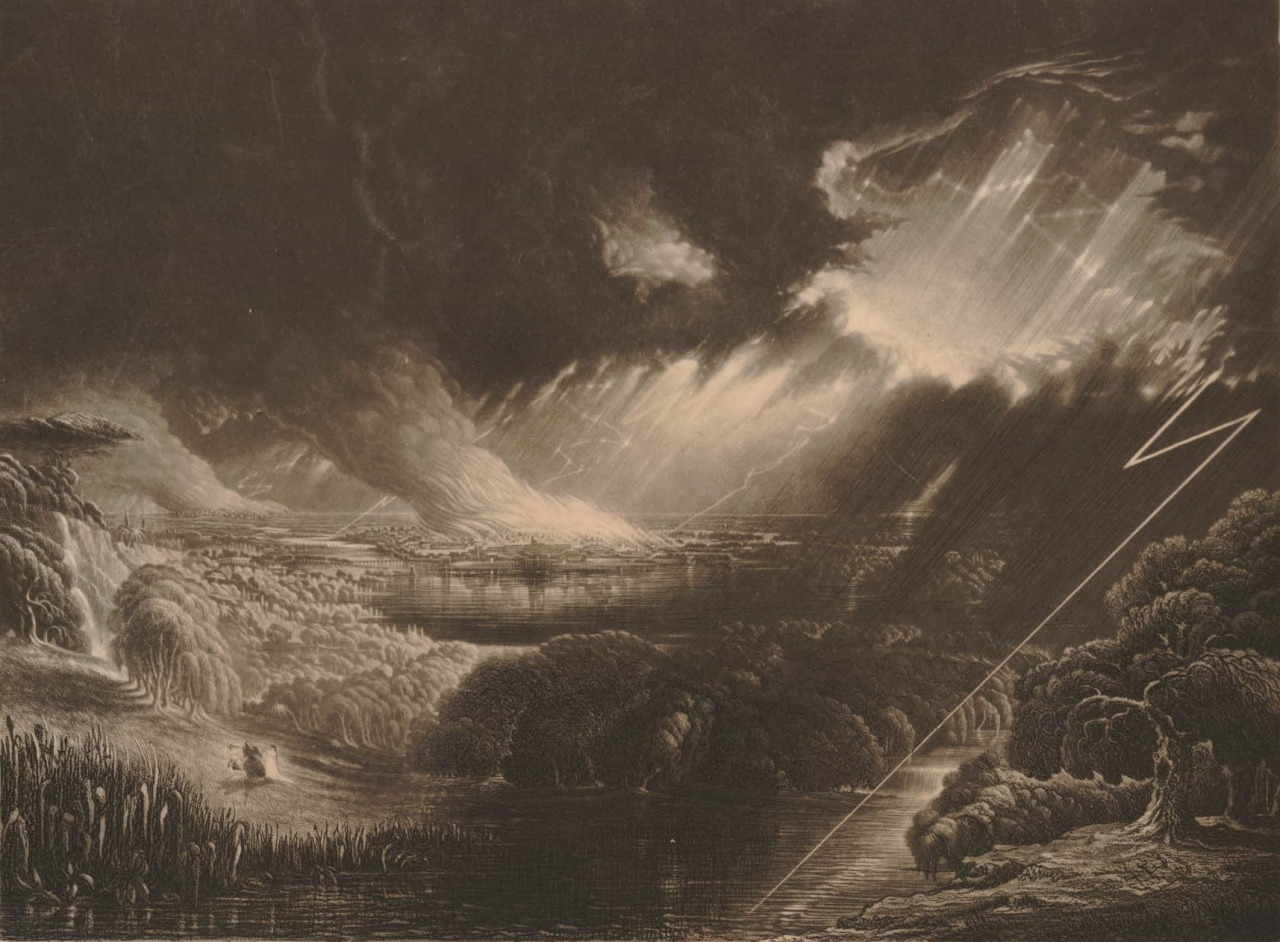
The Destruction of the Cities of the Plain (Lot and his daughters running for cover in foreground. Mezzotint with etching, c.1830s.) ~ by James G S Lucas

So the LGBTQ movement is something that is becoming more and more common and personally affects Christians more than ever before, quite clearly because of the acceptance of the movement in mainstream media.

I have recently wrote about the importance of loving everyone regardless of their race, socioeconomic status, sexual orientation, etc. which can be found HERE but the definition of what that love looks like is very much debated among Christians and everyone else.

As such, I thought it may be helpful for some Christian’s and non-Christians alike for us to outline what we believe at Theologetics.org and why we believe it.

Let’s start by looking at what is at stake. For someone who identifies as being gay or a lesbian, if Christians take a stance against same-sex attraction and these Christians are wrong about it being a sin, the individuals that embrace same-sex attraction will rightly feel ostracized and hurt because what they are identifying as is the same thing many Christians would wrongly be calling a sin. But if Christians stand against homosexuality because it really is something that is wrong, something God condemns, and something that is a hurtful lifestyle, then Christians that lovingly condemn the sin are showing true love to the sinner.

As Christians, it is important for us to realize how deep this goes, many if not all people that embrace same-sex attraction are not just lightly making the decision one day to like the same sex, they had been feeling an attraction for a long time.

Lets take a brief look at the attraction itself. Often it is believed this attraction is something people are born with. While there is not much evidence for that stance, the truth is it really doesn’t matter from a Christian perspective. Some people are born with a disposition for the abuse of alcohol or drugs but that doesn’t make that desire healthy or right. So I would caution Christians or secularists that take a side of the issue using the logic that it is or is not in the genes since the Bible clearly states that we all have sinned and have a sin nature, so genes are not a good measuring stick for this issue or any other for that matter.

So to the Christians reading this I say please be kind, gentle, loving and patient when dealing with this issue as those who are lost need to see Jesus in you more often than hearing about what the Bible says is wrong. Remember, “A gentle answer deflects anger, but harsh words make tempers flare.” Proverbs 15:1

So now, let’s take a quick look at the Bible.

The Bible doesn’t address the issue of homosexuality much but when it does it is clearly condemned as being sin. For the purpose of keeping this blog short I won’t go into the meanings of the verses about homosexuality but for someone that questions what the Bible really says about it being sin, you can find some information on it HERE. Basically there are several ways the Bible is read and how it is read depends on the reader.

In my opinion, the four basic types of Bible readers are:
1. Non-Christians
2. Cultural Christians
3. Non-Fundamentalist Christians
4. Fundamentalist Christians

Non-Christians consider the Bible to be either just another book of many, that it is out-dated or maybe even that it is a bad book. They may believe it has some good ideas or no good ideas but definitely not a book that has any authority over how people should live their lives. As these beliefs are unfounded, it would take at least another separate blog to begin to explain the reasons why but some information about the authority of Scripture can be found as a PDF HERE.

In reality, a Cultural Christian is someone that really follows culture over the Bible regardless if it aligns with the Bible or not. They don’t really read the Bible that often and usually don’t care to either. They may consider themselves a Christian because their parents are Christian, or they were baptized as a child, or something to that effect. A Cultural Christian says one thing and does something else. This is hypocrisy. It is illogical to say you believe something or identify as something but live as though you do not. In reality, many Christians have areas in their lives that they may say they believe what the Bible says but live as though they do not believe it. All who say they follow Christ should examine their hearts in any area of life and truly compare it with what the Bible says regarding that area.

Non-Fundamentalist Christians are among varying denominations and individuals that generally don’t believe in the complete authority of the Bible. They may believe that the Bible is either only partly inspired by God or not at all, or that the inspired word of God has been changed and not to be taken literally today. Similar to Cultural Christians, a Non-Fundamentalist’s belief is also illogical, let me explain.

If I were to believe the Bible is only partially inspired by God, and that some of it are men’s ideas added in, I would have no way of knowing what to really believe is true or not and thus, it would not make sense to put any faith in the Bible at all. The same logic applies if I were to believe the Bible were originally 100% God’s inspired words but that it has since been changed.

Similarly, if I were to believe the Bible was written completely by men, not inspired by God at all, it would have no authority and would just be another book among millions, so calling myself a Christian would really be pointless as all other ideas, religions, and philosophies would have equal merit and truth. (That’s not to say other non-Christian sources of information don not have some truth to them, just that the Bible is the only ancient manuscript that can be shown to be without error in it’s original manuscripts, and divinely inspired with hundreds of fulfilled prophecies. Again, some information about the authority of Scripture can be found as a PDF HERE and other good places to start would be books by Lee Strobel, Ravi Zacharias, C.S. Lewis, and Dan Story)

Which leads to the last type of Bible reader; the Fundamentalist Christian. Fundamentalist Christians believe the Bible is completely inspired by God. They look at context when interpreting the Bible and take it to be literal when the language is not poetic or allegorical. If you claim to be a Christian, this is the most logical way to read the Bible. If you are not a Christian, there are many reasons why you should look into what the Bible really says, specifically about Jesus, and the historical, archeological, theological, and simply logical reasons why the Bible is the inspired Word of God which any of the previously mentioned links and authors are great places to start.

So, if the Bible is completely inspired by God (which the evidence is well in favor of it being so) and the passages that discuss homosexuality are examined in context and taken literally (the most logical way to read and interpret the Bible), homosexuality is clearly found to be a sin. 

Anytime anyone chooses sin, they are saying to God that they want to do things their way instead of God’s way. Anytime we try and do things our way leads to pain, sickness, destruction, and death. Being a sin, homosexuality is destructive to those who practice it and thus, the most loving thing Christians can do is lovingly stand against the sin while being loving and like Christ to those who embrace same-sex attraction. This is our stance. I hope this was helpful for those who read it, at least in understanding where many Christians and Christian organizations are coming from when they say they will not compromise on Scripture when it comes to these specific issues of homosexuality.

By Clark Campbell
Theologetics.org