Go and Make Disciples, Not Just Converts

image
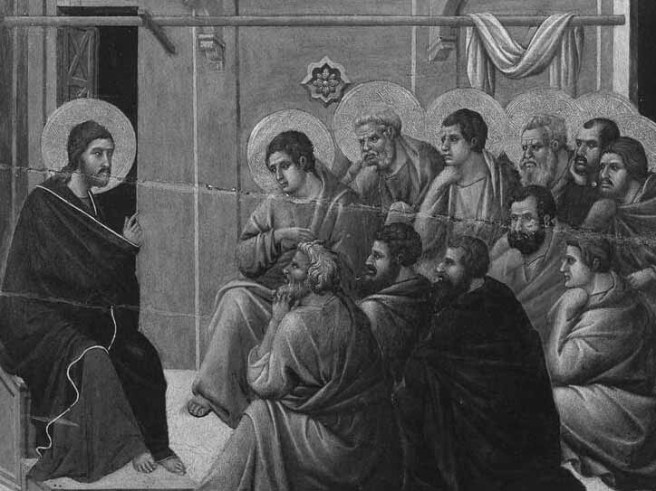
Farewell Discourse from the Maesta by Duccio (1308-1311)


At any given Sunday service, youth retreat, children’s church, Christian concert, etc, there is typically what is known in American Christianity as an “altar call.” It is usually an invitation of those who want to make Jesus Christ their personal Lord and Savior and those who already are Christians but want to rededicate their lives to Him. Some attribute the popularity of alter calls to Billy Graham and his popular crusades. While there is no direct biblical reference to alter calls, I cannot speak negatively of them. Many have come to Christ by the way of altar calls.

I want to talk about what happens after the altar call. I think we falter when we see altar calls as a litmus test of how well a ministry or sermon or gathering is going. We like seeing crowds come to the front. We like knowing that (x) amount of people filled out commitment cards. But there is a danger of a false sense of accomplishment here.

How many of these decisions to come forward were caused by family or peer pressure? How many of these decisions to come forward were based on emotions being drawn by the worship leader? What happens after the music stops? Are these conversions genuine? I’m sure millions are. But, who seeks to pour into spiritual growth afterwards?

In what is known as The Great Commission found in Matthew chapter 28, Jesus commands “Go and make disciples of all nations…”  While making converts is vital to the growth of the Church, there has to be a continuous maturing of the believer after that. Otherwise you’re left with large amounts of spiritual infants who, often by no fault of their own, haven’t moved from milk to meat. They were simply a face in a crowd. While the angels were rejoicing at their salvation the elders bragged about the number of hands that were raised.

If a man has been working at a job for 20 years and showed very little knowledge or skill in his work, you might believe something to be very wrong, either with him or the training program. If a man is a Christian for 20 years and can’t name something elementary like the four Gospels and shows very little spiritual fruit, we should be wondering what went wrong. He is spiritually a 20 year old infant.

Wikipedia defines a disciple as a “student”. Merriam Webster defines a disciple as “someone who accepts and helps to spread the teachings of a famous person.” In traditional Chinese, the disciple was a person “who believes in the ideas and principles of someone famous and tries to live the way they do or did.” In the original Greek of Matthew 28, disciple (didaskalos) is a pupil of a master or teacher. The root Latin word that we get disciple from (discipulus) actually means “scholar”.

As we can see the meaning of disciple is far from someone who stays in spiritual infancy. A disciple should be steadily growing in knowledge and holiness. While the Holy Spirit has His part to play, so do other believers. When Jesus called out Lazarus from the dead, he left it up to his family and friends to make sure he didn’t stay in his grave clothes. In other words when we are saved from our spiritually dead selves, it is the responsibility of those who have been waiting and praying over us to help us look like the spiritually awake individuals that we become. This is one reason being an active member of local church is so vital.

I know of many churches that don’t just leave the new believer alone after their conversion. Many send mail, call, or even visit to help ensure the believer is growing. Many churches have discipleship programs where the new believer or even the 20 year old infant can learn to grow in Christ. There are missionaries who don’t just leave the people they find with a new faith but actually ensure the natives they converted learn and grow to become new pastors and teachers. These are the churches and believers that are fulfilling Jesus’ mandate to make disciples.

If you are a new believer or believer who realizes that you haven’t been growing since you got saved, then my advice is to surround yourself with believers who are maturing spiritually. Find a church that encourages Bible reading and group study. And make the time often to study for yourself.

Helping believers grow in knowledge is one of our goals here at Theologetics.org. Every believer must also mature in spiritual fruit. It is our prayer that reading this will cause us to evaluate ourselves and motivate growth in both aspects of your Christian walk.

Applicable verses:
Matthew 28:19
Hosea 4:6
Psalm 1:1-3
2 Peter 1:5-6
2 Peter 3:18
2 Corinthians 13:5
Colossians 1:10
Ephesians 4:15
Galatians 5:22-23
Titus 2:1-8
Hebrews 5:12

Derrick Stokes
Theologetics.org

How to Understand the Bible

william-morris-letter-b
William Morris letter “B”

Do your best to present yourself to God as one approved, a worker who has no need to be ashamed, rightly handling the word of truth– 1 Timothy 2:15

I’ve heard the same story repeated. I’ve even experienced it myself. A Bible Study is underway and the person leading the study will begin by reading a verse or passage. Then he will ask those attending what that scripture means to them. In a group of 10 you might get 10 different answers. This is especially true with more ambiguous or mysterious passages. You might ask “what’s wrong with that? The Bible speaks to everyone differently depending on where you are in your life.” There is some truth to that. But let me provide another perspective:

You write a letter to a loved one. How much of that letter would you expect them to read? It would be safe to assume that the entire letter is to be read. While certain phrases or sentences may stick out in the persons mind, they are to be taken in context with the rest of the letter. If a sentence seems questionable on its own, usually it is the rest of the letter that will make sense of it. It’s all a part of communication. You want the reader to understand what you meant, not for them to inject their own interpretation.
This is how we should come to scripture.

The Bible is a collection of books and letters written to those identified as God’s people. Hermeneutics is the science of rightly interpreting the Bible.
Scripture in its original form did not consist of chapter and verse divisions. To be honest sometimes I wish it still didn’t. But, with such a large book, chapters and verses are helpful for finding the words you need. However, we fail when we pick out a verse without understanding the surrounding text, or context (with the exception of most of Proverbs and Ecclesiastes). Take a verse like Matthew 7:1 “Do not judge lest you be judged,” which many of us take to mean you should never correct anyone in sin or wrong doing. However, a more thorough reading of chapter 7 will explain that we’re not being told NOT to judge. We’re being told that we shouldn’t judge others before we have judged and corrected our selves first (verses 3-5) on the same matter. Some chapters even begin with the adverb “therefore” meaning “for that reason”. Because of this, we should know what was being said in the previous chapter. This will bring new light to the following chapter. Since most books in the Bible are written as narratives or letters, it would greatly benefit the reader to read the entire book other than just a couple of chapters. This can and will bring the better understanding of each verse read.

In the grander scheme, reading the entire Bible can bring better contextual understanding of each of its included books. In regard to Matthew 7:1 we are told over and over throughout the Bible to judge rightly and to use discernment (judging). Making the common phrase “The Bible says not to judge,” erroneous and at best incomplete.

Literary context is only one step in “rightly dividing the word of God.” Duvall and Hayes in their book GRASPING GOD’S WORD, explain how to get a better understanding of scripture in 5 steps they call “The Interpretive Journey”.

Step 1 is called “Grasping the text in their town”. Basically what would the text in question mean to the original readers. How would they have understood it. This can be difficult if there is no general understanding of who the original audience was or how they viewed the world around them. Is the book written as a historical document, poetry, epistle?

Step 2 is measuring the width of the river to cross. In other words what are the differences between the original audiences and myself? What was their culture, language, and situation? Were they under a different covenant?

Step 3. “Crossing the principlizing bridge.” What is the theological principle this text presents? You come to a verse like “A woman must not wear men’s clothing, nor a man wear women’s clothing, for the LORD your God detests anyone who does this” in Deuteronomy 22:5. This isn’t just a commandment forbidding women to wear pants. If we look at the differences in culture as stated in Step 2, we can understand that there were no pants in the culture of the ancient Israelites. So they would have understood it to mean your appearance in general. God made man to be male and woman to be female. The way you present yourself to the world is to either submit to who God made to be or to go against it. Crossdressing could also be a matter of being deceptive.

“Consulting the Biblical map” is Step 4 of the journey. This goes back to using the rest of scripture as context for understanding. Is what I have gathered about this passage in agreement with the rest of scripture? Since God does not contradict Himself nor does He change His mind then if my understanding is contrary to what is explicitly stated elsewhere then it is my understanding that needs to submit to scripture, not the other way around.

The Last step on the journey is “Grasping the text in your own town”. This is where you apply what you have learned in the previous 4 steps to your life and the lives of those around you. How does it apply in my life and culture now?

Biblical exegesis is a process of rightly interpreting. Exegesis is only done through careful and objective study of the text. The opposite of proper exegesis is called eisegesis. Eisegesis is when the reader interprets the text through subjective lenses and makes the scripture mean whatever he wants it to mean.

One way to properly exegete scripture is by studying the original languages it was written in. I’ll give a simple example that many of us have learned in high school. There is a famous scene in Romeo and Juliet where Juliet is seen asking “Romeo, Romeo. Wherefore art though Romeo.” Now in our modern English, that sounds like Juliet is inquiring about the location of her beloved Romeo. But, in the 1500s, when it was written, that phrase would have been understood as “Romeo, Romeo. Why are you Romeo?” Since Romeo and Juliet came from feuding families she was asking why did Romeo have to be Romeo of the family that her family hated. The next line in the poem makes sense of this when she says “Deny thy father…” Therefore, using proper literary and cultural context we gain a better understanding.

Now if we need help understanding a poem written in the same language only a few hundred years ago, how much more so a book written in foreign languages thousands of years ago? Now I’ll use a biblical example to make my point.

In John 21, after Jesus’ resurrection, He asks Peter “Do you love me?” To which Peter responds “Yes Lord; you know that love you.” Jesus asks this question to Peter twice more. And twice more Peter has the same response. Now in the English this may seem like just a conversation about Peter’s love for Jesus, and that would be right. However, the conversation in the original Greek presents Peter answering a somewhat different question than he is being asked. The term love that Jesus is using is the Greek word “agape” meaning an unconditional love. The term for love that Peter uses is the Greek word “phileo” meaning more so a brotherly/friendship type of love. Both still “love” but different verbal expressions and meanings. It is believed that Peter was so ashamed after his 3 denials of Christ that he could not say with confidence that he unconditionally loved his Lord because his zeal turned to fear and he abandoned Jesus.

Back to the scenario being played out in Bible studies around the country. The goal should not be to come away with subjective interpretations of scripture. We can know what the Bible says and what it means when time is taken to properly study it. So to correct this scenario the person leading the study should already have a proper understanding of the text. Yet, he can walk his audience through how he got the understanding of what the original author meant. So, when the time comes to engage the group, they aren’t left with subjective interpretations; they will have an educated understanding of what was meant. What the Author actual meant. The subjective part comes in how each individual with apply it to his or her own life.

Some people ask me how they should begin reading the Bible. It is my personal opinion that starting with the New Testament is the wisest choice. Start at Matthew and read to the end of Revelations. When I began seriously reading the Bible I spent most of my time in the New Testament until I’d read it several times. I suggest the New Testament first because it teaches us what we need to know about salvation and Christian living. Then I say read the Old Testament, Genesis to Malachi. But as you are reading be sure to read each book just like you would a book. Only using chapter and verse divisions as reference points. Write down verses that speak to you (or baffle you) in a notebook for further study. And last but most importantly, always seek the Holy Spirit’s illumination. Reading the Bible without it will lead to confusion, misunderstanding, and misuse.

By Derrick Stokes
Theologetics.org

Why Didn’t God Make Us Perfect Without Sin?

satan-fall-milton
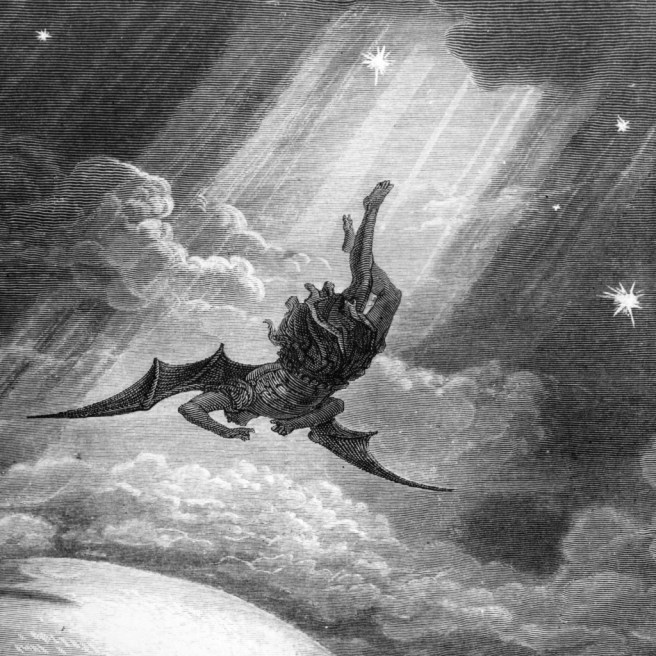
Gustave Doré (engraving); Satan, the Fallen Angel, is flung from Heaven and nears the confines of the Earth on his way to Hell [Paradise Lost, John Milton; 1667]; c. 1866.
God is perfect and God is holy.

So why didn’t God make humans and angels perfect so that they would never sin?

If we can even deduce this, the following are some of the questions I would consider to help us understand why God didn’t make us perfect:

A. Could God have created a perfect being with free will that would never sin?
B. In heaven, will we lose our free will or will it still be possible for us to sin?
C. Why did Lucifer sin in the first place?

D. Why does God allow sin?


A. Could God have created a perfect being with free will that would never sin?

Consider Philippians 2:5-7
“5
Have this attitude in yourselves which was also in Christ Jesus, 6who, although He existed in the form of God, did not regard equality with God a thing to be grasped, 7but emptied Himself, taking the form of a bond-servant, and being made in the likeness of men.…”

Now it seems as though even Jesus Himself outlined human equality with God something that cannot be attained and Jesus was man and God! (This concept of Jesus being 100% man and 100% God is confusing but a brief explanation can be found here under Jesus’ Humanity & Eternality)

Also consider that the question “Could God have created a perfect being with free will that would never sin?” seems to cause an issue; If God were to create a perfect being with free will that never sinned, then it is possible He would in one sense have created a being that was equal to God (at least on some level). A being that is perfect without sin would also be holy, so this seems to indicate that He would have just created another God (this is assuming that perfection is all-encompassing).

Now, this thought process implies that what makes God God is His being perfect and holy. This may not be entirely true since God is more than perfect and holy. There is also His eternality, aseity, necessity, and a list of other characteristics you can find here but it is worth thinking about.

Someone may ask, “If it’s true that God wouldn’t make someone perfect to begin with, how is it possible to become perfect in heaven?” Well, the saints (those who accept Christ as Lord and Savior) were not created perfect but have been perfected by the blood of Jesus. A caterpillar does not become a new creature when it transforms into a butterfly. It’s existence doesn’t cease, it is in a sense “perfected”. The Christian does not cease to be one creation and enter into a different existence. It transforms into perfection.

So, it seems that we will possibly be transformed into perfection in heaven but not into perfect beings, at least not perfect like God is perfect so there seems to be a difference.

B. In heaven, will we lose our free will or will it still be possible for us to sin?
&
C. Why did Lucifer sin in the first place?

One would assume that in heaven, we will know God and His perfectness. That we would still possess free will so to speak but we would never want to deny our Creator because of our knowledge and love of Him? This has been the explanation I have always believed but it still seems like it circles back to the question; Why in heaven would Lucifer sin being in what seems like a similar situation?

I personally believe the answer to question B. is no we will not lose our free will but we won’t want to sin. One reason presented to me for why we could possess free will in heaven and never sin is that we will likely know the difference from being in a place where suffering and pain exists to being in a place where it does not (somewhat separated from God’s presence on earth at God’s discretion). Lucifer had no such knowledge. So it is possible Lucifer ignorantly thought he could take God’s place and it subsequently got him and all the angels who took his side thrown out of heaven because of it. But what could have started this “chain reaction” so to speak?

I have written before about my personal thoughts on sin and/or evil possibly being the direct result of God’s absence but I recently read an article by John Piper (Where Did Satan’s First Desire for Evil Come From?) about an idea worth pondering; that basically God’s glory somehow being hidden from Lucifer may explain Lucifer’s initial desire to “be” God. So maybe, while Lucifer didn’t know what we know about the ugliness involved in the separation from God, some degree of separation may have sparked the flame within him. This is not to say that it is absolutely how it happened, it is just a possibility. Why would God do that to begin with you may ask? I will give my explanation in the next section.

D. Why does God allow sin?

God is perfect and God is holy. He created us with the sin plan. Somehow this is better than making us perfect without sin. I believe that the reason why it is better is evident in the Genesis account of God making the Tree of the Knowledge of Good and Evil for Adam and Eve, and even before with Lucifer by possibly hiding His glory from Lucifer so he and all of creation could experience an unforced choice to love God which seems to require free will.

Another article I read by

So, all things considered, it appears that God created humans and angels with the ability to sin (freely deny Him) because He wanted us to be able to love. God did not want robots, after all, so He allowed himself to be hidden just enough that we must choose to believe, follow, and love Him. It is the sad reality that sin separates us from God. God does not want us to be separated from Him but because of the gift of free will which God has given each of us, we can choose to live a life without Him. Because God is holy, He cannot give anyone a “free pass” and let sin go unpunished but the good news is that someone already bore your punishment for you and His name is Jesus! All you need to do is accept His gift and turn from your sin. It is my prayer that you choose to do so right now, because you may not get another chance tomorrow and there is nothing worse than a lack of God for eternity.

By Clark Campbell with input from Derrick Stokes and Paul Grodell
Theologetics.org

Thoughts, Prayers, Amens and Lies

Praying-Child
Jacques Hnizdovsky (1915-1985) Praying Child Notecard

I had a discussion about prayer with a few individuals online that brought up some interesting ideas, this is just part of that conversation. It all started when this statement was made:

Person A “Any of us who tweet or post “prayers” for people in tragedy and do not follow through on them are in sin. Any of us who merely tweet or post “thoughts” going out to people in tragedy are painfully mistaken. And any of us who broadly dismiss the honest prayers for people in tragedy are tragically blind to true power.”

Now this first statement seemed pretty straight forward to me and a rather truthful statement as well but the conversation that ensued brought up some interesting questions about prayer.

Person BJust making the statement “you are in my prayers” requires the conscious thought in reference and affirmation [of] a higher power and if sincere IS in essence ……a prayer

So as I see it, here is the “theory” being presented for lack of a better word;

A Christian’s thought is a prayer.

If someone has a prayer request and you say to them “You are in my prayers”, because you think it, agree with what they are saying, and have a relationship with God, because God knows your thoughts, you in essence just prayed. Let us continue…

Me “Person B, your statement is an interesting one, at first thought I’ll admit it sounded like a cop-out to actually taking the time to say a specific prayer but when I thought about it, I’m wondering if there could be a little something to that statement…

Person A “Not sure that I agree with that person B. Tacitly referring to a higher power and affirming the existence of a higher power is not in essence communicating with that higher power. Prayer is directed to God. Telling someone “you are in my prayers” is directed toward that person. Also, what is the content of this “prayer” when you say “you are in my prayers”? It seems rather vacuous. In other words, when you say “you are in my prayers”, what are you actually praying for or about on behalf of that person?

Person BIf a person is in your thoughts even and you have a personal relationship with God – any conscious thought of that person while thinking of God would be as sincere and direct a petition to God as any plastic prayer one could muster.

One could go to church and pray every prayer in the book standing or kneeling or arms raised….it matters not.

I would say the almighty needs not for you to do that. Your own relationship with God and your conscious and heartfelt sincere thought is enough. …”

Person A “…When you say “my prayers are with you,” there is no specific petition attached to that, and that is directed at the person and not to God. Prayers can be communicated all sorts of ways, but there must actually be a communication, which implies specific content. So, I’m not sure in what sense simply saying it makes it true…

So, what is being presented now is that saying you will pray for someone is not a prayer because prayer is a conversation between you and God, but that conversation has not happened yet when you simply tell someone you will pray for them. A valid point.

Person BDo you believe God knows your intent? God has grasp of your conscience? God is aware of your conscious and subconscious? That God knows exactly what you are thinking?

Person AIf you do not actually pray, did you have intent to pray?

Person BI agree that if you say that (with intent to pray) and never pray- you’re right (right about not praying being a sin). However if you have a conscious contact with God- and you tell someone you will keep them in your prayers- God can take it from there- you just prayed.

MeThe one point that has not been specifically brought up is that the Bible, and Jesus Himself, commands us to pray specific prayers beyond just agreeing with others needs. The agreement is basically the amen part of the prayer. I personally think that person B is onto something if the comment to someone’s request for prayer was “amen” because that implies “I hear your need, I agree with you and stand with you and believe God’s will will be done.” But if someone were to say “I’m praying” since the Bible is clear on what prayer is, that person should actually take the time to say a prayer.

A few more things were said but one last statement stood out to me:

Person BIf God already knows your specific content whether it be verbalized or not- what need there be for an Amen. God already knows you are in agreement. God already knows if you’re NOT in agreement!!

So one last point I would like to make is that by this logic, one could argue that prayer is not needed at all. If God knows all and is all powerful, then who are we to think that making requests to God in prayer will make any difference?

Well, the problem with this line of thinking is that, like I brought up in the conversation, the Bible and Jesus Himself commands us to pray. Prayer is for our benefit not Gods and is specifically defined. Prayer allows us to grow closer to God, and while God is unchanging by nature with His immutability and impassibility, we can change, so the outcome of a situation can change because we pray.

An example of this is in Genesis 6:6

“And the LORD regretted that he had made man on the earth, and it grieved him to his heart.

Did God make a mistake in making men on the earth? Did he change his mind about his creation? If he was grieved in his heart, does that mean he has changing emotions the same way we have changing emotions?

No. No. And no.

The simple answer is that God does not change, we do. God is holy and we are not. When sin enters the picture, God must act, he is unchanging in this way. So the same principle can be applied to prayer. While we cannot change God’s mind, I believe prayer can move God to act in ways we cannot fully understand and no matter what, prayer lets us become more intimate with the one who made us, we can draw closer to him through our prayers. Who wouldn’t want that?

By Clark Campbell with quotes from a random online conversation
Theologetics.org

Why Did Jesus Want Two Swords Before He Died?

Jesus-Betrayed
Woodcut for “Die Bibel in Bildern”, 1860.
Artist: Julius Schnorr von Carolsfeld (1794-1872)

“Jesus died because He loves us.”

The meaning of this statement was taken to a whole new level for me once I understood why Jesus may have wanted His disciples to be armed on the night before He was crucified.

Luke 22:35-38
35 Then Jesus asked them, “When I sent you without purse, bag or sandals, did you lack anything?”

“Nothing,” they answered.

36 He said to them, “But now if you have a purse, take it, and also a bag; and if you don’t have a sword, sell your cloak and buy one. 37 It is written: ‘And he was numbered with the transgressors’; and I tell you that this must be fulfilled in me. Yes, what is written about me is reaching its fulfillment.”

38 The disciples said, “See, Lord, here are two swords.”

“That’s enough!” he replied.

I found this passage perplexing since Jesus commanded His disciples to buy swords but then when they said they already had two, Jesus said that would be enough. What was He referring to? Enough for what??

Well I read an article about Dale Martin, who is a professor of religious studies at Yale University (link at the bottom), that may explain it. The article is titled:

Jesus Was Crucified Because Disciples Were Armed, Bible Analysis Suggests

The writer of the article actually tries to prove a different point about how Jesus was trying to be a political leader.

What the writer didn’t mention are verses that would prove this view wrong, that His disciples thought that’s what the Messiah would do all along; free them from Roman rule, but the Bible is clear on all accounts that this was not why Jesus came to earth. Regardless, if Jesus’s disciples having swords did make the crucifixion possible, it is pretty amazing to think about how the events leading up to Jesus’s death actually unfolded.

In Luke, it’s recorded that before Jesus was betrayed, He told His disciples to buy swords. They told Him they had two already and He said that was enough. This seems strange, what good would two swords do all of them? Well according to the article mentioned above, by Roman law, Jesus was crucified because of the swords His disciples were carrying the night He was captured. If that was the case, He actually made sure they had swords so that He would be crucified.

Also, Jesus wanted them to have the two swords to fulfill a prophecy in Isaiah.

Therefore I will give him a portion among the great,
    and he will divide the spoils with the strong,
because he poured out his life unto death,
    and was numbered with the transgressors.
For he bore the sin of many,
    and made intercession for the transgressors. (Isaiah 53:12)

So what seems like a strange request by Jesus the night before being betrayed, humiliated, beaten, and crucified was possibly a request to ensure that He would be crucified to fulfill the prophecies about Him and save the lost. What an amazing God we serve!

If you read this article and do not know Jesus as your personal Lord and Savior, please send us an email (Theologetics3.15@gmail.com). We would love to tell you more about how to have a personal relationship with Him!

http://www.newsweek.com/jesus-was-crucified-because-disciples-were-armed-bible-analysis-suggests-271436

By Clark Campbell
Theologetics.org

Do All Scientists Today Really Base Their Beliefs On Science?

Gur029b
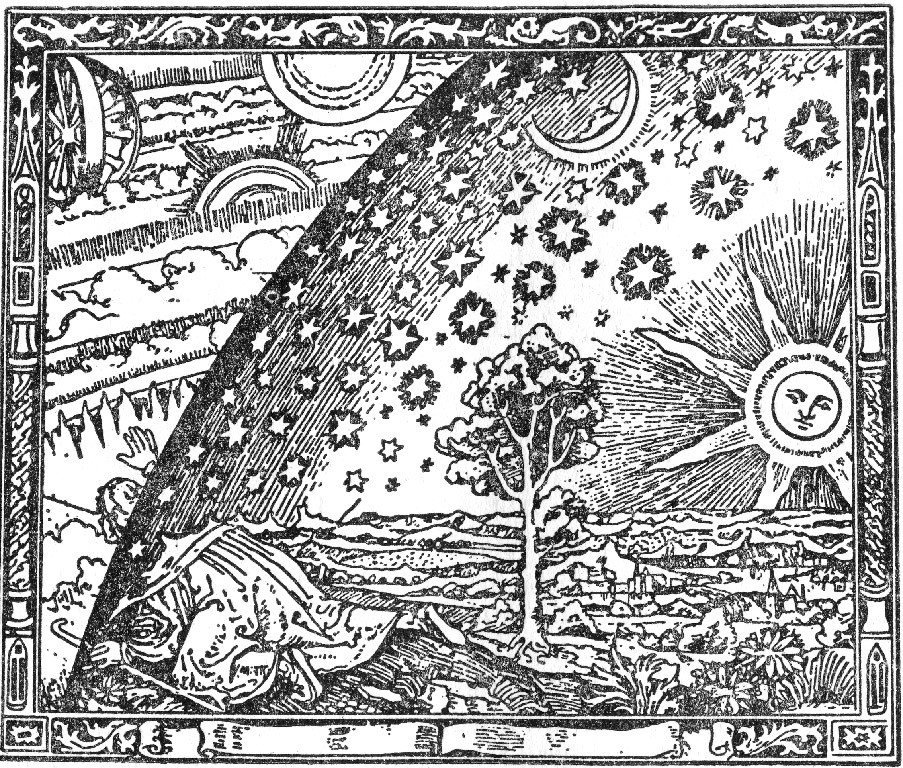
Anonymous – Camille Flammarion, L’Atmosphere: Météorologie Populaire (Paris, 1888), pp. 163

There are natural laws built into the fabric of our existence. Laws like gravity.

These laws, that can be tested by science, are necessary for our existence and are very finely tuned. So much so, that they are difficult to imagine originating on their own by chance.

One such law is so finely tuned, it has been shown that to have happened naturally on its own, by what we know about our universe without something to finely-tune it (God), would be absurd. To have happened on its own would practically be impossible; this law is the cosmological constant.

Scientific theorists have pointed to other possibilities to get around the need for a fine-tuner, one popular idea is that our universe is just one of an infinite number of universes, each with it’s own naturally developed laws. This means that within this “multiverse”, it isn’t absurd to think that our universe is as finely tuned as we measure it to be because if there are an infinite number of universes out there, then at least some would end up with ideally tuned laws for the existence of life.

Scientifically there is a problem with theories like these; they are not scientific. At least not in the sense that they can be measured, observed, and quantified.

Despite this problem, there are many scientists who entertain this idea of a multiverse or even outright believe it exists. The interesting thing is that many of these same scientists would likely be quick to dismiss the idea that God was the one who fine-tuned our universe making it ideal for life on earth.

The point of this article is that the Bible says that nature itself is evidence that God exists.

Romans 1:20
For ever since the world was created, people have seen the earth and sky. Through everything God made, they can clearly see his invisible qualities—his eternal power and divine nature. So they have no excuse for not knowing God.

The scientist who says that a multiverse explains our natural existence occurring by chance or the believer who says that God explains our finely-tuned existence by His eternal power are both making the same statement, and that statement is this:

“I have FAITH!”

If you would personally like to know the God who made our universe, the God who is love, the God who knows who you are and wants you to know Him. If you would like to know Him, just message us (Theologetics3.15@gmail.com), we would love to share!

By Clark Campbell
Theologetics.org

Jesus, the Bible, the Quran, and the Law of Non-Contradiction

Empty Tomb
Author: Doré, Gustave, 1832-1883 Image Title: Angel at the Door of the Sepulchre, woodcut

The Law of Non-Contradiction states that

(A) cannot be both (A) and (non-A) simultaneously.

It is logical to have different aspects of (A), but not contradictory aspects.
Example: John is a father. John is in New York. These are different aspects of the same person. However, logic demands that John cannot be in New York and not be in New York at the same time. This would be contradictory. This goes against logic.

According to the Bible, Jesus died a public death on the cross and rose three days later. All four Gospels testify to the crucifixion referenced below but for the sake of time we will look at John specifically:

Matthew 27:45-60
Mark 15:33-39
Luke 23:44-49

John 19:16-33
16. Finally Pilate handed him over to them to be crucified. So the soldiers took charge of Jesus.
17. Carrying his own cross, he went out to the place of the Skull (which in Aramaic is called Golgotha).
18. There they crucified him, and with him two others—one on each side and Jesus in the middle.
19. Pilate had a notice prepared and fastened to the cross. It read: Jesus of Nazareth, the king of the Jews.
20. Many of the Jews read this sign, for the place where Jesus was crucified was near the city, and the sign was written in Aramaic, Latin and Greek.
21. The chief priests of the Jews protested to Pilate, “Do not write ‘The King of the Jews,’ but that this man claimed to be king of the Jews.”
22. Pilate answered, “What I have written, I have written.”
23. When the soldiers crucified Jesus, they took his clothes, dividing them into four shares, one for each of them, with the undergarment remaining. This garment was seamless, woven in one piece from top to bottom.
24. “Let’s not tear it,” they said to one another. “Let’s decide by lot who will get it.” This happened that the scripture might be fulfilled that said, “They divided my clothes among them and cast lots for my garment.” So this is what the soldiers did.
25. Near the cross of Jesus stood his mother, his mother’s sister, Mary the wife of Clopas, and Mary Magdalene.
26. When Jesus saw his mother there, and the disciple whom he loved standing nearby, he said to her, “Woman, here is your son,”
27. and to the disciple, “Here is your mother.” From that time on, this disciple took her into his home.
28. Later, knowing that everything had now been finished, and so that Scripture would be fulfilled, Jesus said, “I am thirsty.”
29. A jar of wine vinegar was there, so they soaked a sponge in it, put the sponge on a stalk of the hyssop plant, and lifted it to Jesus’ lips.
30. When he had received the drink, Jesus said, “It is finished.” With that, he bowed his head and gave up his spirit.
31. Now it was the day of Preparation, and the next day was to be a special Sabbath. Because the Jewish leaders did not want the bodies left on the crosses during the Sabbath, they asked Pilate to have the legs broken and the bodies taken down.
32. The soldiers therefore came and broke the legs of the first man who had been crucified with Jesus, and then those of the other.
33. But when they came to Jesus and found that he was already dead, they did not break his legs.

As you can see, according to the Gospels, Jesus died. In addition to this the Bible is clear on the importance of Christ’s death, resurrection, and ascent into heaven:

1 Corinthians 15 & 1 Timothy 3:16-17

In Islam, the Quran mentions Jesus more than any other Prophet. It states He was born of a virgin (Surah 19), had disciples (5:111-115), ascended into heaven (4:158), and will return as a sign of the end times (43:61). However, unlike the Bible, the Quran states that Jesus did not die:

Quran 4:157-158
That they said (in boast), “We killed Christ Jesus the son of Mary, the Messenger of Allah”;- but they killed him not, nor crucified him, but so it was made to appear to them, and those who differ therein are full of doubts, with no (certain) knowledge, but only conjecture to follow, for of a surety they killed him not:-
Nay, Allah raised him up unto Himself; and Allah is Exalted in Power, Wise;

Now, we go back to the logic stated at the beginning. (A) cannot be both (A) and (non-A). Both can’t be true. Here, we have the Bible (particularly the Gospels) stating Jesus died and the Quran stating that He didn’t. Both cannot be true.

But wait, the Quran makes a couple other very important claims.
–God sent the Gospels

3:3
It is He Who sent down to thee (step by step), in truth, the Book, confirming what went before it; and He sent down the Law (of Moses) and the Gospel (of Jesus) before this, as a guide to mankind, and He sent down the criterion (of judgment between right and wrong)
5:46
And in their footsteps We sent Jesus the son of Mary, confirming the Law that had come before him: We sent him the Gospel: therein was guidance and light, and confirmation of the Law that had come before him: a guidance and an admonition to those who fear Allah,

— The word God sends cannot be changed (corrupted)

6:34
Rejected were the messengers before thee: with patience and constancy they bore their rejection and their wrongs, until Our aid did reach them: there is none that can alter the words (and decrees) of Allah. Already hast thou received some account of those messengers,

Yet, Muslims believe that the Gospels have been altered to show that Jesus died.

What can we say then? The last of the four Gospels, John, can be dated around 80 A.D. The Quran is dated 570 years later at around 650 A.D.

Jesus either did die or didn’t die. Both books can’t be right on this subject. However, looking at the Gospels and what the Quran teaches about the Gospels, the only logical conclusion on the matter is Jesus was crucified. Both texts affirm it when logic is applied!

So let us recount the sequence of events:

Logic: (A) cannot be both (A) and (non-A) simultaneously
The Gospels attest to Jesus dying on the cross
While Quran 4:157-158 says that Jesus did not die
But Quran 3:3 & 5:46 says God sent the Gospels
And Quran 6:34 states the word God sends cannot be changed (corrupted)
So we are left with two conclusions:

1. If the Quran is right about Jesus not being crucified, this would mean it is wrong about God’s word being incorruptible, so the Quran itself loses credibility since it states the Gospels and the Quran were both sent by God.

or

2. The Quran, which was written over half a millennium after the Gospels, is simply wrong about Jesus not dying because it changed the account of Christ’s death and resurrection.

If both texts logically affirm the Gospels; and the Gospels state Jesus died a public death, was buried, and raised on the third day, we have one more reason to believe in the authority of the Christian scriptures. We have more reason to place our faith in the atoning work of Jesus, the Son of God!

In his book, AT THE MASTER’S FEET, Sadhu Sundar Singh, Christian missionary, imagines a conversation between a disciple and Jesus in which Jesus says:

The cross is the key to heaven. At the moment when by My baptism I took the cross upon My shoulders for the sake of sinners, heaven was opened, and by means of My thirty-three years bearing of the cross and by death upon it, heaven, which by reason of sin was closed to believers, was for ever opened to them.

By Derrick Stokes
Theologetics.org

The Hidden “Verse” about Jesus in Genesis 5

Jesus
Christ Crucified between the Two Thieves: The Three Crosses Rembrandt (Rembrandt van Rijn) (Dutch, 1606–1669) Drypoint, engraving, and scraping; fourth state of five Gift of Felix M. Warburg and his family, 1941 (41.1.33)

The more I learn about God’s Word, the more I stand in awe at how amazing God is. To think, that the book of Genesis, a book written over 1,400 years before Christ was even born, contains specific information about God’s plan to redeem the world by sending his only Son Jesus, it is simply incredible.

This is a subtle foreshadowing of Jesus in Genesis 5, I first heard about this subtlety in a short YouTube video which is linked at the bottom of this article. Now it should be noted that Hebrew cannot be perfectly translated into English, or any language for that matter, so some may disagree on the definitions presented but each one is a definition of the name or the idea behind the name, so I feel the following is pretty amazing!

In Genesis 5 the genealogy from Adam to Noah and a meaning of each name in English is as follows:

1. Adam = Man
2. Seth = Appointed
3. Enosh = Mortal
4. Cainan = Sorrow
5. Mahalalel = The Blessed God
6. Jared = Shall come down
7. Enoch = Teaching
8. Methuselah = His death shall bring
9. Lamech = The despairing
10. Noah = Rest

Some names have multiple meanings and roots but one translation of each of the ten names, one name after the other reads:

Man Appointed Mortal Sorrow,
The Blessed God Shall come down Teaching,
His death shall bring The despairing, Rest

So there you have it. The story of Jesus in the 5th chapter of Genesis. These names, starting with Adam from the beginning of creation, to Noah around 2,000 years before Jesus was even sent to earth, outline what God had planned all along to get his children back. Not only that, but this is another example of Christ’s divinity.

I believe that God has a reason for every single word in the Bible, every period and every comma, on more dimensions than we can even imagine. Because of that, I believe the ideas behind these names can be translated this way for a reason, and that reason was to show the world in yet another context, that God loves us so much that he gave his One and only Son to save us from our sin!

1. http://www.abarim-publications.com/Meaning/Adam.html#.VjxQaKSlr7s
2. http://www.abarim-publications.com/Meaning/Seth.html#.Vjw8E6Slr7s
3. http://www.abarim-publications.com/Meaning/Enosh.html#.VjxH26Slr7s
4. http://www.abarim-publications.com/Meaning/Cainan.html#.VjxHyKSlr7s
5. http://www.abarim-publications.com/Meaning/Mahalalel.html#.VjxIWqSlr7s
6. http://www.abarim-publications.com/Meaning/Jared.html#.VjxI8aSlr7s
7. http://www.abarim-publications.com/Meaning/Enoch.html#.VjxOraSlr7s
8. http://www.abarim-publications.com/Meaning/Methuselah.html#.VjxPQqSlr7s
9. http://www.abarim-publications.com/Meaning/Lamech.html#.VjxUrKSlr7s
10. http://www.abarim-publications.com/Meaning/Noah.html#.VjxQBaSlr7s

http://www.youtube.com/watch?v=WsPhPldS6ys