In Numbers 21, we read one of the more surprising rescue stories of Israel. The people rebelled, serpents bit them, many died, and Moses prayed for the nation. Then the LORD said:
“Make a fiery serpent, and set it on a pole; and everyone who is bitten, when he sees it, shall live.” (Numbers 21:8)
So Moses made a bronze snake, lifted it high, and those who looked endured. That bronze image was, in its moment, a divinely-given means of deliverance. It was not magical in itself, but God created it as a sign: repent, look, live.
Later, however, we read in 2 Kings 18:4 that King Hezekiah destroyed that very bronze serpent — called Nehushtan — because the people had begun to burn incense to it. What was once a tool became an idol.
The bronze serpent was not a fetish. It was not meant to become the object of worship. It was a “look and live” sign. The serpent foreshadowed later realities (as Jesus himself referenced in John 3:14–15) — the lifted-up Christ, who brings healing, life, and redemption.
The key is: God ordains means, for his purposes, in his time. A means is good so long as it points away from itself and points to him.
But the bronze serpent became a problem. 2 Kings 18:4 states:
“…for up to that time, the Israelites had been burning incense to it. It was called Nehushtan.”
What changed? The people stopped seeing the object as the means. They began venerating the object. They burned incense. They worshipped the serpent. The means became the end. The sign became the substance. The action became the object of trust.
Thus, we see a pattern:
1. A god-ordained symbol becomes a comfortable habit.
2. A god-ordained tradition becomes a barrier to biblical truth.
3. A god-ordained means becomes the substitute for the true end.
If we’re not cautious, the very things God uses to bless our faith become traps in our devotion.
What does this look like in our context today?
Perhaps a worship style, a ministry program, a church tradition — originally given to serve — becomes the thing we cling to, rather than Christ.
Perhaps a past experience of God becomes the standard prize rather than the person of God.
Perhaps a helpful symbol, like a cross on a necklace, becomes the locus of our trust.
When the object of our faith becomes anything but the living God, we drift into idolatry. And idolatry is not just bowing to carved images; it is anything that takes God’s place in our hearts (see Romans 1). To serve the created rather than the Creator is to become idolaters (Romans 1:25).
Hezekiah’s act of breaking the bronze serpent is a striking image. It’s not destruction for destruction’s sake: it is obedience to the Lord’s re-ordering of worship. The object itself had done its job — it had served its day — and now it hindered the true worship of the living God.
We, too, must ask: Are there “bronze serpents” in our lives? Things once used by God that now stand between us and God. Things we trust in, cling to, bow down to — though they were only meant to lead us to Christ.
Therefore, be thankful for the means God has given. Use them. But never worship them. When they become a wall rather than a window to God, they must go.
The gospel is always about Christ, not our methods. Always about faith, not form. Always about the living God, not our comforts.
The Lifted Serpent and the Lifted Savior
Jesus said of this ancient event:
“Just as Moses lifted up the serpent in the wilderness, so must the Son of Man be lifted up…” (John 3:14)
The bronze serpent pointed to Christ on the cross. The serpent on the pole drew the dying, the wounded, the bitten — and when they looked, they lived. Christ on the cross draws sinners, wounded by sin, and grants eternal life by his work. The serpent was never the object of worship — Christ is.
Let us, therefore, live by faith in Christ, not in our symbols. Let us worship God in spirit and truth (John 4:24). Let us tear down our idols — even those born of good intentions — that none may stand between us and the one true God.
Conclusion
The story of Nehushtan is a sober warning and a hopeful message. A warning: that the means can become the idol; a hopeful message: that Christ is the true object, the true end, the living hope. May our hearts hold fast to him — not the bronze snakes of our past, but the Living God who grants life by faith.
When people speak of Christianity, it is often described exclusively as either a religion or a relationship. Those who argue that it’s purely a relationship oftentimes see religion as a negative thing, at least for Christianity. Religion is typically seen as a stiff set of rules held by stiff people wearing their stiffclothes holding their stiff noses in the air as they judge the sinners around them. The Christianity-is-a-relationship crowd tends to place emphasis on love, acceptance, and freedom. On the other hand, the ones who see it as a religion seem to have a more encompassing view of what Christianity is, in my opinion. Yes, it is love and acceptance and freedom. But it also includes structure, rules, and some of the less feel-good aspects like “the wrath of God.”
However, those in the relationship crowd aren’t very different from those in the religion crowd when it all boils down to it. Think about what a relationship is, whether it be between spouses, friends, family, or employees/employers. There are rules, whether spoken or unspoken, written or unwritten, that govern whether the relationship is going to be healthy or not. A healthy relationship has boundaries. One or all parties involved understand that there are certain things that they shouldn’t do if they want to continue in harmony with the other participant(s). A husband knows that certain things will make his wife legitimately unhappy and that other things will bring her happiness and security. Some things may have more bearing on the trajectory of the marriage than others. A cheating spouse is more at risk of causing the marriage to end than a spouse who forgets to take out the trash. Or, in an employee/employer relationship, stealing time is more detrimental than stealing a pen or paperclip. Either way, it’s understood that no matter the relationship, there is typically a strict set of do’s and don’ts if you want the relationship to last. I feel that perhaps, more often than not, those who adhere to a strict mindset of Christianity being a relationship and not a religion want to do away with the religious aspect because they don’t think it’s should be about rules. To this, I agree. It shouldn’t be about rules. It should be about the object that we want to have a relationship with. I didn’t marry my wife for it to be about rules, but I did get married knowing that there are rules that I would have to abide by if I want the marriage to work. Some rules are universal, like don’t cheat. Some rules are more specific to the relationship because of the individuals involved. My wife doesn’t like her steak well done, so I know not to let it cook on the grill for longer than she would like. If I messed up the steak once or twice, she’ll forgive me, but if I do it every time, she may feel as if I don’t care or am doing it out of spite.
The problem with some in the religious crowd is that it has become about rules. The relationship has been completely dismissed for a checklist. Usually, it is a checklist of negatives. Don’t smoke, don’t drink, don’t wear that, don’t say that, don’t go there, don’t watch that. It can easily become (or at least be seen as) a joyless list of impossible commands to appease a joyless and angry God. Many people would rather do without such stringency.
So people do away with the “religion” and its rules. Relationship feels better. It comforts. It brings peace. It brings freedom. It lifts up and encourages. Some say they’re not religious but are “spiritual.” There are various reasons one may claim to be spiritual, but one of the reasons is often a rejection of the rigidity of religion. Some even go further and reject it all together. (Sadly, some people who reject religion aren’t very good at relationships either. They want the security that either may bring but they also want the freedom that makes neither an option. You can’t live as a single person and expect a happy marriage. You can’t be employed but live as though you have no job.)
I feel that what’s missing on both sides is a true understanding of what Christianity is supposed to be. It’s both a religion and a relationship. Merriam-Webster defines religion as “a personal set or institutionalized system of religious attitudes, beliefs, and practices.” Britannica sites religion as: human beings’ relation to that which they regard as holy, sacred, absolute, spiritual, divine, or worthy of special reverence. Both definitions, along with any other I could find, describe what Christianity is. However, that’s like looking at a book and describing it by giving the definition of a book.
Christianity is so much more.
In the New Testament of the Bible, Jesus is often seen rebuking the religious leaders of his day (this fact is frequently used as proof that our faith isn’t a religion). But like the religious leaders in Jesus’ time and those in modern times, the religion is weaponized. The Pharisees and Saducees used the Jewish religion and its rules hypocritically. They misunderstood what the law was given for. One such example was when Jesus healed a blind man on the Sabbath. According to the “rules,” no work was supposed to be done on the Sabbath. This law was (and still is) a good law because it requires rest. Any hard worker understands that sometimes you have to be made to take a breather. Don’t work yourself so that you don’t get time to enjoy yourself and your loved ones. Take a day to enjoy the fruits of your labor. Take this day as a day to gather and worship God. Instead, the religious leaders made it another burden on the people. When Jesus healed the blind man on the Sabbath, he was chastised. John 9 tells us,
“They brought to the Pharisees the man who had been blind. Now on the day which Jesus had made the mud and opened the man’s eyes was the Sabbath…Some of the Pharisees said ‘This man is not from God, for he does not keep the the Sabbath.’” (verses 13-16 NIV).
While the Pharisees knew the letter of the law, Jesus understood the spirit of the law. The rule concerning the Sabbath kept someone from lifting burdens on that day. Jesus freed a man from his burden that day.
When God gives rules, they are to help us. To keep us from trouble. Sometimes, the trouble is unknown to us. Rules aside, the Bible is full of relational statements. God desires all who he created in his image (that’s all humans) to be his sons and daughters. But as I mentioned earlier, to have a healthy relationship with anyone, there are expressed boundaries set by one or more parties. God himself has expressed what his boundaries are. He has said that there are things we ought to do and things we ought not do. The goal isn’t in the oughts and ought nots. The goal is the object of our affection. That object is God. The all-knowing lover of our souls knows what benefits us and what hurts us even when we don’t. Just because something feels good doesn’t mean it’s beneficial in the long run, just like one may use maladaptive coping mechanisms to deal with stress, but in the end, it leads to more hurt.
James 1:15 ESV Then desire when it has conceived gives birth to sin, and sin when it is fully grown brings forth death.
So I’ll end this by saying that yes, the Christian faith is a religion, technically. The goal, however, is relationship. It is what God desires to have with us. It is the reason Jesus came and died: so that we may be reconciled into right relationship with him when we have strayed. But for us to stray means that there was a breach in the relationship. We sometimes walk away by doing what God has expressed displeases him. In the same way, many of us have had failed relationships because we or the other party did something that had negative repercussions on the bond. If we continue, the bond can be severed forever. Likewise, if we continue in ways that displease God, we are severing our bond. One day, it’ll be too late to reconcile.
Earlier today, I read a well written article on a popular Christian website. The name of the website escapes me, though. The name of the article is the same as this blogs title. The conclusion of the article was basically “Yes. God cares.”
Without going into the details of the article (mainly because I can’t remember), I will touch on some reasons that I believe their conclusion was correct, but I will give one reason that I believe they missed altogether.
One often quoted “Bible verse” that’s not found in the Bible is “Come as you are.” Yes, this verse is not in the Bible. However, the concept is. The Gospel message itself is that you bring your sinful, broken self to God and He makes you into a new creature. He changes your heart and conforms you into the image of his Son. So basically we don’t fix ourselves before we come to God. We can’t. We come to God as we are and let him do the changing to us.
In the context of how we dress for church, the phrase “come as you are” is used quite often. The article I mentioned above touches on this phrase. What I think they left out is that, if we are truly saved, we come as we are but we aren’t supposed to stay as we are. When God changes our hearts, even the way we dress may change. And if the way we used to dress was immodest then it is my strong conviction that how one dresses would change also.
I know that anytime the topic is brought up most people immediately think about how some women show up to church. Mine does. However, in no way should this apply to women only. While women may wear skirts or dresses that are too short, men might wear shirts or pants that are too tight.
I’m often told by the older saints that the “church mothers” or ushers would place a small blanket over the exposed legs or shoulders of younger ladies that they feel are dressed immodestly for church. I think there was a time where we expected the older folks in church to hold the younger believers accountable. But now we sneer at anyone who tries to tell us that what we’re doing or what we’re wearing might not be appropriate, even in church. We think no one can judge us but God. We have to remember, though, that “Do not judge” is not a stand-alone verse. Judging rightly is a command stated over and over in Scripture. But are we to judge those who aren’t believers? The Apostle Paul says in 1 Corinthians 5:12, “For what have I to do with judging outsiders? Is it not those inside the church whom you are to judge?” The outsiders he mentioned here are unbelievers. Paul is saying not to hold unbelievers to the same standard of Christians.
So maybe an unbeliever or a new believer comes through the church doors wearing something we deem immodest. What do we do as believers? First let’s look inward. As my mom used to tell me “If I point one finger at you I have 3 more pointing back at me.” Scripture says in Matthew, chapter 7, “first pull the plank out of your own eye so that you may see clearly to get the speck out of your brothers eye.”
Second, we should ask ourselves if what we claim to be immodest is just tradition mistaken as God’s word. Is it a woman wearing pants? Does the Bible forbid women to wear pants when there were no pants in the Bible? Is it that a man is wearing shorts and sandals? Is that immodest or just not how we think people should dress in church? Is someone wearing jeans when you think they’re supposed to have on a suit immodest? Are any of these examples inappropriate for church? Not really but if it bothers the wearers conscience then, for him, it is. No one should go against their conscience (Romans 14:23). On the other hand, some articles of clothing are inappropriate for church. If an individual is showing too much skin or can barely sit or walk up stairs because they’re afraid of exposing something, it might be a bit much for church. If your clothing is so tight that it leaves little to the imagination, then it’s probably best you leave it at home. If the clothing is so flashy that you’re getting all the attention, maybe save it for another occasion. The focus during church service should be on God, not ourselves.
Going back to the title, the subject is “we”. Who is the “we” in the title? “Churchgoers” one may say. Well, in every attempt to find the original article that I read with that title, I see many Christian websites have articles with the same title. So, to me, the “we” is not just churchgoers but believers. To me asking the question if God cares what we wear to church is akin to asking if God cares how we act, talk, dress, and think in any situation. The answer is emphatically yes!
For the Christian, according to Martin Luther, there are two kinds of righteousness. There is coram Deo and coram mundo. Coram Deo is our righteousness before God. Coram mundo is our righteousness before man, like how we treat each other. As we gather on Sunday, Wednesday, Saturday, or whenever we gather with the saints, we should dress and speak and act in a way that does not cause stumbling to other believers. Our Christian life is not only for our benefit but it should be for the benefit of those within our sphere of influence and for the edification of the Church body. I would dare say that there is no true Christian independence. We’re all in this together.
The way we dress is also a reflection of our coram Deo. To live coram Deo is to live one’s entire life in the presence of God, under the authority of God, to the glory of God. The way we dress, act, speak, and think should always give glory to God. If God has truly changed who we are then the way we think and act will reflect who we are in him. The moon reflects the light it gets from the sun. In the same way the Christian should reflect the light it gets from God. Like the moon, the Christian has no light in and of itself. The moon gives testimony to the existence of the sun. The Christian should likewise give testimony to the existence of God. If there is no change in the life of the Christian from his or her former self or a change in the life of the Christian from the unsaved world around them, then they aren’t giving glory to God. And if they aren’t reflecting the light of God then, perhaps the light of God is not in them.
In conclusion, the problem with the “come as you are” mentality, is that as a Christian, we are not supposed to stay as we are. We are supposed to change from the person we used to be. There is supposed to be an obvious difference in the person we were and the person we are in Christ. There is supposed to be an abundant difference in unbelievers and believers. At times that means our wardrobe changes also. So let us look up, out, and in. During service, as we gather to worship The Most High God (up), let us come in reverence. Let us not forget He is holy and commands us to be holy as He is holy. Let us also do what is in our power to not cause our fellow believers (out) to stumble. Lastly, let us look and judge ourselves (in) first before we tell or suggest anyone else change how they come to worship God. Remember, man looks at the outward appearance, but God looks at the heart (1 Samuel 16:7).
———
P.S.
Grace. We all need to show each other grace. Even in judgement, we have to extend grace. We extend grace because we have been shown the grace of God. If a brother or sister in Christ needs correction, we should be graceful about it. Likewise, we should be graceful in receiving correction. Sometimes God uses God’s people to do God’s work.
Introducing our FREE 1 month Devotional! It’s based on our God’s Attributes poster that can be found and also downloaded for free. We pray this devotional not only informs but draws each reader closer to their Creator. Don’t forget to share it with others!
“In the beginning was the word and the word was with God and the word was God.” John 1:1
During the early church, there was a dispute about the ontology of Jesus Christ. Is Jesus the same essence as God or is he of a similar essence? These two schools of thought divided those who wished to be faithful to what was revealed in scripture about the Redeemer. They used the Greek words ὁμοούσιος (homoousios) and ὁμοιοούσιος (homoiusios) to describe thier respective views.
Homo-ousios – that the Father and the Son are of the same essence. “Homo” meaning same. “Usia” meaning essence, or being.
Homoi-usious – that the Father and the Son are of similar essense. “Homoi” meaning similar.
Now at first glance it may seem that the difference in the two is nonessential banter. Why would there be division about such a seemingly trivial concept? Well, those that accepted the homoousian christology believed that the other camp was downplaying or outright denying the divinity of Christ. That the Theos and Logos described in John 1 are of the same essence and to describe them as anything else would be to describe someone else other than the Christ of Scripture.
Arius, a third century Lybian theologian believed in similar-substance-christology. Arius did not believe, however, that his view went against the teachings of scripture. Nor did his christology start with him. He learned from Lucian of Antioch. In a letter to another theologian known as Alexander, he called Jesus “a creature of God.” Making God the Father the creator of everything else including the Son and Holy Spirit. Therefore, according to those of the homoousion christology, God does not save but one of His creations does. Making Arianism seem to be too close to donetism, that Jesus is only a man.
Now this seems to coinside with John 3:16 that says Jesus is the “only begotten son.” The Greek here is μονογενής (monogenēs) meaning basically the single of its kind. This is important because if Jesus was of similar essence then He would not be of the same kind as His Father.
Arius, in his letter to Eusibius of Nicomedia, says of Jesus, “…the Son is not unbegotten, nor in any way part of the unbegotten; and that he does not derive his subsistence from any matter; but that by his own will and counsel he has subsisted before time and before ages as perfect as God, only begotten and unchangeable, and that before he was begotten, or created, or purposed, or established, he was not. For he was not unbegotten. We are persecuted because we say that the Son has a beginning but that God is without beginning.”
The Nicene Creed describes the Son as “God of God, Light of Light, true God of true God, begotten but not made…” Now I am not placing any creed above Scripture. However, those in the Council of Nicea (A.D. 325) thought it vital to settle this debate. That Scripture made it plain that Jesus and God are one (John 10:30).
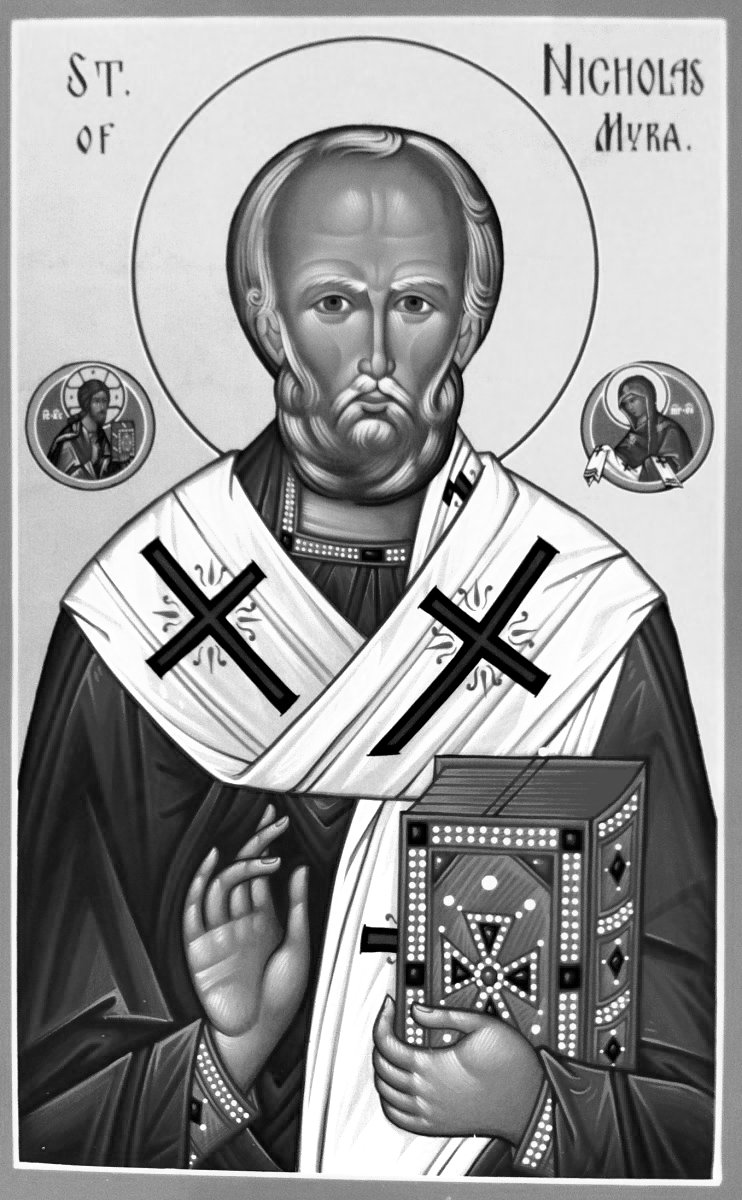
Tradition has it that one member that attended the council was even so impassioned that he slaps an Arian, perhpas even Arius himself. This attendee was none other than Saint Nicholas of Myra, the same St. Nicholas we see around Christmas time.
——————————–
Now, I’ve heard the argument, “what about Colossians 1:15 that states that Jesus is the first born of all creation? How can He be of the same essence as the Father?” I believe that instead of using the word “of” here, “over” would have been better as used in the New King James Version, NIV, and the CSB.
Colossians 1:15-18 states, “He is the image of the invisible God, the firstborn of all creation. For by Him all things were created, both in the heavens and on earth, visible and invisible, whether thrones or dominions or rulers or authorities—all things have been created through Him and for Him. He is before all things, and in Him all things hold together. He is also head of the body, the church; and He is the beginning, the firstborn from the dead, so that He Himself will come to have first place in everything.
” (NASB). We see here that He has made EVERYTHING. All that was created has been created by Jesus Christ. As John 1:3 says, “…apart from Him nothing came into being that has come into being.” Making Jesus outside of creation and not a thing created.
While I can’t say that the New Living Translation is the best or even my favorite translation, I think it excellently words Colossians 1:5 this way, “Christ is the visible image of the invisible God. He existed before anything was created and is supreme over all creation.” In other words it’s Christ’s preeminence over creation that this verse is talking about.
In conclusion, I believe homoousia better describes our Lord as revealed in the Bible. Not homoi-.
Further reading: John 5:18, John 8:24, John 8:58, John 10:30-33, John 20:28, Colossians 2:9, Hebrews 1:8
Often times in our day to day interactions we hear someone say something that sounds like it’s from the Bible or even hear something we’ve read or heard in church knowing it’s from the Bible. Therefore, we don’t put much thought into the validity of the quote and we’ll affirm it with a hearty “Amen.”
And, too often, I’ll hear something and I think to myself “that’s not what that means.” Usually, the person speaking isn’t trying to be careless or malicious with their use of scripture. It’s usually just being spoken from ignorance. So, I’ve decided to write about one of the often quoted yet misused scripture quotes that we hear thrown about. One that I’ve even misused in the past:
Philippians 4:13 ” I can do all things through Christ “
We see this verse used on athletic clothing and sports banners. We say it before big tests. We say it when beginning our work week at a place we’d rather not work. We use it as a self affirmation when going to job interviews. It has become a Christian mantra for completing any daunting task.
At first the verse seems pretty upfront and plain. However, there’s a simple principle one can remember when using Bible verses, “Never read a Bible verse.” This means that all verses are surrounded by other verses and chapters and all verses should be read and used in context with the complete message in which it was stated.
So what does this verse really mean? Let’s look at the immediate context.
Philippians 4:10-14“But I rejoiced in the Lord greatly that now at last your care for me has flourished again; though you surely did care, but you lacked opportunity. Not that I speak in regard to need, for I have learned in whatever state I am, to be content: I know how to be abased, and I know how to abound. Everywhere and in all things I have learned both to be full and to be hungry, both to abound and to suffer need. I can do all things through Christ who strengthens me. Nevertheless you have done well that you shared in my distress.“
Paul, the writer of Philippians had been through great distress during his travels proclaiming the Gospel to the Gentiles. But these times were full of beatings, stonings, prison, and shipwrecks (2 Corinthians 11:25). It is likely that Paul during his earlier days came from a place of affluence. Paul knew what it was like to have and to have not.
What Paul wants the reader to know here is that because of the power of Christ he can be content in all situations. No matter what he is facing he knows Who is ultimately in control.
As he said earlier in the chapter, “Be anxious for nothing, but in everything by prayer and supplication, with thanksgiving, let your requests be made known to God; and the peace of God, which surpasses all understanding, will guard your hearts and minds through Christ Jesus.”
As I was perusing through my suggested videos on YouTube I came across a once popular pastor who claims he doesn’t believe in hell anymore. He also stated that he believed scripture wasn’t inspired by God but that man was inspired to write about God. “What’s the difference?” You may ask. The purpose of this blog is to answer that question.
In Paul’s second epistle to Timothy, he states, “All Scripture is inspired by God and is profitable for teaching, for rebuking, for correcting, for training in righteousness,”(CSB). The word “inspired” is also used in the NASB and the NLT, among others. The NKJV and KJV use the phrase “given by inspiration of God”. The Darby translation says “divinely inspired.”
The ESV and NIV say “God-breathed” or “breathed out by God.” These two English versions come the closest to conveying the original meaning in this verse, as I understand it.
The Greek word used here is θεόπνευστος (theopneustos) which is the combination of theos, meaning God, and pneustos, meaning to blow or breathe. So in the original Greek the term literally means “God-breathed.”
When Jerome translated the Bible into Latin in the late 4th – early 5th century, he used the term “divinitus inspirata.” Inspirata is where we get the English word inspiration. Nowadays, when we say inspired or inspiration, we usually mean that something or someone was our muse for a musical piece, a book, movie, or any other work of art.
However, that is not what Paul is conveying here in 2 Timothy 3:16. He is not saying that as man thought about God, that God acted as some artistic influence in the way that an artist paints a mountain he sees or in the way love inspires a song. He is saying that scripture is actually breathed out of the mouth of God Himself. As John Macarther says, “The Old Testament is the revelation of God to show men what God is like, who God is, what God tolerates and does not tolerate, how God desires holiness and punishes sin. The New Testament is God revealed by His Son in the life of His Son, in the message of His Son, in the understanding of the work of His Son, and in the culmination and the coming of His Son to establish His eternal kingdom. But in either case, Old Testament, New Testament, God spoke. What we have is, indeed, the Word of God. This is not the word of man. The New Testament writers wrote down the Word of God.”
Scripture is God’s words to us. It is the very Word of the living God. He shows us Himself and how we relate to Him. He shows us how we can get to know Him. He shows us the great lengths He goes so that we may know the love He has for us. Through Scripture God shows us how to love Him and our fellow man. And through Scripture we see how we can live eternally with Him.
Knowing this first of all, that no prophecy of Scripture comes from someone’s own interpretation. For no prophecy was ever produced by the will of man, but men spoke from God as they were carried along by the Holy Spirit. (2 Peter 1:20-21, ESV)
If a group of believers pray’s for someone to be healed of an illness, and that person dies of that illness, then how are we to take Matthew 18:19?
This question was posed to me a couple years ago. My first thought was that person, if a believer, would be immediately healed upon their death when they leave their body. Also in their glorified bodies after their resurrection they will experience no more pain and sickness. This was my first thought. And while true, I didn’t take the context of the verse into consideration. Rather, I didn’t take the time to study the context.
Matthew 18:19 says, “Again, truly I tell you that if two of you on earth agree about anything they ask for, it will be done for them by my Father in heaven.”
At first glance this passage seems pretty up front. That whatever two or more believers ask of God, He will do. So if several Christians gather to pray for someone’s physical healing, we can be confident that God will heal them. Some would even say that God is “obligated” to do what’s being prayed for. That’s what many of us hear all the time anyway, especially in America.
This belief seems to be validated when we look at the verse immediately before and the verse immediately after. Verse 18 reads, “Verily I say unto you, Whatsoever ye shall bind on earth shall be bound in heaven: and whatsoever ye shall loose on earth shall be loosed in heaven.” And verse 20, “For where two or three are gathered in My name, there am I in the midst of them.”
So now we seem to have a good formula for healing in Jesus’ own words. 1) Two or three gather making Christ present, 2) touch and agree, 3) bind and loose [binding sickness or demons and releasing blessing and healing, etc] 4) God will do it.
Sounds pretty cut and dry. But, what about the last part of the question posed at the beginning. “…the person dies…” One could take this sad result several ways:
Someone praying or the one being prayed for didn’t have enough faith (Jesus did just say in chapter 17 that the disciples couldn’t cast out a demon because of their lack of faith).
Or, there was unrepentant sin in someone’s life. John 9:31 says that God does not listen to sinners but those that do His will.
Or, it just wasn’t God’s will at that moment to heal that person (2 Corinthians 12:8). But God is true to His word, so why would there be a promise if God would only keep it sometimes?
So what are we to make of this passage?
In one of my earlier blogs on how to understand the Bible, I mention that we must read scripture in its correct context. Picking a verse out of context can, and often does, lead someone to believe something that was not intended. So let’s apply Matthew 18:18-20 to its proper context.
The words of Jesus beginning with verse 12: What do you think? If a man has a hundred sheep, and one of them goes astray, does he not leave the ninety-nine and go to the mountains to seek the one that is straying? And if he should find it, assuredly, I say to you, he rejoices more over that than over the ninety-nine that did not go astray. Even so it is not the will of your Father who is in heaven that one of these little ones should perish. Moreover, if your brother sins against you, go and tell him his fault between you and him alone. If he hears you, you have gained your brother. But if he will not hear, take with you one or two more, that ‘by the mouth of two or three witnesses every word may be established. And if he refuses to hear them, tell it to the church. But if he refuses even to hear the church, let him be to you like a heathen and a tax collector. Assuredly, I say to you, whatever you bind on earth will be bound in heaven, and whatever you loose on earth will be loosed in heaven. Again, I say to you that if two of you agree on earth concerning anything that they ask, it will be done for them by My Father in heaven. For where two or three are gathered together in My name, I am there in the midst of them.”
Here we have Jesus speaking of what we call “church discipline”. He begins first by speaking about a lost sheep which is, in this case, a brother in sin. Another brother should try to correct the wayward believer in private. If he doesn’t listen then one or two more should try. The reference Jesus gives comes from Deuteronomy 19:15, One witness shall not rise against a man concerning any iniquity or any sin that he commits; by the mouth of two or three witnesses the matter shall be established.” To call a brother out on his sinning there needed to be at least 2 witnesses. And these witnesses would work to restore their brother. If that doesn’t work, then the brother is to be brought before the assembly for the sole purpose of restoration from his sin. If after all that, he refuses to give up his sin then he is to be treated as though he is no brother at all. This is also referenced in 1 Timothy 5:20 and 2 Corinthians 5:4-5.
So what does the “binding and loosing” mean and what does Jesus mean when He says He is “there in the midst of them”?
A couple chapters before, Jesus tells Peter, ” ‘And I tell you that you are Peter, and on this rock I will build my church, and the gates of Hades will not overcome it. I will give you the keys of the kingdom of heaven; whatever you bind on earth will be bound in heaven, and whatever you loose on earth will be loosed in heaven.‘ Then he ordered his disciples not to tell anyone that he was the Messiah.” Here we see Jesus establishing His church. His corporate body of believers which at that time consisted of Jews.
Another step of interpreting a text is understanding how the original hearers or readers would have understood the words. For example, in John 3 when Jesus told Nicodemus that he should have understood what being born again meant because he was a teacher of the law, we should ask ourselves where in the Old Testament would he have understood being “born again” to be referenced. The answer is Ezekiel 36:25-27.
So how would the Jews have understood “binding and loosing”? Matthew Henry’s commentary on Matthew 18 states, “…these, in the common speech of the Jews, at that time, signified to prohibit and permit; to teach or declare a thing to be unlawful was to bind; to be lawful, was to loose.” So once again we see a certain judicial understanding to what this passage in Matthew means.
Henry continues, “When ministers preach pardon and peace to the penitent, wrath and the curse to the impenitent, in Christ’s name, they act then pursuant to this authority of binding and loosing. The key of discipline,which is but the application of the former to particular persons, upon a right estimate of their characters and actions. It is not legislative power that is hereby conferred, but judicial; the judge doth not make the law, but only declares what is law, and upon an impartial enquiry into the merits of the cause, gives sentence accordingly.”
One reference for binding and loosing is found in the Gospel of John. After Jesus resurrection, He reminds His apostles of their authority. In chapter 20, verse 23, we read, “If you forgive the sins of any, they are forgiven them; if you retain the sins of any, they are retained.”
Sound doctrine and strict disciple are the two ways church leaders remit and retain sin:
“By sound doctrine. They are commissioned to tell the world that salvation is to be had upon gospel terms, and no other, and they shall find God will sayAmento it; so shall their doom be.
By a strict discipline, applying the general rule of the gospel to particular persons. “Whom you admit into communion with you, according to the rules of the gospel, God will admit into communion with himself; and whom you cast out of communion as impenitent, and obstinate in scandalous and infectious sins, shall be bound over to the righteous judgment of God.’ ” (Henry)
So we see from reading in context what Matthew 18:19 is really about.
So am I saying that we shouldn’t pray for healing or anything else? Not at all. I’m also not saying that gathering together to pray for someone is unbiblical. What I am saying is that whether one lonely believer is praying or 100 are praying together, God hears. James 5:14-15 says, “Is anyone among you sick? Let him call for the elders of the church, and let them pray over him, anointing him with oil in the name of the Lord. And the prayer of faith will save the sick, and the Lord will raise him up. And if he has committed sins, he will be forgiven.” Jesus even mentions how someone was healed through faith of just one person (Mark 5:34, Luke 17:19).
On the other hand, as I mentioned earlier, sometimes God chooses not to heal. In 2 Corinthians 12 Paul writes, “And lest I should be exalted above measure by the abundance of the revelations, a thorn in the flesh was given to me, a messenger of Satan to buffet me, lest I be exalted above measure. Concerning this thing I pleaded with the Lord three times that it might depart from me. And He said to me, ‘My grace is sufficient for you, for My strength is made perfect in weakness.’ Therefore most gladly I will rather boast in my infirmities, that the power of Christ may rest upon me. Therefore I take pleasure in infirmities, in reproaches, in needs, in persecutions, in distresses, for Christ’s sake. For when I am weak, then I am strong.”
The context here is Paul telling the Corinthians how he could boast because of his visions of heaven but he chooses not to be a “fool.” Rather, He thanks God for his infirmaries because they keep him humble. Therefore, his boasting will only ever be in Christ. Even though he prayed three times for God resolve this issue, God chose not to. In choosing to say no to Paul’s prayer, God granted Paul the greater benefit of understanding the greater depth of the sufficiency of God’s grace.
Then why should we pray? First, because we are commanded to do so. Matthew 5:44, Romans 12:12, Ephesians 6:18, Philippians 4:6, 1 Thessalonians 5:17, and 1 Timothy 2:1 are among the many commands that we have from God to pray.
We should also pray because it works. When we pray according to God’s will He hears us. The Bible is full of examples when God’s people prayed and God answered. In 1 Samuel 1, a woman named Hannah was in deep, emotional prayer by herself. She was praying for a child. God listened and blessed her with the son that would become the great prophet Samuel. In Acts 12, Peter is in prison and the church is praying for him. An angel appeared and freed Peter from his chains. Afterwards, Peter went to the house where the saints had gathered and were praying. There they were still praying when he shows up. The effectual fervent prayer of a righteous man (or woman) avails much. (James 5:16)
For more information on prayer, check out Focus on the Family‘s articles on the subject here.
We must also remember that sometimes we don’t see the results of our praying. As stated in Hebrews 11, some people pass on to glory before they see the results of the fruit of their faith.
Lastly, as I stated at the beginning of this blog that healing actually will come to those who place their faith in Christ. That is a promise. By His stripes we are healed. Whether in this life or in the next.
.
.
P.S.: All that being said, there is a power in Christian unity. We are the body and when the body joins together, we become a more complete picture of Jesus. All of us as different parts working and praying together, and building each other up.
Colossians 2:9 For in Christ all the fullness of the Deity lives in bodily form, . ..
In the Bible we learn that God came down and dwelt in the body of man. He was born of a woman, lived, ate, slept, cried, and died. In theology, this is known as the Doctrine of the Incarnation. The word “incarnation” means to be made into flesh. The Incarnation is one of the vital doctrines of the Christian faith although it has had its critics over the centuries. Here I seek to explore and defend the concept of God in the flesh.
In the Book of Genesis, God tells Eve that her Seed will crush the head of the serpent but the serpent will bruise the Seed’s heel (3:15). This was a promise from God that a man born of a woman would be the one to defeat the serpent, Satan. This gospel is the first revelation of who the Messiah would be. As time goes on in human history we are provided more info on this Man (progressive revelation).
In Isaiah 7:14, we are told that there will be a virgin who will give birth to a Child and His name will be Immanuel. Often in the Old Testament times, a name given to a person was actually a description of that person. Such is the case with Immanuel which means “God with us.” So this will be literally God dwelling among us as a man. Isaiah goes on to say in chapter 9, “For to us a child is born, to us a son is given, and the government will be on his shoulders. And he will be called Wonderful Counselor, Mighty God, Everlasting Father, Prince of Peace. Of the greatness of his government and peace there will be no end. He will reign on David’s throne and over his kingdom…” So more is now revealed. God will dwell among man as a man. He will be of the lineage of David and will establish His kingdom. And from Genesis, Satan will bruise His heel but He will defeat Satan.
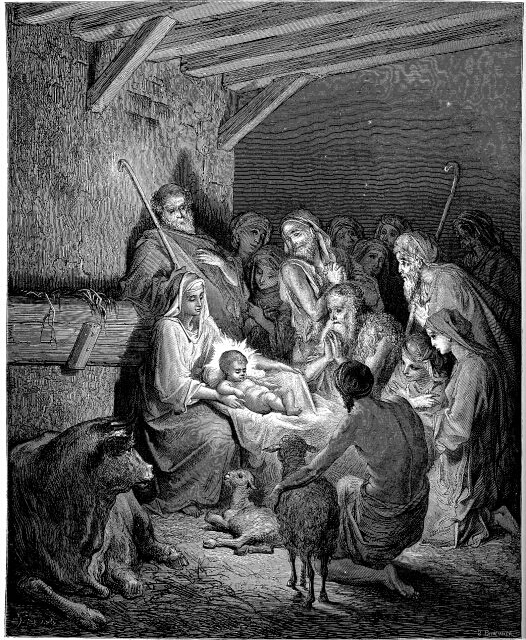
Now we come to the fruition of the promise made to Eve and to the people of God. The birth of Jesus. The only man born of a virgin, Jesus came to earth as the Immanuel that Isaiah foretold of 700 years before.
Like I’ve stated previously, in Matthew we see that Jesus is the fulfillment of Isaiah’s prophecy. And in the Gospel of John, He is described as the Word that was with God and the Word that was God (John 1:1). In Colossians 1:15, He is the “image of the invisible God.” In Philippians 2:6, He is the very nature, or form, of God. Hebrews 1:3 says He is “the radiance of the glory of God and the exact imprint of his nature.”
Jesus is the “uncreated incarnate Creator of creation”. All things were created from Him, through Him, and for Him (Romans 11:36). Yet, the Creator came to earth and dwelt in His creation. This is referred to as the Hypostatic Union; Jesus being truly God and truly man. Jesus is the two natures of God and man in a single hypostasis(essence, substance, nature). He is the theanthropos, or God-man.
The dual nature of Jesus may sound confusing, but God is not the author of confusion. John 1 calls Jesus the light. Scientists have discovered that light also has a dual nature. The scientific community was once divided on whether light was wave or whether it was particle. However they’ve discovered that it is both wave and particle, something scientists used to consider an impossibility.
Some have argued that Jesus is not God because the Scriptures says He slept and that an all-powerful God does not need to sleep. This argument basically comes from a person who doesn’t take their own premise to its logical conclusion. That is, that God being all powerful can choose to place himself in a human body and limit that human body to the natural laws that govern all other humans; like the need for rest and food and water. He also came as a Jew meaning that He had to obey the spiritual laws He had given Moses about 1,200 years before. And He did so, perfectly.
Some people would say “is this like Hercules who was the progeny of a god and human mother?” NO. Jesus was fully God and fully man. The fictional Hercules was half-god and half-man. Some would say that Hercules only became a god after his death. Unlike Hercules, Jesus the Son was ALWAYS God. He says in the Gospel of John, “Before Abraham was, I am.” Jesus says in the Garden of Gethsemane that He shared the glory with God before the world began (John 17:5). Therefore, there was no progression, or apotheosis, of Jesus to divinity. He was always God.
Jesus came to earth to be the propitiation, or atoning sacrifice, of our sins. He could only be this as a perfect man, but since there is no perfect man, God came to earth to be just that.
As John Piper states, “In order for Jesus to suffer and die, he had to plan way ahead of time, because … he couldn’t die. Immortal. He didn’t have any body, yet he wanted to die … for you. So he planned the whole thing by clothing himself with a body so that he could get hungry and get weary and get sore feet. The incarnation is the preparation of nerve endings for the nails – the preparation of a brow for thorns to press through. He needed to have a broad back so that there was a place for the whip. He needed to have feet so that there was a place for spikes. He needed to have a side so that there was a place for the sword to go in. He needed fleshy cheeks so that Judas would have a place to kiss and there would be a place for the spit to run down that the soldiers put on him. He needed a brain and a spinal column with no vinegar and no gall so that the exquisiteness of the pain could be fully felt. I just plead with you – when you’re reading the bible and you read water toy texts like “he loved you” and “gave himself for you,” you wouldn’t go too fast over it. Linger, linger, linger, and plead with him that your eyes would be opened.“
Further reading: John 1:1-14, Romans 1:2-5, 8:3, 9:5, Philippians 2:6-11, 1 Timothy 3:16, Hebrews 2:14, 1 John 1:1-3, 4:2
In my last blog I stated that in the realm of spiritual truths, having the right answer matters, especially in regard to an eternity with or apart from God. Jesus made claims that must be examined. He claimed to be the only way to the Father. If what He said is true then all other beliefs are false.
When anyone makes a claim of who they are then they must be able to back up those claims in order to persuade others. A person who claims to be a doctor will have proof of receiving his doctorate. A company asking for proof of who you are may ask for identification or proofs of residence. A man claiming to be the one way to God must prove to be from God and of God. Here I offer such proofs of Jesus being who He claimed to be.
1. Jesus healed and raised the dead on His own authority. We are shown often in the Scriptures that God’s prophets and apostles have healed people. The difference between them and Christ is that they did not do so of their own power or authority. They had to pray before doing so (ex. 2 Kings 4:33, 1 Kings 17:20). Or they did so “in Jesus name” (Acts 3:6). Jesus never had to appeal to a secondary means of authority.
2. The Seven Witnesses: In the Gospel of John there are seven witnesses listed that validate Jesus’ claims. Deuteronomy 19:15 states that a single witness does not suffice. Knowing this, the Pharisees told Jesus in John 8:13, “Here you are, appearing as your own witness; your testimony is not valid.” However, John the Apostle shows us there are more than enough witnesses to corroborate that Jesus is who He says He is.
John the Baptist: John 1:34 And I have seen and have borne witness that this is the Son of God.
Jesus Himself: John 8:14 Even if I do bear witness about myself, my testimony is true, for I know where I came from and where I am going, but you do not know where I come from or where I am going.
God the Father: John 5:37 And the Father who sent me has himself borne witness about me. His voice you have never heard, his form you have never seen (Matthew 3:17, Luke 9:35)
The Holy Spirit: John 15:26 But when the Helper comes, whom I will send to you from the Father, the Spirit of truth, who proceeds from the Father, he will bear witness about me.
The prophets of the Old Testament: John 5:39 You search the Scriptures because you think that in them you have eternal life; and it is they that bear witness about me
Jesus’s miracles (works): John 10:25 I told you, and you do not believe. The works that I do in my Father’s name bear witness about me (Matthew 14:20, Matthew 17:27, Mark 4:39-41, John 2:7-9)
The witness of believers: John 15:27 And you also will bear witness, because you have been with me from the beginning.
3. The Resurrection. This is perhaps the most important of all that substantiate Jesus’ claims. While the Bible states that others have been raised from the dead, only Christ was raised of His own power. He said, ” Destroy this temple and in three days I will raise it up again.” (John 2:19). He also said, regarding His life, that He has the “authority to lay it down and authority to take it up again.” (John 10:18).
4. Doubting Thomas, Jesus-hating-Saul, and Unbelieving James end up worshiping Jesus as God.
After word was getting around that Jesus had risen from the dead, His disciple, Thomas, refused to believe it until he saw with his own eyes and felt the nail scars with his own hands (John 20:25). After Jesus appeared to Thomas, He told him that he could touch His wounds. We aren’t told whether Thomas did actually touch, but we do know that just the sight of Jesus made him believe. And in believing he called Jesus “My Lord and my God.” (John 20:28)
Paul, who was not only skeptical of Jesus but persecuted His followers, was also visited by the risen Savior. This event was so miraculous that it changed Saul from a hater of Christians to Paul, one of Christianity’s most prominent missionaries. Paul, who wrote 13 of the 27 New Testament books. In these books he calls Jesus God and describes divine attributes of Jesus: Romans 8:3; 1 Corinthians. 8:6; 10:4; 15:47; 2 Cor. 8:9; Galatians 4:4, Philippians 2:5-6, Colossians 1:16-19.
James, the Brother of Jesus, did not believe in Him (John 7:5). 1 Corinthians 15:7 states that Jesus appeared to James and the other apostles after His resurrection. Afterwards, James became a follower (and worshipper) of his brother and went on to write the New Testament epistle that bears his name. Historian, Flavius Josephus even records that James was martyred because of the truth of his brother that he spread to others, ” the brother of Jesus, who was called the Christ…was delivered to be stoned” (Antiquities, 20.9.1)
So, as we see Jesus didn’t just make outrageous claims; He backed them up. We see that He had witnesses and His own works to validate what He said about Himself. As C.S. Lewis famously states, “I am trying here to prevent anyone saying the really foolish thing that people often say about Him: I’m ready to accept Jesus as a great moral teacher, but I don’t accept his claim to be God. That is the one thing we must not say. A man who was merely a man and said the sort of things Jesus said would not be a great moral teacher. He would either be a lunatic — on the level with the man who says he is a poached egg — or else he would be the Devil of Hell. You must make your choice. Either this man was, and is, the Son of God, or else a madman or something worse. You can shut him up for a fool, you can spit at him and kill him as a demon or you can fall at his feet and call him Lord and God, but let us not come with any patronizing nonsense about his being a great human teacher. He has not left that open to us. He did not intend to.”








 Theologetics.org